Your vet just recommended Hill’s Science Diet Perfect Weight, and before you spend the money you want to know whether it actually delivers. Hill’s Perfect Weight is a legitimate, clinically backed weight management food — but it only works if you pair it with strict portion control and realistic expectations. It is not magic kibble, and it has real trade-offs worth knowing before you commit.
This review breaks down the ingredients, the clinical evidence, the common owner complaints, and the situations where a different food would serve your dog better.
Quick Answer: Hill’s Science Diet Perfect Weight
- Product tier: Over-the-counter (no prescription needed), Hill’s Science Diet line
- Main protein: Chicken (first ingredient) and chicken meal
- Key feature: Reduced caloric density (~287 kcal/cup) combined with pea fiber for satiety
- Best for: Dogs 10–30% above ideal weight with no complex medical conditions, owned by people committed to portion discipline
- Price tier: Mid-range OTC; cheaper than Hill’s Prescription Metabolic, comparable to Pro Plan weight management
What Is Hill’s Science Diet Perfect Weight?
Hill’s Pet Nutrition has been around since the 1940s and occupies an unusual position in the pet food world: it is owned by Colgate-Palmolive, operates with a large in-house team of veterinary nutritionists, and has built most of its reputation through veterinary channel sales. That vet-office presence is a core part of why so many owners hear about Hill’s products through a recommendation rather than a pet store shelf.
Within the Hill’s lineup, there are two distinct families. Hill’s Prescription Diet requires a veterinary authorization to purchase and is formulated for specific medical conditions — including obesity managed alongside metabolic disease. Hill’s Science Diet is the over-the-counter line, available at pet stores, Chewy, Amazon, and Petco. Perfect Weight sits within Science Diet, which means you can buy it without a prescription, though many vets actively recommend it.
The headline claim Hill’s makes for Perfect Weight is specific: in a controlled clinical study, 70% of dogs reached a healthier weight within 10 weeks. That is a more precise and honest statement than most pet food marketing, because it comes with a time frame, a success rate (not 100%), and is tied to published methodology. The study used controlled feeding of the formula at recommended portions — context that matters a great deal when evaluating real-world results.
The Perfect Weight Product Range
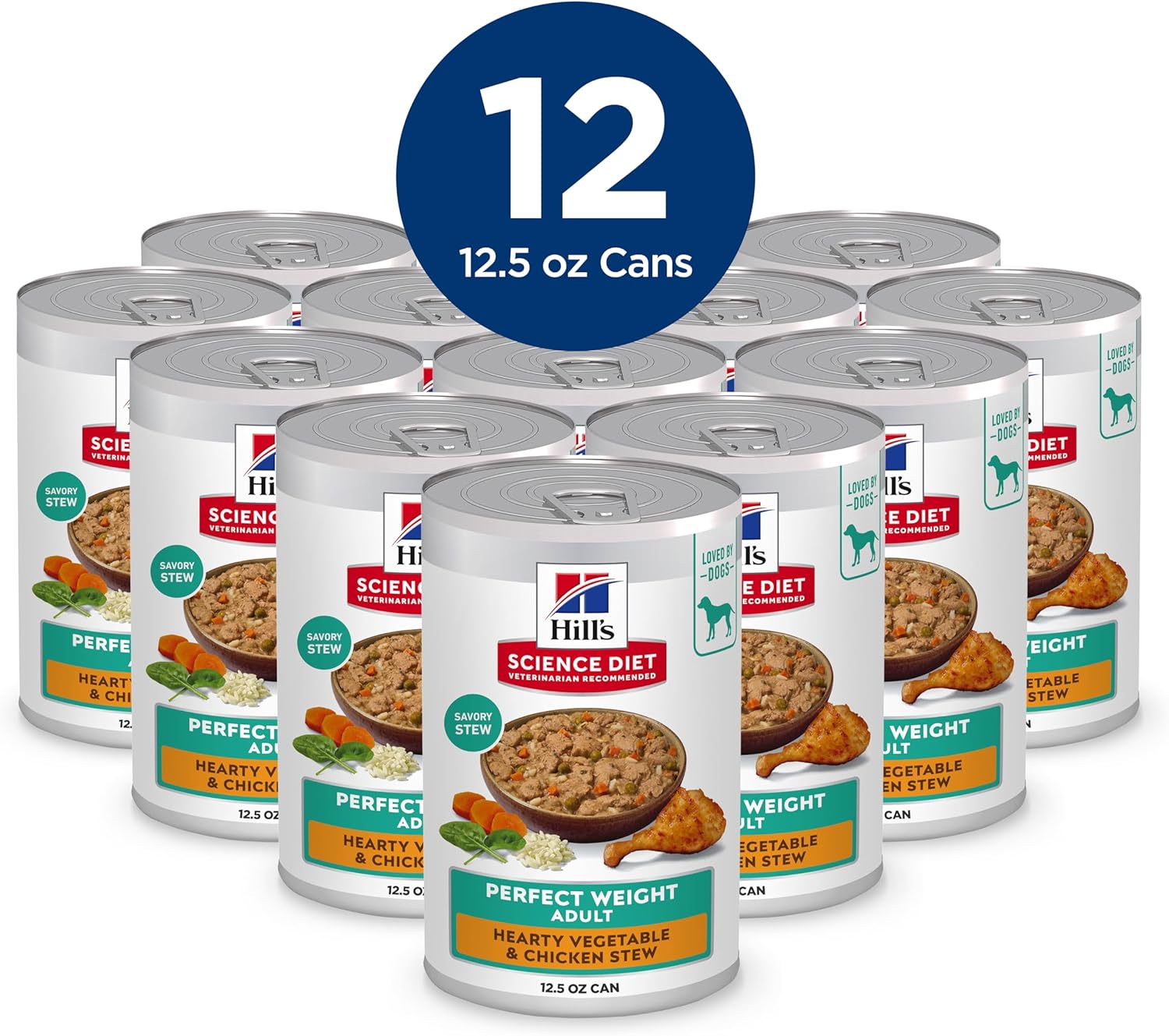
Hill’s offers Perfect Weight in four primary formulations:
| Formula | Target Dog |
|---|---|
| Adult Small & Toy Breeds | Dogs under 25 lbs |
| Adult (standard) | Medium breeds, roughly 25–50 lbs |
| Adult Large Breed | Dogs over 50 lbs |
| Adult 7+ | Senior dogs needing weight management |
Each formula has slightly different caloric and nutrient targets. The large breed version, for example, is formulated with joint considerations in mind given the additional load excess weight places on larger dogs. The 7+ formula adjusts protein and caloric levels for lower activity levels common in older dogs. For this review, references to nutritional figures apply to the standard Adult formula unless noted.
Ingredient and Nutrition Deep Dive
Understanding what is actually in the bag — and what the numbers mean — is essential before evaluating whether this food suits your dog.
Ingredient List and Protein Sources
The first several ingredients in the Adult formula are: Chicken, Cracked Pearled Barley, Whole Grain Wheat, Whole Grain Corn, Pea Fiber, Chicken Meal, Corn Gluten Meal, Powdered Cellulose, Chicken Fat.
Chicken as the first ingredient is a positive. It is a named, whole protein source rather than a generic “meat” designation. Chicken meal — which appears later — is actually a concentrated protein source (moisture is removed, so pound for pound it delivers more protein than whole chicken). Having both is genuinely useful from a protein contribution standpoint.
One thing worth being clear about: chicken appearing first by weight does not mean chicken is the dominant macronutrient. Once cooked, moisture evaporates and the grain ingredients rise proportionally. This is standard in kibble and not unique to Hill’s, but it is worth understanding if ingredient positioning matters to you.
Grain Profile
Perfect Weight is unambiguously grain-inclusive: barley, whole grain wheat, and whole grain corn all feature prominently. If your dog has a documented grain sensitivity, or if you have philosophical preferences about grain-free diets, this is not the right food. For most dogs, however, grains are perfectly digestible and pose no concern. The grain-free trend has outpaced the science behind it, and the FDA’s ongoing investigation into dilated cardiomyopathy (DCM) links in grain-free diets has prompted many veterinarians to steer back toward grain-inclusive formulas — which partly explains the continued vet endorsement of products like Perfect Weight.
Corn is the ingredient that draws the most skepticism in online discussions. In this formula, corn appears in two forms: whole grain corn and corn gluten meal. Corn gluten meal is high protein dog food and contributes meaningfully to the protein content. It is not filler in the traditional sense, but it is also not the same quality protein as chicken or fish. Owners seeking the highest-quality protein profile will find more satisfying options elsewhere.
Fiber Strategy and Caloric Density
The satiety mechanism in Perfect Weight relies heavily on fiber. Pea fiber and powdered cellulose create bulk in the digestive tract, slowing gastric emptying and extending the sensation of fullness. This is how the formula allows dogs to eat a satisfying volume of food while consuming fewer calories overall.
The caloric density of the Adult formula is approximately 287 kcal per cup, compared to a typical adult maintenance kibble at around 370 kcal/cup. That roughly 22% reduction is meaningful. A 40-pound dog eating two cups per day of a standard food would consume around 740 calories; on Perfect Weight at the same volume, that drops to around 574. Over weeks, that deficit produces weight loss — assuming no other caloric inputs.
Macronutrient Profile
On a dry matter basis:
| Nutrient | Approximate DM Value |
|---|---|
| Crude Protein | ~25% |
| Crude Fat | ~9% |
| Crude Fiber | ~9% |
| Calories per cup (as fed) | ~287 kcal |
At 25% DM protein, this is moderate — not high-protein by today’s premium standards, where 30–35% DM is common. The low fat content (9% DM) is deliberate; fat is the most calorie-dense macronutrient, and reducing it is a straightforward way to lower overall energy density.
L-carnitine is present in the formula, which supports fat metabolism at the cellular level and helps preserve lean muscle mass during caloric restriction. This is a meaningful inclusion — not a marketing flourish — because muscle loss during weight reduction is a genuine concern, especially in older or less active dogs.
No artificial colors, flavors, or preservatives are used. Preservation is handled with mixed tocopherols (natural vitamin E).
Where Premium Grain-Free Brands Have the Edge
To be fair: if your primary concern is protein quality and ingredient sourcing, this formula does not compete at the top tier. Higher-end grain-free weight management options from brands like Orijen or Acana will offer 35–40% DM protein with named single proteins and no corn. What Perfect Weight trades in ingredient prestige it offers in clinical validation and veterinary track record. That trade-off is worth naming honestly.
How Perfect Weight Performs in Practice
Palatability
This is one of the most polarized aspects of owner reviews, and the honest answer is: palatability is mixed. Some dogs eat Perfect Weight without hesitation. Others — particularly dogs who have been on higher-fat, more aromatic foods — show initial reluctance. Lower fat content directly reduces food aroma, and aroma is a primary palatability driver for dogs. A proper transition over 7–10 days (gradually increasing the new food’s proportion) helps significantly. Dogs that refuse outright after a full transition period are telling you something about the formula’s fit for them specifically.
Stool Quality and Volume
High fiber content has a known trade-off: higher stool volume. This is one of the most consistently mentioned complaints in owner reviews, and it is real. Dogs on Perfect Weight typically produce more frequent and bulkier stools than they did on a lower-fiber food. For most dogs this is not a health problem, but it is a notable quality-of-life consideration for owners, particularly in apartment settings or with dogs who have sensitive digestion. Loose stools in the early transition period are common and generally resolve; persistently soft stools in an established dog on the formula can indicate the fiber level is not agreeing with that individual.
Energy and Coat
Most owners report maintained energy levels and reasonable coat quality during the weight loss period. The L-carnitine and adequate protein appear to do their job in preserving lean mass. Dogs losing weight on this formula typically do so without the lethargy or dull coat associated with extreme caloric restriction. This is one of the formula’s genuine strengths compared to simply feeding less of a regular food.
Weight Loss Results: What the Numbers Mean in Practice
Hill’s clinical study reported an average weight loss of 14% body weight over 10 weeks. For a 60-pound dog, that is approximately 8.4 pounds — a meaningful result. But the study conditions were controlled: measured portions, no additional treats, consistent feeding. Real-world results frequently fall short because owners underestimate treats, free-feed, or feed family members who top up the bowl.
The critical principle: Perfect Weight fed free-choice will not produce weight loss. The formula’s reduced caloric density only creates a deficit relative to maintenance needs when portions are controlled. If a dog is allowed to eat until full, they will self-regulate caloric intake upward and the weight loss advantage disappears. Every vet who recommends this food should — and most do — pair it with explicit portion guidance by body weight and target weight, not just cup measurements.
Get the first pack for your dog here
Perfect Weight vs. Hill’s Prescription Metabolic
Hill’s Prescription Diet Metabolic is the prescription-level alternative for weight loss, and the question of which to choose comes up frequently. Here is a direct comparison.
| Factor | Science Diet Perfect Weight |
|---|---|
| Requires prescription | No |
| Price per pound | Lower |
| Clinical indication | Overweight dogs, no complex conditions |
| Mechanism | Reduced kcal, high fiber |
| Best when | First-line OTC weight management |
Prescription Metabolic works through a different mechanism — it targets the metabolic pathways that regulate fat storage, not just caloric intake. It is the appropriate choice when a dog has already failed to lose weight on an OTC formula like Perfect Weight, when a vet suspects metabolic dysfunction (common in spayed females and certain breeds), or when weight loss needs to be actively supervised as part of treatment for a comorbid condition like orthopedic disease.
The price difference is real: Metabolic costs noticeably more, and it requires a vet visit to obtain. For a straightforward overweight dog with no complicating factors, starting with Perfect Weight is entirely reasonable and is exactly how many vets use the two products: Perfect Weight as the first intervention, Metabolic as the escalation if the first line fails.
One common protocol worth knowing: some vets recommend using Perfect Weight as a maintenance food after a dog reaches their target weight on Prescription Metabolic. The lower caloric density helps prevent rebound weight gain without requiring the ongoing prescription cost. This is a practical and widely used approach.
Who Should and Shouldn’t Buy Hill’s Perfect Weight
Good Candidates
- Dogs 10–30% above ideal weight with no underlying medical conditions driving the weight gain
- Owners who want clinical backing and trust vet-endorsed brands — the trial evidence is real and the formula is peer-reviewed
- Dogs that tolerate grain-inclusive diets without digestive issues or skin reactions
- Owners who will commit to strict portion control, measure cups accurately, account for all treats, and follow through for the full 10+ week window
- Multi-dog households where one dog is overweight — since Perfect Weight is safe for healthy weight dogs to eat (at maintenance portions), it can simplify feeding logistics
Not the Right Fit
- Dogs with grain sensitivities — wheat and corn are present; not appropriate for dogs with confirmed grain intolerances
- Dogs who have already failed an OTC weight loss program — if your dog did not lose weight on a previous comparable formula, escalate to Prescription Metabolic rather than trying another OTC option
- Owners who are not going to portion control — this is not a passive weight loss dog food. If the household isn’t ready for structured feeding, the food will not compensate for it
- Owners prioritizing ingredient quality over clinical efficacy — if premium protein sourcing and grain-free formulation are priorities, Pro Plan Sport or Royal Canin Satiety Support offer different trade-off profiles
- Dogs with medically driven obesity — hypothyroidism, hyperadrenocorticism (Cushing’s), or post-spay metabolic changes often require veterinary intervention beyond what an OTC food can address
Frequently Asked Questions
Is Hill’s Science Diet Perfect Weight prescription?
No. Hill’s Perfect Weight is part of the Science Diet over-the-counter line and does not require a veterinary prescription. You can purchase it at pet stores, Chewy, Amazon, and Petco without any authorization. The prescription weight management product from Hill’s is called Prescription Diet Metabolic, which is a separate product requiring a vet’s sign-off.
How long does it take Hill’s Perfect Weight to work?
Hill’s own clinical study used a 10-week period, during which 70% of dogs reached a healthier weight. Practically, most owners following correct portions see measurable progress within 4–6 weeks. If you see no change after 8 weeks of strict portion control, discuss escalating to Prescription Metabolic with your vet rather than continuing indefinitely on the OTC formula.
Can healthy weight dogs eat Hill’s Perfect Weight?
Yes, with a portion adjustment. The food meets AAFCO standards for adult maintenance, so a dog at a healthy weight can eat it without nutritional concern — but you would feed more per day than the weight loss portions to maintain rather than lose weight. Hill’s provides maintenance feeding guidelines on the bag. This makes Perfect Weight useful in multi-dog homes where one dog needs to lose weight and the other does not.
How much Hill’s Perfect Weight should I feed my dog?
Feeding amounts are on the bag based on current body weight, but for weight loss you should ideally feed based on your dog’s target body weight, not their current weight. Your vet can calculate this precisely. A general starting point for a 50-pound dog aiming to lose to 42 pounds would be to feed based on the 42-pound recommendation and reassess every 4 weeks. Avoid the common mistake of eyeballing cups — use a kitchen scale or a precisely marked measuring cup.
Is Hill’s Perfect Weight grain-free?
No. Hill’s Perfect Weight contains whole grain barley, whole grain wheat, and whole grain corn. It is explicitly a grain-inclusive formula. If your dog has a grain sensitivity or you prefer a grain-free diet for other reasons, this is not the right product. Hill’s does not currently offer a grain-free version of Perfect Weight.
Hill’s Perfect Weight vs. Hill’s Metabolic — which is better?
Neither is universally better — they serve different clinical situations. Perfect Weight is the appropriate starting point for most overweight dogs: it is OTC, affordable, and backed by solid evidence. Prescription Metabolic is the appropriate choice when OTC options have already been tried without success, when a vet needs to supervise a structured weight loss program, or when the dog has metabolic factors making simple caloric restriction insufficient. Start with Perfect Weight; escalate to Metabolic if needed.
Where can I buy Hill’s Science Diet Perfect Weight?
Hill’s Perfect Weight is widely available. Major retail options include Chewy (often with autoship discounts), Amazon, Petco, PetSmart, Walmart (select locations), and many independent pet stores. It is also commonly stocked at vet offices, which may offer loyalty pricing or smaller bags for initial trials. Prices are broadly consistent across retailers, though Chewy autoship typically offers the best ongoing rate.
Bottom Line
Hill’s Science Diet Perfect Weight dog food is one of the more honestly marketed weight management pet foods on the market. The clinical trial evidence is real, the mechanism makes nutritional sense, and the vet endorsement is not just a rubber stamp — this product has been through genuine scrutiny. For an overweight dog without complicating medical issues, owned by someone willing to actually portion-control and stay consistent, it is a solid first-line choice.
The weaknesses are equally real: palatability is not guaranteed, the stool volume increase bothers a meaningful number of owners, and the ingredient quality is mid-tier rather than premium. The food does not work passively — a dog overfed on Perfect Weight will not lose weight, and the 70% success rate from the clinical study assumed controlled portions that home environments frequently don’t replicate.
If your vet recommended it, that recommendation is grounded in reasonable evidence. Use it with discipline — measure every meal, cut treats drastically or replace them with pieces of the kibble itself, reweigh your dog every 3–4 weeks, and give it the full 10-week window before evaluating. If it doesn’t work under those conditions, ask your vet about Prescription Metabolic. If it does work, consider transitioning to Perfect Weight for long-term maintenance once your dog reaches goal weight.
The food is worth trying. Just go in with accurate expectations rather than hoping the bag does the work for you.
Disclaimer: This review is for informational purposes only and does not constitute veterinary advice. Consult your veterinarian before changing your dog’s diet, especially if your dog has existing health conditions or is taking medication. Individual results vary.