Choosing a collapsible dog crate is about more than finding a crate that folds down for storage. The right crate should give your dog enough room to stand, turn around, lie down, and settle comfortably while also fitting naturally into your home and lifestyle.
Whether you need a crate for everyday use, travel, or temporary confinement, The Pet Geek will work you through practical steps can help you choose, set up, and maintain one that works well for both you and your dog.
How to Choose the Top Collapsible Dog Crate for Your Needs
1. Choose the Right Size
The crate should be large enough for your dog to move comfortably without giving them excessive unused space.
Measure your dog before buying
Start by measuring your dog while they are standing.
Start by measuring your dog accurately. For length, measure from the tip of your dog’s nose to the base of the tail. For height, measure from the floor to the top of the head or ears, whichever is higher.
These measurements give you a useful starting point when selecting a crate that provides enough space for your dog to stand, turn around, lie down, and stretch comfortably.
Add a little extra room to both measurements so your dog can change position comfortably.
Your dog should have enough space in the crate to stand comfortably without crouching, turn around easily, lie down without feeling restricted, and stretch out naturally when resting.
For a puppy, think about their expected adult size rather than choosing a crate that they will quickly outgrow. A crate with a divider can make it easier to adjust the available space as your puppy grows.
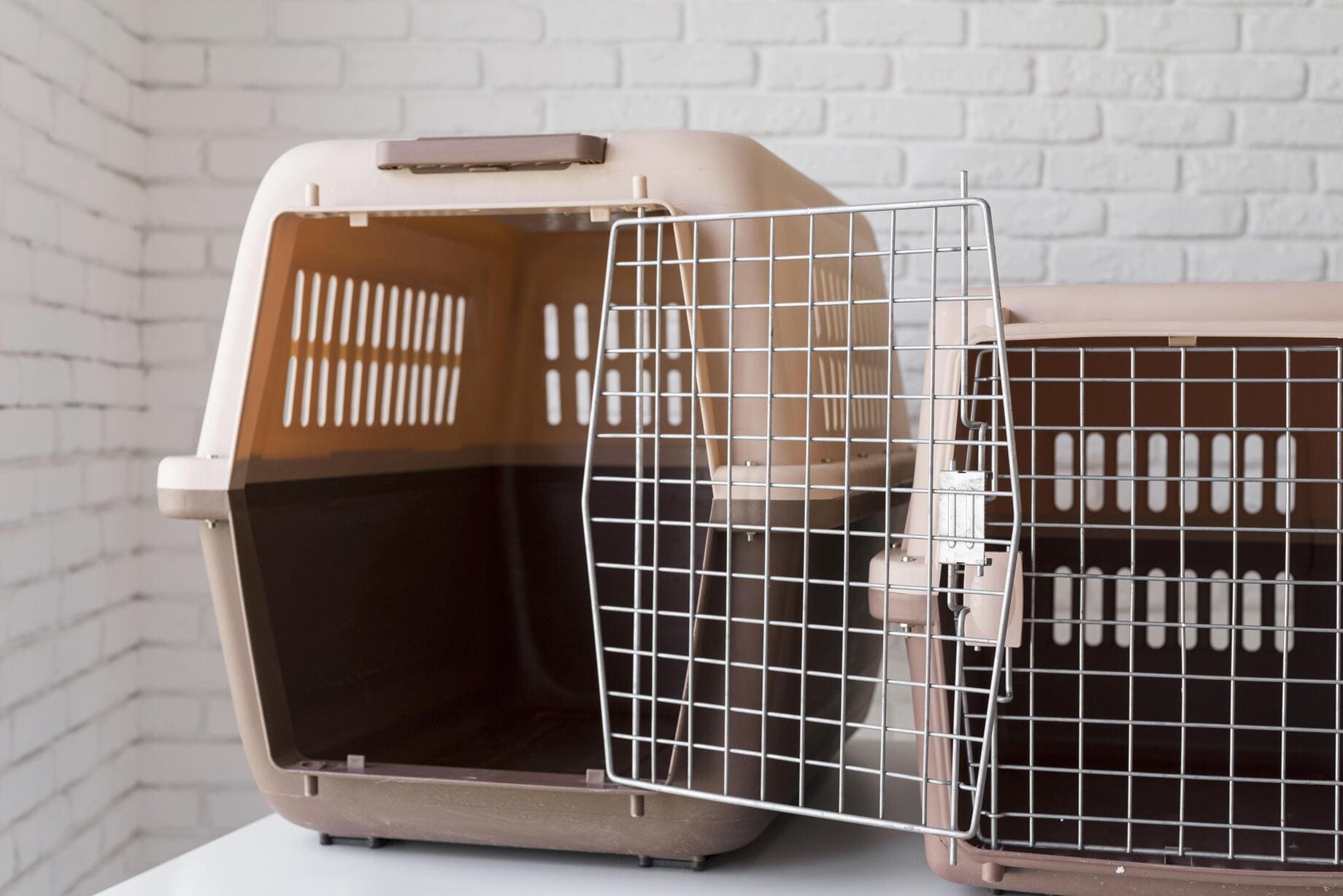
Avoid choosing a crate based only on weight
Weight ranges can be useful when comparing products, but they should not replace actual measurements.
Two dogs with the same weight can have very different body shapes. A long-bodied dog may need a longer crate, while a taller dog may need additional height.
The interior dimensions are therefore more useful than weight alone when deciding whether a crate will fit your dog.
Consider how you will use the crate
Your ideal crate size may also depend on where and how you plan to use it.
For everyday use, prioritize enough space for your dog to rest comfortably.
For travel, check both the interior dimensions and the folded dimensions. A crate that fits your dog may still be inconvenient if it is difficult to transport or store.
When searching for the top collapsible dog crate, don’t base your decision solely on ratings or price. The right crate should match both your dog’s needs and the way you plan to use it. Compare your options based on these key factors:
2. Frame & Durability
Consider the materials used for the frame, the strength of the joints, and how well the crate can withstand everyday use.
If your dog tends to scratch, push against, or chew on their crate, durability becomes especially important. For strong or escape-prone dogs, a sturdy construction may be more valuable than choosing the lightest option available.
3. Ease of Folding & Storage
One of the biggest advantages of a collapsible dog crate is that it can be folded down when not in use. Before choosing one, consider:
- Is it easy to open and fold?
- Does it significantly reduce the amount of storage space needed?
- Does folding require removing multiple parts?
- Is it convenient to carry or transport?
A crate that is technically collapsible but difficult to fold may not provide much practical value for owners who frequently move or store it.
4. Ventilation & Visibility
Good airflow and visibility can help your dog feel more comfortable inside the crate. Look for designs with mesh or wire panels that allow adequate ventilation while giving your dog the opportunity to see their surroundings.
However, ventilation and visibility should not come at the expense of security. Check that the panels are securely attached and strong enough for your dog’s size, strength, and behavior.
5. Door & Locking System
A secure door is essential, especially if your dog is strong, anxious, or tends to push against the crate.
When choosing a crate door, look for one that opens and closes smoothly without sticking or requiring excessive force. The locking mechanism should be sturdy and reliable enough to prevent your dog from pushing the door open, especially if your pet is anxious, strong, or likely to test the crate.
It should also be easy for you to operate so you can quickly access your dog when needed. If you plan to move or transport the crate, make sure the door remains securely locked and does not loosen or shift during handling. A well-designed door should provide both easy access for the owner and dependable security for the dog.
For dogs that are prone to escaping, pay particular attention to the latch and surrounding frame. A lightweight crate is not necessarily a good choice if its door or locking system is easy to manipulate.
6. Comfort & Interior Design
A good collapsible dog crate should provide enough usable space for your dog to rest comfortably without making the interior feel crowded.
Consider whether the crate has enough room for appropriate bedding while still allowing your dog to stand, turn around, and lie down naturally.
Also check the interior for potential problem areas such as:
- Sharp edges
- Exposed joints
- Gaps or openings
- Uneven surfaces
- Parts that could catch your dog’s paws or collar
The interior design should work with your dog’s size and behavior rather than simply looking spacious from the outside.
More options to choose, try Indoor dog fence instead of a dog crate
7. Portability
If you plan to use your collapsible dog crate for travel, portability becomes an important factor.
Look beyond whether it can simply be folded. The folded dimensions are important because a compact crate is easier to store in a closet, garage, or car when it is not in use. Consider how much space it takes up once folded, especially if you have limited storage space.
Weight and handles also affect how practical the crate is to use. A lightweight design may be easier to carry, while sturdy handles can make moving the crate between rooms or loading it into a car much more convenient. Make sure the crate is comfortable enough for you to carry without compromising durability.
Finally, consider how quickly the crate can be set up and transported. A good collapsible crate should open and secure easily when you arrive at your destination, without requiring complicated assembly. This is particularly useful when moving between your home, car, hotel, boarding facility, or other locations with your dog.
A crate that folds compactly but is difficult to carry or takes a long time to set up may not be the most practical choice for frequent travelers.
For occasional travel, a slightly heavier but more durable crate may be worthwhile. If you regularly move the crate between locations, prioritize a combination of lightweight construction, compact storage, and easy setup.
How to Set Up a Collapsible Dog Crate at Home
Once you have the right size, where you put the crate can make a big difference in how easily your dog accepts it.
Choose a calm but familiar location
Place the crate somewhere your dog can feel connected to the household without being surrounded by constant activity.
Avoid locations that are extremely noisy, directly exposed to strong sunlight, in the middle of heavy foot traffic, near drafts or extreme temperatures
A quiet corner of a living room or bedroom can work well, depending on your home’s layout and your dog’s routine.
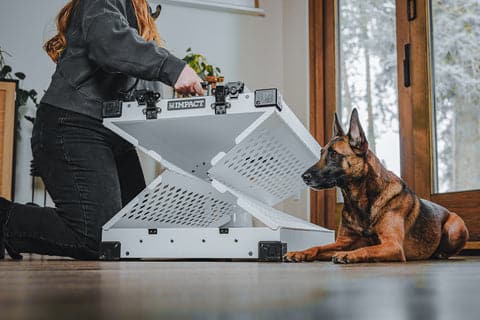
Make sure the crate is fully secure
Before allowing your dog inside, unfold the crate completely and check that all locking mechanisms are properly engaged.Pay particular attention to the crate’s doors and latches, as these are common points of wear and should remain secure during use. Check the folding joints and connectors for signs of looseness, bending, or damage, especially if the crate is frequently folded or transported.
The floor panel should remain stable and properly supported without cracks, gaps, or sharp edges that could injure your dog. Also inspect any removable components to make sure they fit securely and cannot be easily dislodged or chewed by your pet. Regularly checking these areas can help identify potential safety problems before they become more serious.
The crate should remain stable when your dog moves around inside it.
Give your dog enough space around the crate
Don’t place the crate somewhere that makes the door difficult to open or forces your dog to squeeze through a narrow area.
Leave enough room for you to access the crate easily for cleaning, feeding, or other routine care.
Introduce the crate gradually
If your dog is unfamiliar with the crate, leave the door open and allow them to investigate it at their own pace.
You can place a familiar toy or other positive item nearby to encourage curiosity.
Avoid forcing your dog inside. The goal is to help them associate the crate with a safe and comfortable place rather than something they need to avoid.
How to Make a Collapsible Dog Crate Comfortable
A crate becomes much more useful when your dog actually wants to spend time in it.
Add comfortable bedding
Choose bedding that fits the interior without taking away too much usable space.
Your dog should still be able to stand, turn, and lie down normally after the bedding is added.
For dogs that chew or destroy bedding, choose an option that is appropriate for their behavior and avoid leaving materials that could become a hazard.
Check out our recommended list of large dog beds if you have a golden or oversize dog
Add familiar items
A familiar blanket or toy can make a new crate feel less unfamiliar.
Your dog’s own scent can help create a more recognizable environment, particularly when introducing the crate in a new home or before travel.
Keep the number of items inside the crate reasonable so your dog still has plenty of room to move.
Keep the environment comfortable
The crate itself is only part of your dog’s comfort.
Consider:
- Room temperature
- Air circulation
- Noise levels
- Lighting
- Household activity
Avoid covering the crate in a way that restricts ventilation or makes the space excessively warm.
Make the crate a positive place
Try not to use the crate as a punishment.
Instead, let positive experiences happen around it. You can offer praise, treats, meals, or calm attention when your dog willingly enters or settles inside, depending on what works for your dog.
Over time, this can help your dog view the crate as their own comfortable resting space.
How to Use a Collapsible Dog Crate for Travel
One of the biggest advantages of a collapsible crate is that it can be easier to transport and store when you’re away from home.
However, traveling with a crate requires more preparation than simply folding it into the car.
Check the crate before leaving
Before a trip, inspect the entire crate carefully to make sure it is safe, secure, and ready for transport. Pay particular attention to the door and latch to ensure they close properly and cannot be pushed open. Check the hinges, frame, and connectors for cracks, bending, looseness, or other signs of damage.
The floor or base should be stable and free from cracks or sharp edges, while any mesh or wire sections should be firmly attached without gaps, broken wires, or damaged areas that could injure your dog. Address any problems before traveling rather than relying on a damaged crate to keep your pet secure.
Make sure everything is secure before your dog uses it during travel.
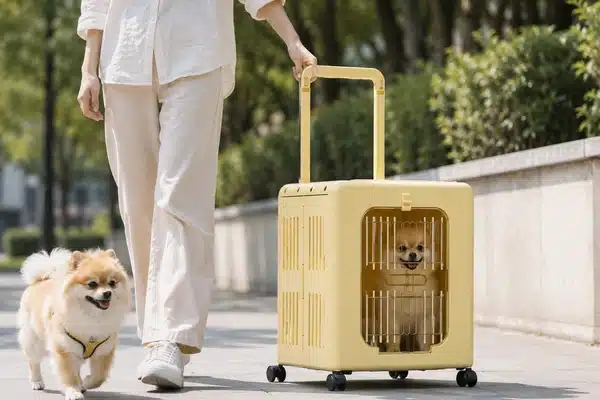
Make the crate familiar before the trip
If your dog has never used the crate before, don’t wait until travel day to introduce it.
Give your dog time to explore and use the crate at home first. A familiar crate can make a new environment less stressful.
Keep familiar items inside
A familiar blanket or toy can help the crate feel more recognizable when you’re staying somewhere new.
However, avoid overfilling the crate. Your dog should still have enough room to move and settle comfortably.
Think about transport conditions
When traveling by car, make sure the crate is positioned and secured appropriately for your setup.
Never leave your dog unattended in a vehicle under unsafe temperature conditions.
For longer journeys, plan appropriate opportunities for your dog to drink, relieve themselves, and stretch according to their needs and the travel situation.
Use the crate consistently at your destination
When you arrive at a hotel, vacation rental, or another temporary location, set the crate up in a calm area rather than immediately placing it in the busiest part of the room.
Keeping familiar routines can help your dog settle into the new environment more easily.
Dog crate alternative: Wireless dog fence
Frequently Asked Questions About Collapsible Dog Crates
How do I know what size collapsible dog crate my dog needs?
Choose a crate that allows your dog to stand comfortably, turn around, lie down, and stretch out. Measure your dog’s length and height before buying, and compare those measurements with the crate’s interior dimensions rather than relying only on weight recommendations.
How do I make my dog comfortable in a collapsible dog crate?
Use comfortable bedding, familiar toys or blankets, and place the crate in a calm area of your home. Avoid overcrowding the crate and make sure there is adequate ventilation. Positive experiences can also help your dog become more comfortable using the crate.
How do I get my dog used to a collapsible dog crate?
Start by leaving the crate door open and allowing your dog to explore it voluntarily. You can use treats, meals, toys, or praise to create positive associations. Gradually increase the amount of time your dog spends inside rather than forcing them to stay in the crate for long periods immediately.
Are collapsible dog crates good for travel?
Yes, a collapsible dog crate can be practical for travel because it can be transported and stored more easily than many non-collapsible designs. Before traveling, check that the crate is secure and undamaged, and give your dog time to become familiar with it beforehand.
How do I safely fold a collapsible dog crate?
Remove all bedding and other items, make sure your dog is outside, and follow the manufacturer’s folding instructions. Never force hinges, panels, or latches. After folding, inspect the crate for damage before storing it.
Where should I put a collapsible dog crate at home?
Place the crate in a calm, familiar area where your dog can still feel connected to the household. Avoid excessive noise, direct sunlight, drafts, and areas with heavy foot traffic. Make sure there is enough space around the crate to open the door and access it easily.
How often should I check a collapsible dog crate for damage?
Inspect the crate regularly, particularly if your dog uses it frequently or travels with it. Pay attention to the door, latches, hinges, connectors, frame, and mesh or wire sections. Any damaged or sharp component should be addressed before your dog uses the crate again.