Looking for the best dog toys for zoomies? If your dog randomly bolts around the yard at full speed, ears back, tail tucked, that’s the zoomies — vets call it a Frenetic Random Activity Period (FRAP). It’s completely normal, but the right toy can help your dog burn off that burst of energy safely instead of crashing into furniture.
| Toy Type | Best For | Why It Works |
|---|---|---|
| Flirt pole | Herding & sporting breeds | Mimics prey chase, burns energy fast |
| Tug rope | Supervised indoor play | Channels energy into push-pull instead of chaos |
| Fetch ball or disc | Open yards, parks | Full-body sprinting in a straight line |
| Tunnel or mini agility set | Small to medium dogs | Direction changes tire dogs faster than straight running |
Why Do Dogs Get the Zoomies?
For my Poopy, it’s almost always right after a bath — she comes out of the tub looking personally offended, and within about ninety seconds she’s rocketing around like the towel-drying was some kind of insult that can only be resolved by running very fast. Vets will tell you it’s a normal release of pent-up energy, not a behavior problem, and most dogs settle down as they get older. Some breeds, corgis apparently included, just never fully grow out of it.
I stopped trying to stop the zoomies a long time ago. These days my only goal is giving that energy somewhere safe to land before it turns into an indoor sprint through my coffee table.
Step 1: Catch the Trigger Early
Once you’ve lived with a zoomie dog for a while, you start noticing the pattern. Bath time is Poopy’s big one, but I’ve also caught her mid-launch first thing in the morning and right around dusk. Once you know your own dog’s usual window, you can have a toy ready to go before the energy actually spikes instead of scrambling after the fact.
Step 2: Pick a Toy That Matches the Energy
Flirt Poles
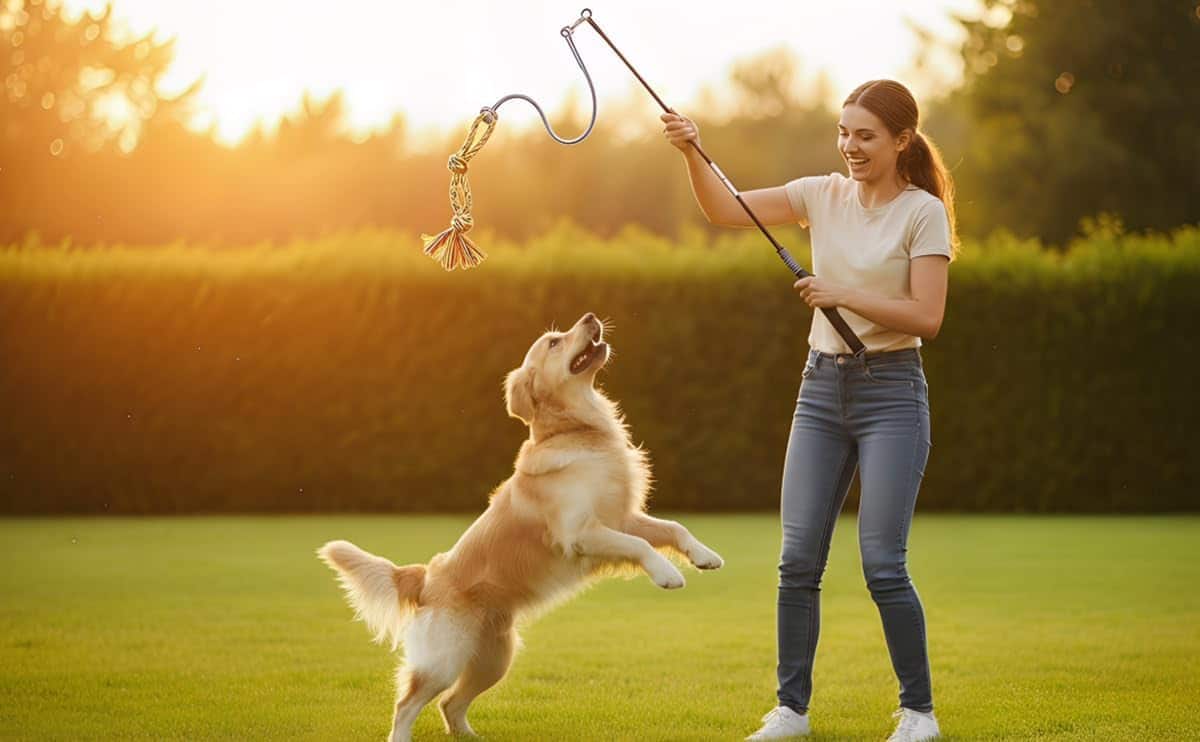
A flirt pole is essentially a giant cat teaser for dogs — a long pole with a lure on the end that you swing in circles. It’s one of the fastest ways to tire out a high-energy dog, combining sprinting with sudden direction changes.
- Keep sessions to 5–10 minutes — it’s more intense than it looks
- Best for herding breeds that love to chase
- Let your dog “catch” the lure occasionally so they don’t get frustrated
Durable Tug Toys
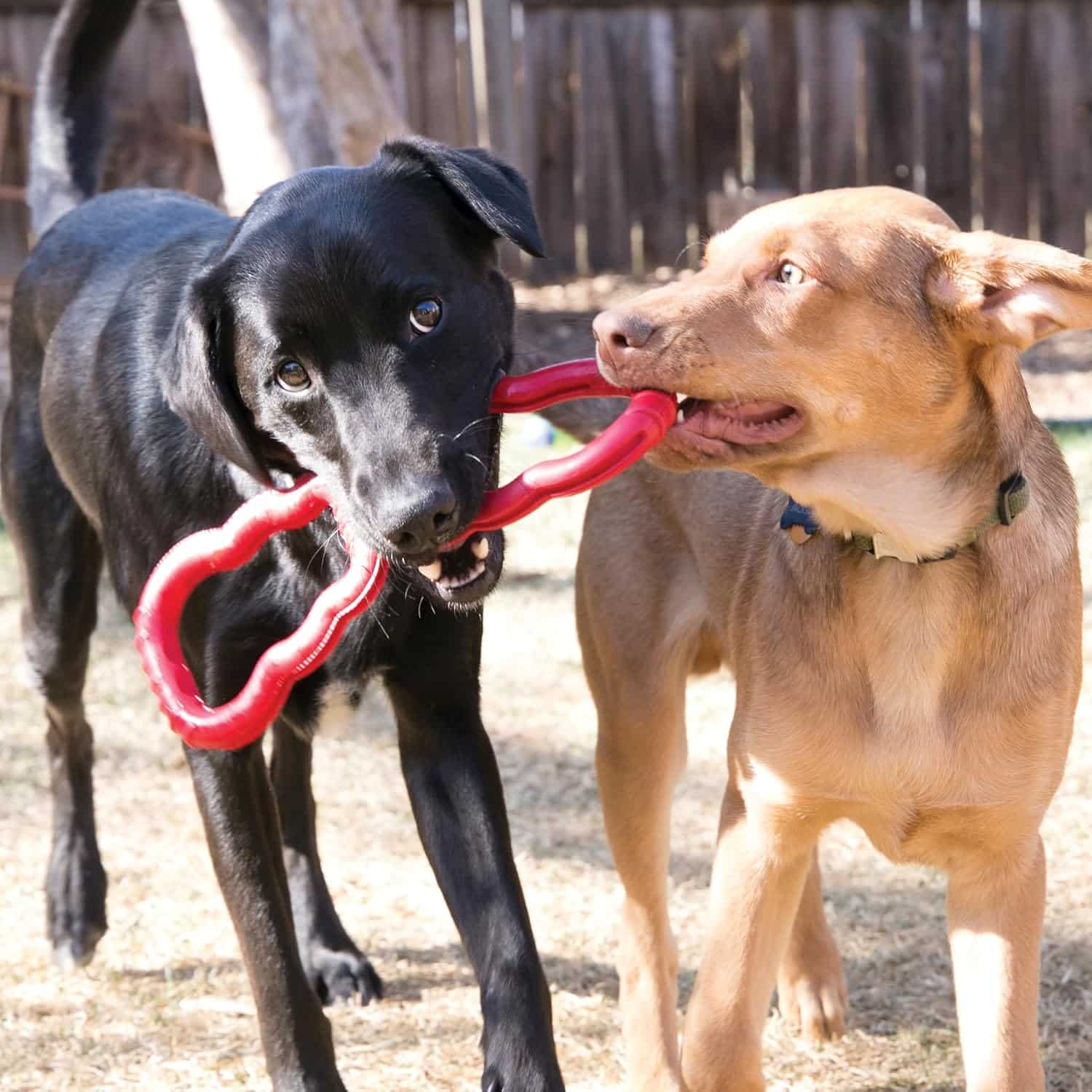
Tug play gives your dog a controlled outlet for the same energy that fuels zoomies. Look for a rope or rubber tug with two handles so you can play safely.
- Great for rainy days when outdoor play isn’t an option
- Teach a solid “drop it” cue before starting regular tug sessions
- If your dog shreds rope fibers fast, pair it with an indestructible dog toy
Try Kong tug toy – the most durable toys for dogs
Fetch Balls & Discs
Straight-line sprinting is one of the fastest ways to burn energy. A rubber ball or soft flying disc works well as a dog toy for zoomies in a yard or open field.
- Choose a size that matches your dog’s mouth — too small is a choking risk
- Soft discs are gentler on teeth and joints than hard plastic
- For dogs that love retrieving solo, an automated launcher can help fill the gap when you’re busy
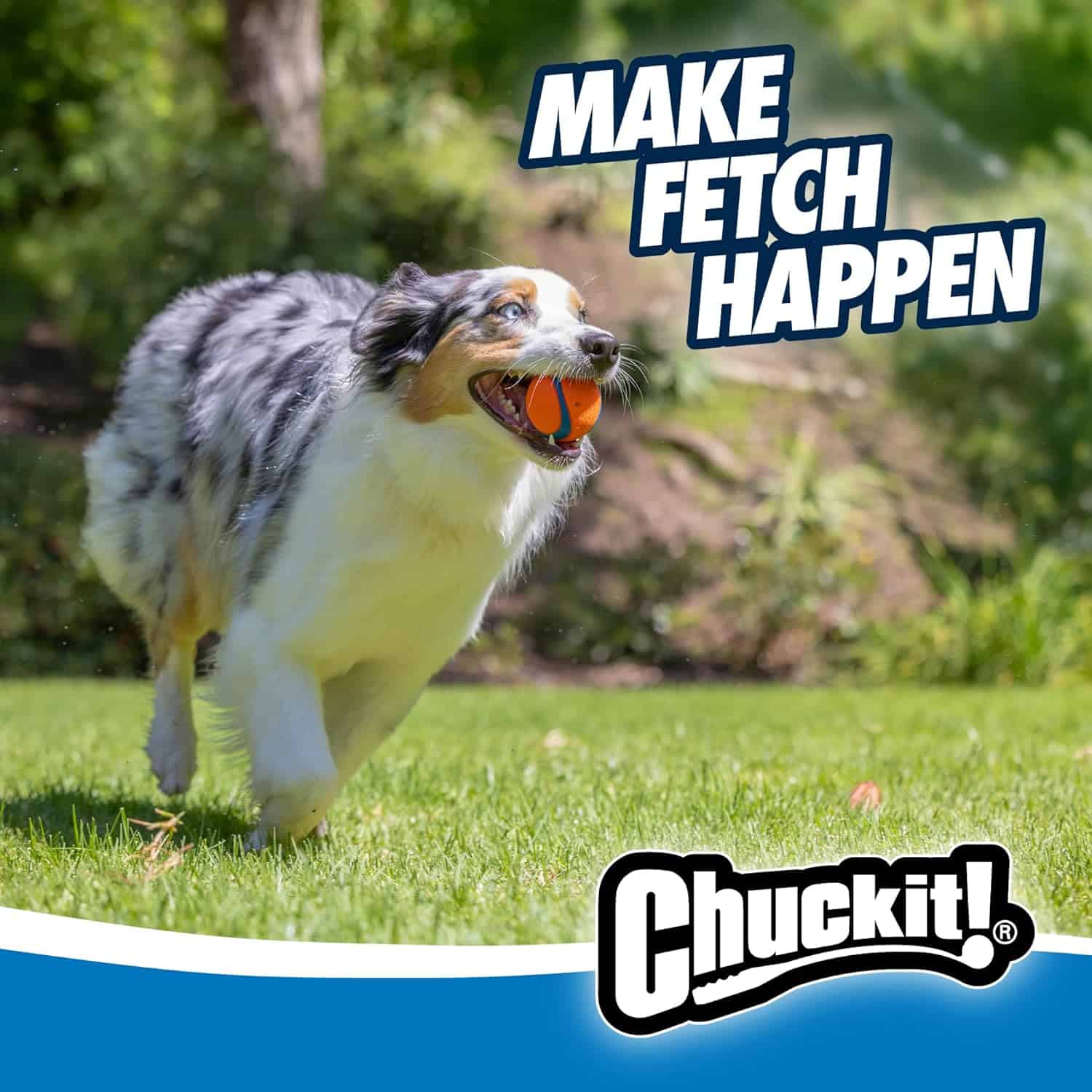
Try Chuckit!
Tunnels & Mini Agility Sets
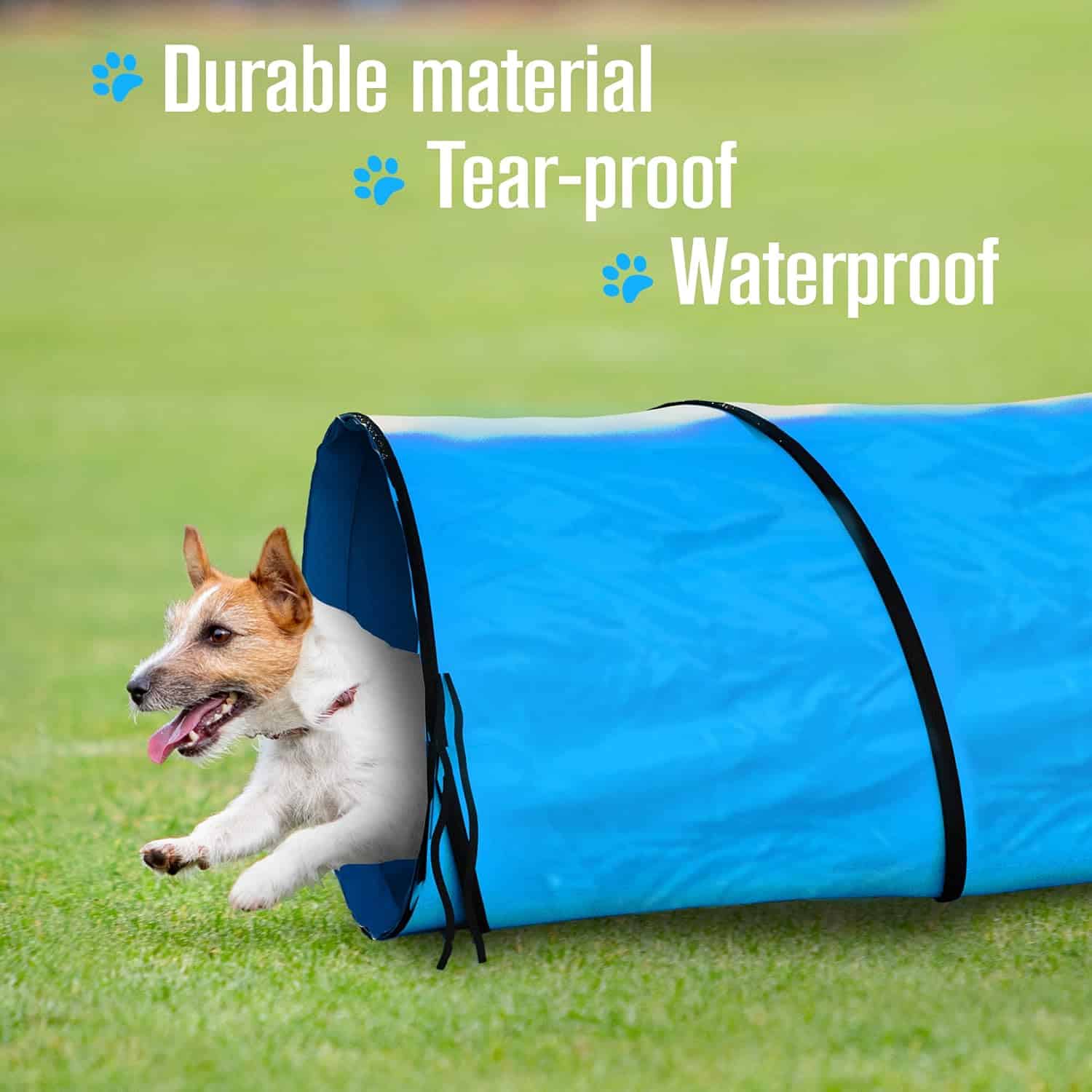
Adding turns and obstacles tires a dog out faster than running in a straight line, since it demands more coordination. A collapsible tunnel or a few weave poles works well in a smaller backyard.
- Good for yards too small for a flirt pole to swing safely
- Doubles as mental stimulation on top of physical exercise
- Store fabric tunnels away when unsupervised — they aren’t chew-proof
Step 3: Keep Sessions Short and Supervised
Safety Note: Flirt pole and tug play should always be supervised. These are guided-play tools, not toys to leave with your dog unattended.
I learned to skip anything with small removable parts or brittle plastic during a zoomies session after Poopy managed to pop a squeaker out of a toy mid-sprint once — a dog at full speed and full excitement is a lot more likely to bite down hard or swallow a piece by accident than a dog just lounging around with the same toy.
Step 4: Wind Down Afterward
I always follow an intense session with something calmer — a stuffed chew toy, or just quiet time on her bed near me. It genuinely helps her nervous system settle instead of staying keyed up for another hour, and it’s turned into a nice little ritual for both of us.
Do Zoomies Change by Age or Breed?
Puppies and adolescent dogs tend to get the zoomies far more often than seniors, simply because they have more raw energy and less impulse control. Some breeds also keep the habit longer than others.
| Life Stage / Breed Type | Typical Pattern |
|---|---|
| Puppies (under 1 year) | Frequent, often several times a day, usually short bursts |
| Adolescents (1–2 years) | Peak energy — this is often when zoomies are most dramatic |
| Adult working/herding breeds | Zoomies can persist into adulthood without enough structured exercise |
| Senior dogs | Much less frequent, shorter and slower when they do happen |
Free Games That Don’t Require Buying a Toy
If you want to redirect zoomies energy right now without a shopping trip, a few no-cost games work almost as well as a dedicated toy:
- Chase-and-freeze: jog a few steps, then stop suddenly and let your dog catch up — the unpredictability mimics a flirt pole’s effect
- Find it: toss a handful of kibble across the yard and let your dog sniff it out; sniffing burns mental energy alongside the physical activity
- Stairs or hills: a few minutes of up-and-down movement tires a dog out faster than flat-ground running
Tips: Toys can be dirty, learn how to wash dog toys and pick the best pet safe detergent for dog toys
Frequently Asked Questions
Are zoomies a sign something is wrong with my dog?
Not usually. Occasional zoomies are a normal release of energy or excitement. If they happen constantly, look distressed rather than playful, or come with other behavior changes, mention it to your vet.
What toy tires out a high-energy dog the fastest?
A flirt pole is generally the quickest option, since it combines sprinting with sharp turns — most dogs are noticeably calmer after just 5 to 10 minutes of play.
Can puppies get the zoomies?
Yes, and puppies tend to get them even more often than adult dogs. Keep sessions shorter and on softer surfaces, since puppy joints are still developing.
The Bottom Line
Zoomies are normal — the goal is giving that burst of energy somewhere safe to go. A flirt pole, a sturdy tug toy, or a simple game of fetch usually does the trick, and pairing physical play with mental stimulation keeps the energy from building right back up.
Want toys that also work your dog’s brain, not just their legs?
See our full roundup: Best Interactive Dog Toys →
I’m a dog owner sharing what’s actually worked for Poopy and me, not a certified trainer or a vet — if your dog’s zoomies come with anything that looks like real distress, a trainer or your vet will have better answers than I can offer here.