We’ve bought a genuinely embarrassing number of leashes over the years — a drawer full of them, if we’re being real about it. Most of those purchases happened because we didn’t understand what actually separated one type of leash from another, not because the first one we grabbed off the shelf was wrong for our dog.
If you’re trying to make sense of the different types of dog leashes, here’s the short version: each style exists to solve a different problem — control, distance, hands-free walking, or training. Picking the wrong one is usually why a leash “doesn’t work,” not anything actually wrong with your dog.
Dog Leash Types at a Glance
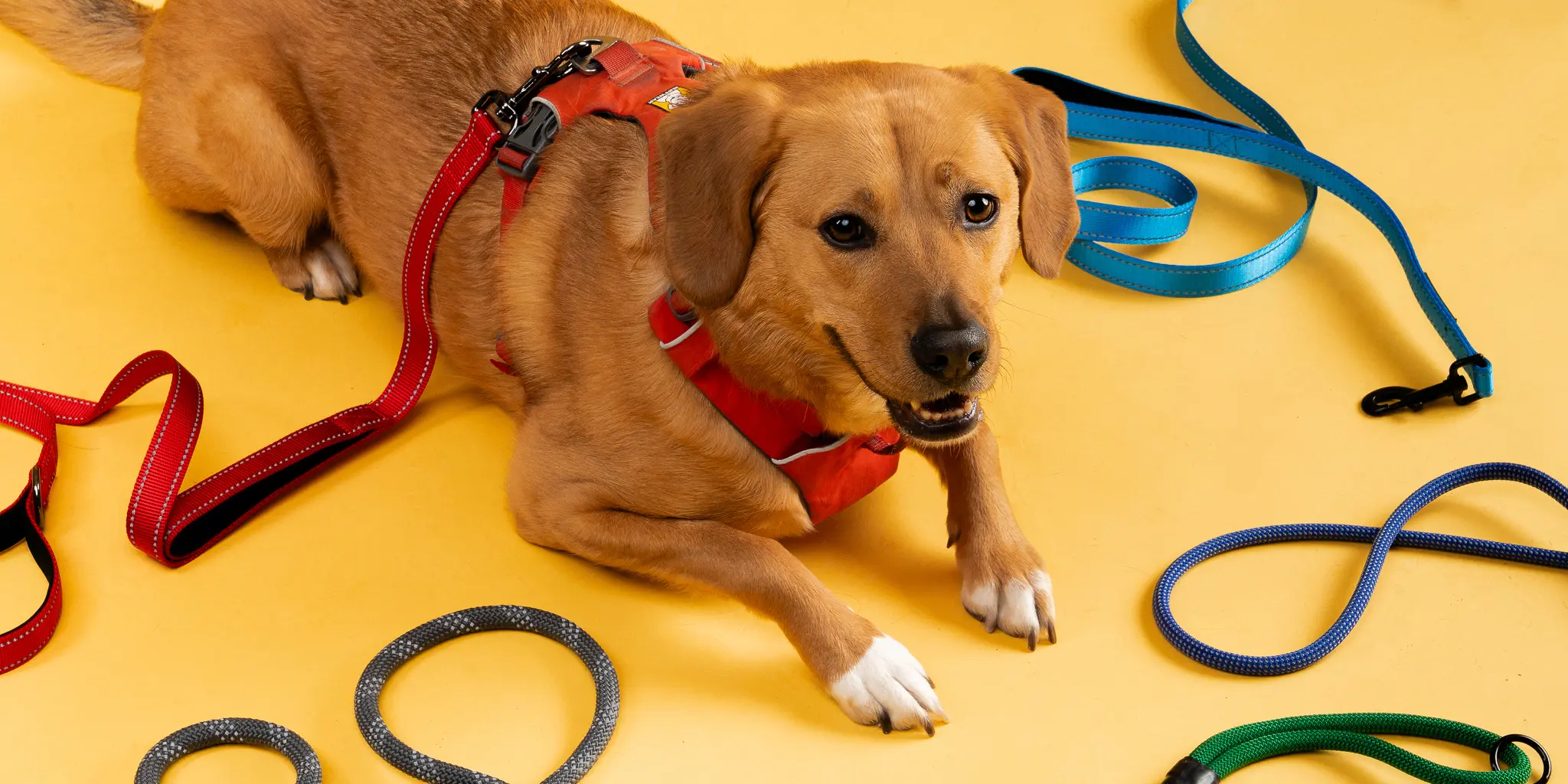
| Type | Best For | Watch Out For |
|---|---|---|
| Standard/fixed leash | Everyday walks, most dogs | Not much — this is the safe default |
| Retractable leash | Very controlled, open-space use only | Injury risk, less control near traffic or other dogs |
| Slip lead | Quick control, vet visits, groomers | Can tighten fully around the neck if misused |
| Martingale leash/collar combo | Dogs who can back out of a regular collar | Needs correct sizing to work as intended |
| Chain leash | Determined chewers who bite through fabric | Heavier, less comfortable to hold for long walks |
| Hands-free leash | Runners, hikers, multi-tasking dog parents | Less precise control than a hand-held leash |
| Long line/training leash | Recall practice, supervised off-leash-style freedom | Tangling risk, needs open space |
1. Standard (Fixed) Leash
This is the leash most people picture when they hear the word — a single length of material, usually 4 to 6 feet, with a handle on one end and a clip on the other. There’s a reason it’s the default for most dog parents: it gives consistent, predictable control without any moving parts to worry about. A 4-foot leash keeps a dog close through crowded sidewalks and busy vet waiting rooms, while a 6-foot version gives just enough extra room for sniffing without handing over real control. If you only ever own one leash, this is the one to own.
2. Retractable Leash
A retractable leash extends and retracts a thin cord or tape from a plastic handle, letting a dog range out further and then reel back in on demand. It sounds convenient, and in a wide-open, low-traffic field, it genuinely can be. We’d still steer most people away from making it their everyday leash, though.
The problems tend to show up in the same places every time. The thin cord can cause real cuts or rope-burns if it wraps around a leg — yours or your dog’s — and the mechanism gives noticeably less immediate stopping power than a fixed leash does. A dog at the far end of fifteen feet of slack is also just harder to pull back fast if something goes sideways near a road or another dog. The American Veterinary Medical Association has published general dog-walking safety guidance that touches on exactly this control-versus-distance tradeoff, and it’s worth a skim if you’re on the fence.
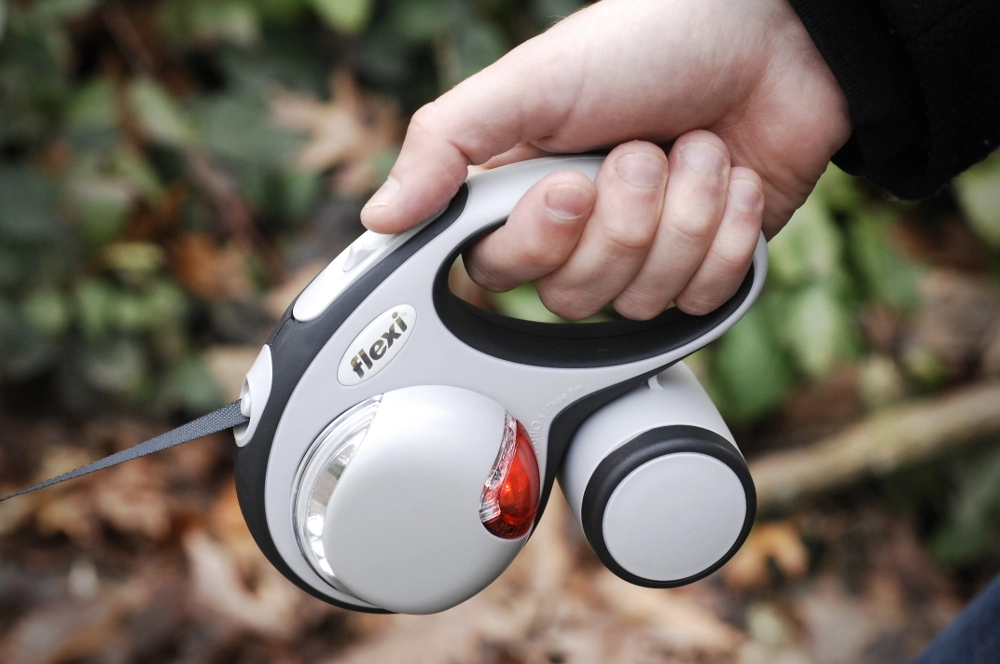
If you do use one: reserve it for wide open spaces away from traffic, other dogs, and other people — not sidewalks, trailheads, or anywhere a fast reaction actually matters.
3. Slip Lead
A slip lead is a single loop of rope or fabric that acts as both collar and leash at once — no separate collar, no buckle, just a loop that tightens slightly under tension and loosens once it’s off. Vet clinics, shelters, and groomers lean on these constantly, mostly because they’re fast to put on and take off with a dog you may not know well.
That speed is the whole point, and also the reason we wouldn’t recommend one as a dog’s everyday, unsupervised leash. Positioned wrong — sitting low on the neck instead of high, right behind the ears — it can tighten more than intended, which isn’t something you want happening without you watching closely.
4. Martingale Leash and Collar Combo
Martingale setups pair a leash with a two-loop collar that tightens slightly, never all the way if it’s fitted correctly, whenever a dog pulls back against it. The whole design exists to stop a dog from backing straight out of a regular collar mid-walk. Sighthounds and other narrow-headed breeds are the textbook case, but honestly, any escape-artist dog benefits from one. The catch is that fit does all the work here — sized correctly, it tightens just enough to prevent an escape without ever choking; sized wrong, in either direction, it fails at the one job it’s meant to do.
5. Chain Leash
A metal chain leash solves one specific, fairly narrow problem: dogs who chew straight through fabric or nylon leashes, sometimes mid-walk, sometimes while just standing around bored. It’s not comfortable to hold over a long distance, and it’s heavier than most first-time buyers expect. But for a genuinely determined chewer, it’s about as close to indestructible as a leash gets, and that trade-off is worth it for the specific dogs who need it.
6. Hands-Free Leash
These clip to a waist belt or run across the body, freeing up both hands for running, hiking, or just carrying groceries without juggling a leash handle the whole way home. Some include a bit of built-in bungee stretch that softens sudden pulls mid-run, which matters more than you’d think once you’re actually moving at a jog. What you give up is precision — hands-free is great for open trails and steady pace, less great for tight, unpredictable moments where you want instant, exact control.
7. Long Line or Training Leash
A long line is exactly what it sounds like: a lightweight leash running anywhere from 15 to 50 feet, used for recall training and for giving a dog room to explore while you still hold a physical line of control if you need it. This isn’t a walking-around-the-block leash — it’s a training and open-field tool, and it works best in wide grassy areas without a lot of trees, poles, or other dogs to tangle around. Watch where the slack goes; that’s the entire skill of using one well.
Material Comparison: Nylon vs. Leather vs. Biothane
| Material | Pros | Cons |
|---|---|---|
| Nylon | Affordable, widely available, lots of colors | Can fray over time, holds odor if it gets wet often |
| Leather | Comfortable grip, softens and improves with age | Needs occasional conditioning, pricier upfront |
| Biothane | Waterproof, wipes clean instantly, doesn’t fray | Can feel stiff at first; pricier than basic nylon |
How to Actually Choose
Start with what your walks actually look like, not what looks impressive on a shelf. Sidewalk strolls, trail hikes, and backyard training sessions all call for a different leash, and there’s no single option that does all three well. From there, match the leash to your dog’s specific habits rather than their general size — a chewer needs chain or heavy-duty material regardless of whether they’re 15 pounds or 80, and an escape artist needs a martingale setup, not just a bigger, thicker leash. Most households genuinely only need two leashes in rotation: one standard leash for daily walks, and whichever specialty option solves that one specific quirk your dog has.
If your dog has a history of aggressive pulling, reactivity, or escaping collars and leashes, it’s worth working with a certified trainer alongside any equipment change — the right leash helps, but it isn’t a substitute for training.
Read more: How a dog slow feeder help your dog?
Frequently Asked Questions
Are retractable leashes bad for all dogs?
Not inherently, but the risk profile runs higher than a standard leash — thin-cord injuries, slower reaction time, and less control near hazards. They make more sense in wide open, low-traffic spaces than as an everyday walking leash.
What’s the difference between a slip lead and a martingale?
A slip lead is a single loop acting as both collar and leash, mainly meant for quick, temporary use. A martingale is a two-loop collar design, usually paired with a separate leash, built for daily wear on dogs prone to backing out of a standard collar.
What leash length is best for training?
A standard 6-foot leash covers most obedience basics just fine, while a long line — 15 to 30 feet — works better for recall practice and giving a dog more freedom in open, safe areas.
Do I need a different leash for a puppy?
Not necessarily a different type, but a lighter-weight version of a standard leash tends to be more comfortable for a puppy still learning what leash pressure even means, compared to a heavy chain or thick leather leash.
Got a dog with more energy than your leash routine can handle?
Check out our guide to interactive dog toys for extra ways to burn it off, or our breakdown of Wireless dog fence if you’re exploring off-leash containment options too.
We’re dog owners, not certified trainers — if your dog has a history of aggressive pulling, reactivity, or escaping collars and leashes, a certified trainer alongside any equipment change will get you further than we can from here. The right leash helps, but it isn’t a substitute for training.