No digging, no posts, no installation crew, and no weekend lost running wire around the yard. A wireless dog fence is a radio-based containment system that creates an invisible circular boundary around a central transmitter — your dog wears a receiver collar that beeps, then delivers a mild static correction when they approach the edge. You can have the whole thing running in under an hour.
That appeal is real. So are the limitations. This guide covers exactly how the technology works, where it falls short, what to look for when buying, and whether it suits your dog and property.
How a Wireless Dog Fence Works
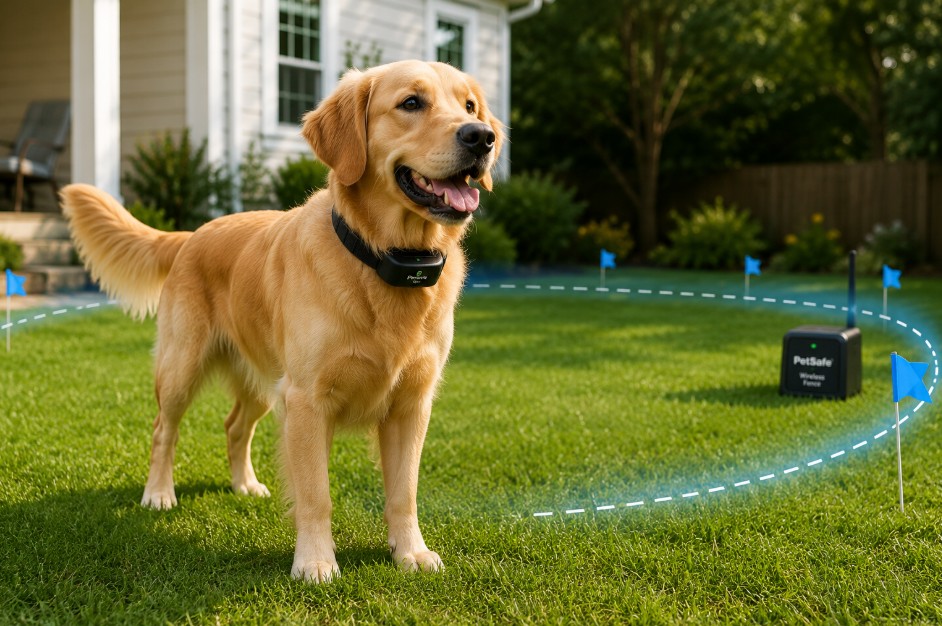
The system has two components: a transmitter that sits indoors, and a receiver collar your dog wears. Understanding what each piece does explains both the strengths of the system and why it fails in certain situations.
The Transmitter
The transmitter plugs into a standard outlet and emits a continuous radio signal in all directions. Because the signal radiates evenly, the boundary is always a circle. You dial in how far it extends — most units adjust from roughly 90 to 200 feet in radius depending on the model, covering roughly half an acre to just over an acre at maximum range. Real-world performance in typical residential conditions is consistently less than the advertised figure.
The Receiver Collar
The collar constantly reads the signal strength from the transmitter. When your dog is well inside the yard, nothing happens. As they move toward the edge, the signal weakens. When it drops below a set threshold, the collar issues an audible warning tone. If your dog keeps moving, it delivers a brief static correction.
The correction is adjustable — most systems offer 4 to 8 levels. A small, sensitive dog may only need level 1 or 2. A stubborn large breed may need a higher setting. The static correction is not a shock — it is a brief, startling sensation comparable to a doorknob static. The goal is to interrupt the behavior, not cause pain.
What Happens at the Boundary
The sequence is: warning tone, pause, then static correction if the dog continues. With proper training, most dogs eventually turn back at the tone alone without ever needing the correction. The system works on conditioned response — your dog learns that approaching the flags means a beep, and retreating makes it stop.
The Signal Interference Problem
This is the most important technical limitation of every wireless dog fence: the radio signal is disrupted by physical obstacles. Slopes change how the signal distributes across the yard unevenly. A house wall, a large shed, dense tree lines, or underground metal can create dead zones where the collar receives no correction — or hot spots where it fires well inside the yard. This is not a product defect; it is how radio signals behave around physical mass. If your property is not relatively flat and open, a wireless fence will not produce a consistent boundary.
Training Is Required
A wireless dog fence does not work the moment you plug it in. Without training, your dog has no idea what the beep means or why they should turn around. A deliberate training period of 2 to 4 weeks is required, and that work falls entirely on the owner. The setup section covers the full process.
Wireless vs. Underground vs. GPS: Which Is Which
These three types of electronic dog containment use different technology, work differently, and suit different situations. Here is a clear comparison.
Wireless (Radio)
A wireless electric dog fence uses a radio signal from an indoor transmitter. The boundary is circular and cannot be customized. Setup takes under an hour. The signal is affected by terrain, structures, and interference. It is the fastest and cheapest of the three — and the most limited in flexibility.
Try PetSafe wireless dog fence
Underground (In-Ground Wire)
An underground fence uses a buried wire you lay around the exact perimeter you want. You can shape it around garden beds, driveways, or any section of the yard. Signal is consistent because the wire is the source. Setup requires digging a shallow trench and burying the wire — significant work upfront, but more reliable and shapeable than any wireless system.
GPS Fence
A GPS fence uses satellite positioning. You draw a boundary on a smartphone app, and the collar tracks your dog’s coordinates relative to that shape. No transmitter, no wire. Works anywhere with satellite visibility, any boundary shape. The collar is larger and heavier, accuracy varies by conditions, and these systems cost significantly more than wireless or underground options.
| Type and How It Works | Best For |
|---|---|
| Wireless (radio) — Indoor transmitter emits a circular radio signal; collar detects signal strength as the dog approaches the boundary edge | Renters, frequent movers, flat open yards, owners who want quick setup without installation |
| Underground (wire) — Buried perimeter wire carries a signal; collar detects proximity to the wire wherever it runs | Homeowners with irregular yard shapes, consistent terrain, willing to invest in installation for long-term reliability |
| GPS — Satellite positioning tracks the collar against an app-defined boundary of any shape | Large rural properties, situations where terrain rules out other options, owners with flexible budgets |
Who Should Choose Wireless
A wireless dog fence makes the most sense if you rent and cannot dig, if you move homes frequently, if your yard is flat and roughly circular, or if you want to test electronic containment before committing to underground installation. It also packs well for travel — you can set up a temporary boundary at a new location in minutes, which no buried-wire system can match.
Limitations of Wireless Dog Fences
These systems work well when they match the property and the dog. They fail badly when they do not. Here are the real limitations before you spend money.
1. Circular Boundary Only
You cannot shape a wireless dog containment system boundary. If your driveway cuts through the yard, the fence will either exclude a section of usable yard or include the driveway. If you want to keep your dog out of a garden bed, a wireless fence cannot do that. The circle is fixed, centered on the transmitter — that is the only shape available.
2. Terrain Sensitivity
This is the most common cause of wireless fence failure in real-world use. Any meaningful slope or rise changes how the signal distributes across the yard. A property with even a moderate incline may have inconsistent correction zones — your dog passes the boundary on one side with no correction, while getting corrected ten feet inside on the other. Walls, physical fences, metal-sided buildings, or dense tree lines create similar problems. Before purchasing, walk your property and honestly assess how flat and open it is.
3. Not a Physical Barrier
A wireless fence keeps your trained dog in. It does not stop anything from coming in. Other dogs, wildlife, and visitors are all unaffected. Your dog can also bolt through the boundary when triggered by a squirrel or another dog. A dog who bolts out is then outside the boundary and may refuse to cross back in because the collar corrects them again from that direction. This is known as boundary reversal.
4. Not All Dogs Are Good Candidates
Some dogs push through the correction regardless of level. Huskies, Beagles, and other high-drive breeds are frequently cited, but individual temperament matters more than breed. A highly motivated dog will accept the correction as the cost of getting to whatever they want. These dogs are not suitable candidates.
Dogs with fear or anxiety issues can be made worse by a correction they do not understand. Puppies under 6 months should not use these systems — their developing brains cannot reliably make the behavioral association, and repeated unexpected corrections at this stage can cause lasting problems. Dogs with aggression issues are also a poor fit — a correction near the boundary while a trigger is present on the other side can intensify reactivity rather than contain the dog.
5. Collar Maintenance
The receiver collar needs a working battery at all times. A dead battery provides no containment, and batteries die gradually — your dog may have been running free for hours before you notice. Build battery checks into your regular routine.
6. Multiple Dogs
Most wireless fence systems ship with one collar. Each additional dog requires an additional collar, typically sold separately at $40 to $150 depending on the brand. Factor that into the total cost when comparing systems.
What to Look for When Buying a Wireless Dog Fence
Once you have decided wireless suits your situation, these are the specifications that actually matter.
1. Coverage Area
Manufacturers advertise maximum range. Real-world range in typical residential conditions is often 15 to 25 percent less. If you need half an acre, look for a unit rated at three-quarters of an acre or more. Also check whether the spec is a radius or total area — some brands advertise the radius, which makes coverage sound larger than the area figure would suggest.
2. Adjustable Correction Levels
A small, sensitive dog needs a mild setting — a high level would be distressing and counterproductive. A large, stubborn breed may need a higher setting to reliably turn back. Look for at least 5 correction levels. Premium units include a tone-only mode, useful during training and for dogs who respond to the audio warning alone.
3. Waterproof Collar
Dogs get wet. The collar needs to be fully waterproof, not just splash-resistant. IP67 rating means waterproof to one meter for 30 minutes — a reasonable standard for outdoor use. If your dog swims regularly, confirm the rating specifically covers submersion.
4. Battery Type
Rechargeable collars are more convenient over time and cheaper to run. Replaceable batteries are useful for travel. Higher-end models offer rechargeable collars with a charging dock, which makes daily battery management significantly easier.
5. Multiple Collar Support
Verify that additional collars are available and compatible with the transmitter you are considering. Check the price of add-on collars before buying — some brands charge substantially more than others, and a two-dog household’s total cost can shift the comparison considerably.
6. Signal Consistency
This is hard to verify from a spec sheet. Read user reviews specifically for mentions of inconsistent boundaries, random corrections in the middle of the yard, or noticeably different boundary zones on opposite sides of the property. Reviews that specify terrain type — flat yard, moderate slope, near a structure — are the most useful comparisons.
7. Training Support Materials
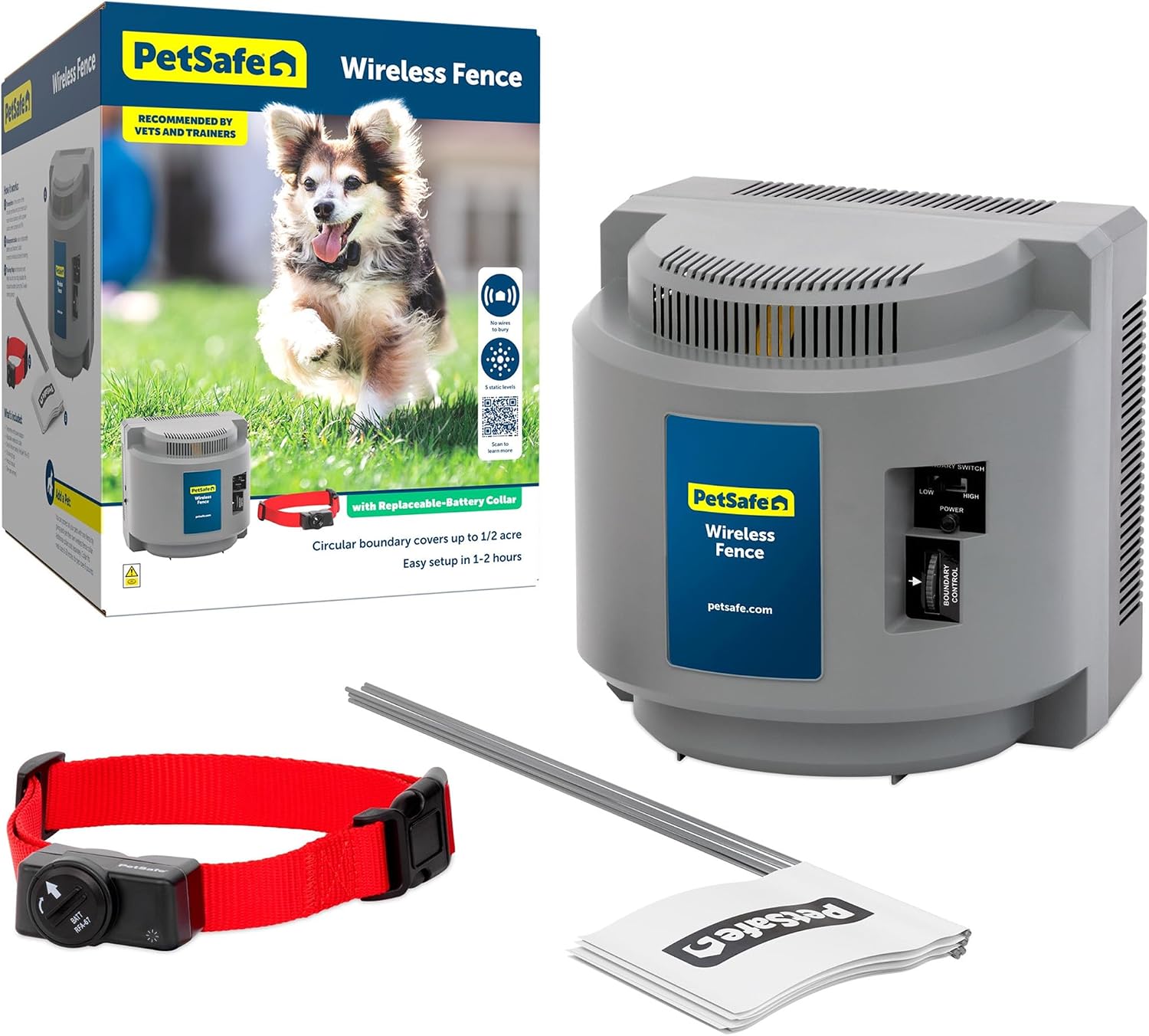
Units that include boundary flags and a written training guide are better for first-time users. The flags are not decorative — they are the visual markers your dog needs to associate with the boundary during training. If a system does not include them, buy a set separately before you start.
8. Brand Reliability
PetSafe, SportDOG, and Extreme Dog Fence are the most widely used brands with consistent parts and collar availability. This matters for long-term ownership — a transmitter you buy today may run for years, and you will want to replace a failed collar without replacing the entire system. Generic or white-label units at very low prices carry more risk here.
Setting Up and Training Your Dog
Setting up the hardware takes under an hour. Training is where the time goes, and it cannot be rushed without undermining the system’s reliability.
Step 1: Place the Transmitter and Test the Boundary
Place the transmitter centrally in your home — at the geographic center of your property, not pushed against an exterior wall. A central position gives the most even coverage. Plug it in, set the radius, then walk the boundary yourself carrying the receiver collar. Note where it beeps and check for gaps or hot spots around the full perimeter. Adjust the radius and recheck until the boundary is consistent with your intended containment area.
Step 2: Mark the Boundary with Flags
Place training flags at the boundary line, roughly every 8 to 10 feet. These are your dog’s visual reference point during training. Leave them up for the full training period — dogs learn the boundary location through the flags first, and removing them early slows the process.
Training Weeks 1 and 2: On-Leash Introduction
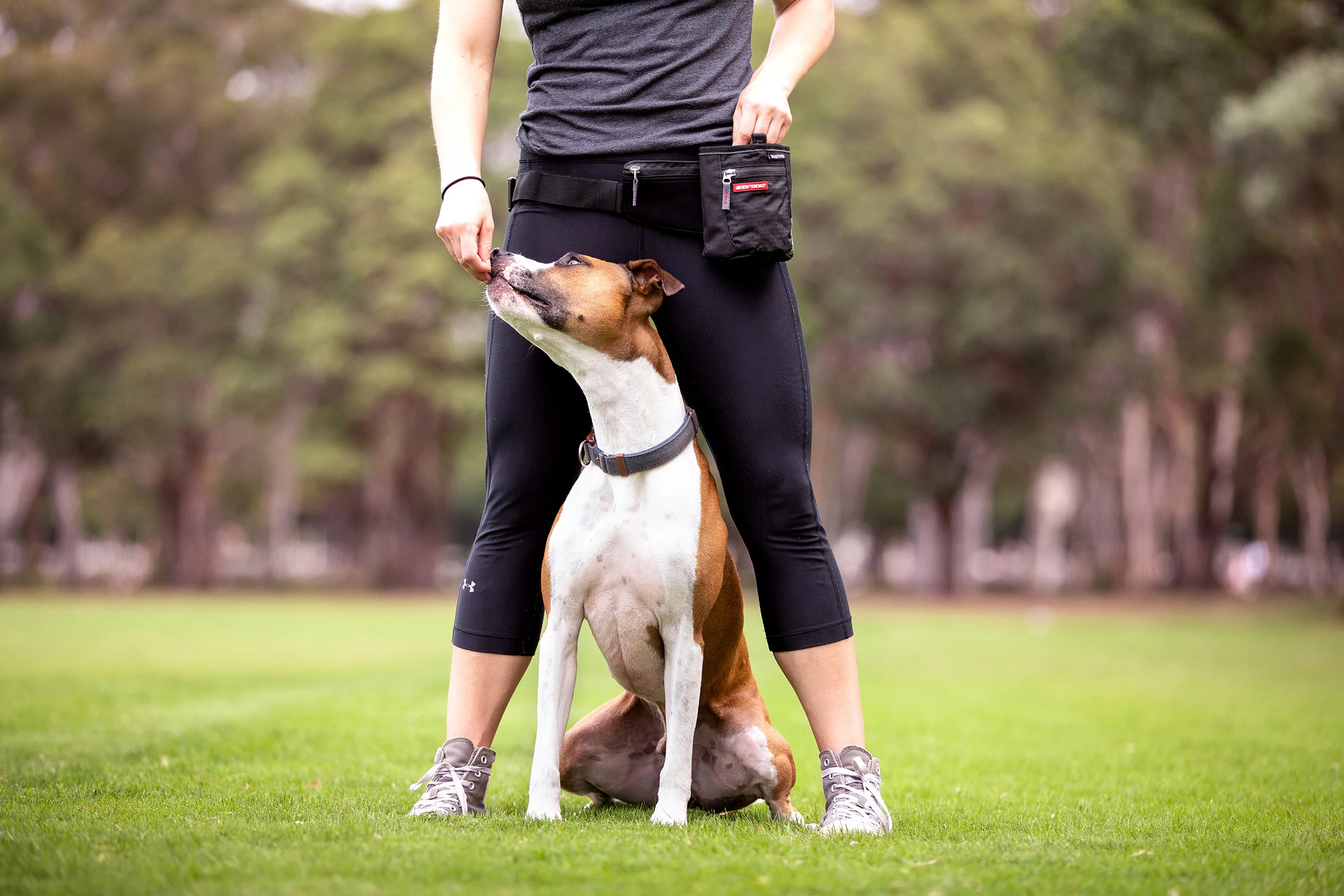
Walk your dog on a 6-foot leash inside the boundary, letting them explore freely. Then walk toward the flags. When the collar beeps, redirect your dog cheerfully back toward the center and reward with praise, a treat, or play. Keep sessions to 10 to 15 minutes, two or three times a day. The goal is a simple association: the beep predicts turning back, and turning back means something good.
Training Weeks 3 and 4: Longer Lead
Switch to a 20- to 30-foot long lead. Let your dog approach the boundary more freely on their own. When the collar beeps, watch for them to self-correct. Reward every instance they turn back without a prompt. If they push through, calmly return them inside and reward the return — never punish a crossing. The collar handles the consequence; adding punishment creates confusion.
Week 4 and Beyond: Supervised Off-Leash
Begin off-leash sessions with you present in the yard. Do not leave your dog unsupervised until you have observed consistent boundary respect across multiple sessions. Transition to unsupervised time gradually rather than immediately once the leash comes off.
Signs Training Is Working
Training is working when your dog self-corrects at the warning tone alone — approaching the flag line, hearing the beep, and voluntarily turning back without receiving the static correction. Most dogs reach this point within 2 weeks of consistent training. High-drive or stubborn breeds may take 4 or more weeks. Some individual dogs never reach reliable containment, which is information worth discovering during supervised training rather than afterward.
Is a Wireless Dog Fence Right for Your Dog?
Here is a direct summary for different situations.
Good Candidates
A best wireless dog fence setup works well for medium to large breeds with moderate temperament on a flat, open property, where the owner has 2 to 4 weeks to invest in training. Dogs who are food-motivated, respond well to redirection in everyday life, and show no high prey drive or history of escape behavior are the best candidates. If your dog reliably recalls and respects “no” in other contexts, they are significantly more likely to respond to the collar boundary.
Not Good Candidates
Determined escape artists are not good candidates — a motivated dog will push through a static correction to get what they want, and the fence provides no physical barrier. Very reactive dogs, dogs with significant anxiety, and dogs with any aggression history should not use static correction containment without guidance from a certified trainer who has assessed the individual dog.
Huskies, Beagles, Belgian Malinois, and other working or hunting breeds with strong independent drive are frequently cited as unreliable candidates. This is not absolute — individual temperament varies — but these dogs require honest assessment before you rely on containment that depends on the dog’s willingness to accept discomfort rather than a physical obstacle.
Small Dogs and Collar Fit
Most standard receiver collars are designed for dogs in the 8 to 100-pound range. For dogs under 8 to 10 pounds, a standard collar may be uncomfortable and sit poorly on a small neck. Look specifically for lightweight collar options when buying for a small breed, and verify the manufacturer’s minimum weight recommendation. The contact points also need direct skin contact — a small dog with a thick coat may have trouble with consistent contact without the collar being too tight.
The Bottom Line
A wireless dog fence is a genuinely useful tool when it matches the situation. For a renter with a flat, open yard who needs quick containment for a calm, trainable medium or large breed, it is hard to beat on simplicity and upfront cost. Set it up in an afternoon, train your dog over a few weeks, and you have a usable yard without digging a single hole.
Where these systems fail, they often fail quietly — not obvious until after you have spent money, finished training, and started relying on the boundary. A high-drive dog who bolts through, an irregular yard that cannot fit a circle, or a sloped property with signal gaps can make the system useless or actively misleading. Be honest about both your yard and your dog before committing.
If wireless does not fit, underground wire gives you a shaped boundary and consistent signal at the cost of installation effort. A GPS fence removes terrain constraints entirely but costs more and requires diligent collar management. The right containment option exists for most situations — not every situation calls for wireless.
Frequently Asked Questions
Do wireless dog fences actually work?
Yes, for the right dog and the right property. These systems deliver reliably when the dog is a suitable temperament candidate, the property is flat enough for consistent signal distribution, and the owner completes the training process. They fail — sometimes completely — when any of those three conditions are missing. The technology works; the question is whether it is the right match for your situation.
Can a wireless dog fence work through walls?
The radio signal passes through most standard building materials, which is why an indoor transmitter works at all. However, thick concrete, brick, metal siding, and large metal structures significantly reduce signal strength. The result is an uneven boundary — noticeably smaller on the side near a large structure versus the open side. Walk the boundary with the collar before involving your dog to identify any inconsistencies on your property.
How do I stop my dog from running through the wireless fence?
First, verify the correction level is appropriate — not so low it goes unfelt, not so high it causes panic. Then revisit training. A dog who runs through is almost always one whose training was rushed or incomplete. Extended on-leash boundary work with consistent positive reinforcement for turning back resolves most cases. If the dog continues through despite correct settings and full retraining, a wireless fence is not the right tool for that dog — underground wire, a physical fence, or a GPS system are the alternatives.
Are wireless dog fences cruel?
The static correction is a brief, startling sensation — not a sustained shock. Used at appropriate levels with proper training, these systems do not cause physical harm. The welfare concern worth taking seriously is a dog who receives repeated corrections without understanding why, which is an argument for completing training correctly. A well-trained dog who self-corrects at the warning tone and rarely receives the static is in a very different situation than one receiving random corrections due to signal inconsistency.
Can I use a wireless dog fence in an apartment?
Not in the standard way. A wireless fence creates a circular boundary centered on the transmitter — in an apartment, that boundary extends into neighboring units and common areas. The system is designed for single-family outdoor use. For a small private patio or terrace, a short underground wire loop or a physical barrier is the appropriate solution.
How far does a wireless dog fence signal reach?
Most consumer systems advertise a maximum radius of 90 to 200 feet, translating to roughly 0.5 to 1.2 acres of total coverage. In ideal conditions — flat, open ground — real-world range is close to the advertised figure. In typical residential conditions with structures and terrain variation, expect 15 to 25 percent less. Most transmitters also adjust to a smaller radius for compact yards.
What happens if the power goes out?
If the transmitter loses power, the signal stops and the collar provides no correction. Your dog is uncontained, and most systems have no battery backup on the transmitter side. A power outage, tripped breaker, or unplugged cord means the fence is down until power is restored. If this is a concern, an underground fence (which can run on a battery backup unit) or a physical fence is more resilient.