You went in for a routine checkup. The vet placed your dog on the scale, checked the chart, pressed gently along their ribs, and then said the words you weren’t fully prepared for: “Your dog is overweight, and they really need to lose some weight.” Maybe there was a mention of joint pain down the road, or diabetes risk, or just a shorter life. And then the appointment ended, you paid at the front desk, and you walked out with a pamphlet — but no real plan.
The best weight loss dog food is one formulated specifically for active caloric restriction: high in protein and fiber, lower in fat and calorie density, designed to keep your dog full while creating the deficit they need to safely shed body fat. But the food is only part of the answer — how much you feed, how often, and how you track progress matters just as much. This guide gives you the complete plan your vet visit probably skipped.
Quick Answer: Weight Loss Dog Food at a Glance
- Weight loss dog food works by reducing calorie density while maintaining complete nutrition — you cannot safely just feed less of a regular maintenance formula.
- The safe rate of weight loss in dogs is 1–2% of body weight per week — faster than that risks muscle loss and nutritional deficiency.
- Prescription diets (Hill’s r/d, Royal Canin Satiety Support, Purina Pro Plan OM) are the gold standard for dogs with BCS 7+/9 or those with related health conditions.
- Over-the-counter “light” formulas can work for mildly overweight dogs, but calorie density varies wildly — always compare kcal per cup, not the brand claim on the bag.
- Diet drives weight loss; exercise preserves lean muscle during the process. Both matter, but food is primary.
Is Your Dog Actually Overweight? Body Condition Score Explained
Before you change a single thing about what your dog eats, you need to know where they actually stand. The number on the scale alone tells you surprisingly little. A 65-pound Labrador at an ideal weight and a 65-pound Lab who is genuinely obese can look like the same dog to an untrained eye — and feed them identically, and you’ll get very different results.

The tool veterinarians use is called the Body Condition Score (BCS). It’s a 9-point scale that assesses fat coverage and muscle mass based on what you can feel and see, not just what the scale says. Here’s how each range breaks down:
| BCS Score | What It Means |
|---|---|
| 1–3 | Underweight — ribs, spine, and hip bones visible from a distance; no fat covering; severe muscle loss possible |
| 4–5 | Ideal — ribs easily felt but not seen; visible waist from above; abdominal tuck visible from the side |
| 6 | Overweight — ribs felt with firm pressure; waist still visible but reduced; slight abdominal fat |
| 7–8 | Obese — ribs difficult to feel under heavy fat; no waist visible from above; abdomen rounded or sagging |
| 9 | Severely obese — ribs not palpable; massive fat deposits over chest, spine, and base of tail; no waist or abdominal tuck |
How to Assess BCS at Home
You do not need a vet to do a rough BCS check. Use these three physical tests:
- The rib check: Place both thumbs on your dog’s spine and spread your fingers across the ribcage. In an ideal-weight dog, you should feel each rib with light pressure — like pressing on the back of your hand. If you need to press firmly to feel anything, there is significant fat covering. If ribs are immediately visible without any touching, the dog is underweight.
- The waist check from above: Look down at your dog from directly above. An ideal dog has a visible narrowing behind the rib cage — an hourglass shape. An overweight dog looks more like a rectangle or oval. An obese dog may appear wider at the belly than at the chest.
- The abdominal tuck from the side: View your dog from the side. The belly should rise upward from the base of the rib cage toward the hind legs. If the abdomen hangs level or droops, this is a strong indicator of excess abdominal fat.
How Much Should Your Dog Weigh? Calculating Target Weight
Before you can figure out how much to feed your dog, you need a target. That means estimating your dog’s ideal lean body weight — what they should weigh at BCS 4–5.
Estimating Ideal Body Weight from BCS
Veterinary nutritionists use a simple formula based on current weight and BCS. The logic is that each BCS point above 5 represents roughly 10–15% excess body weight.
- BCS 6: Current weight is approximately 10–15% above ideal. Divide current weight by 1.10–1.15.
- BCS 7: Current weight is approximately 20–30% above ideal. Divide current weight by 1.20–1.30.
- BCS 8: Current weight is approximately 30–40% above ideal. Divide current weight by 1.30–1.40.
- BCS 9: Current weight is 40%+ above ideal. A vet-guided calculation is strongly recommended.
Worked examples:
- Small dog: A 20 lb Beagle at BCS 7. Estimated ideal weight: 20 ÷ 1.25 = approximately 16 lbs. Goal: lose 4 lbs.
- Medium dog: A 55 lb Cocker Spaniel mix at BCS 8. Estimated ideal weight: 55 ÷ 1.35 = approximately 41 lbs. Goal: lose roughly 14 lbs.
- Large dog: A 95 lb Labrador at BCS 7. Estimated ideal weight: 95 ÷ 1.25 = approximately 76 lbs. Goal: lose roughly 19 lbs.
Safe Rate of Weight Loss
Here is one of the most important facts in this entire article: safe weight loss in dogs is 1–2% of body weight per week. That sounds slow, and it is — deliberately. Rapid weight loss in dogs causes muscle wasting, increases the risk of hepatic lipidosis (fatty liver disease), and depletes essential micronutrients faster than a reformulated diet can supply them. Faster is not better here.
Using the Labrador example above: the dog weighs 95 lbs and needs to lose 19 lbs. At 1% per week, that’s roughly 0.95 lbs per week. At that rate, reaching the target takes approximately 20 weeks — about five months. Many owners find this discouraging. But the dog who loses weight safely, maintains muscle mass, and keeps it off is in a far better position than the dog who drops weight rapidly and rebounds within a year — which is exactly what happens when weight loss is too aggressive.
Calculating Caloric Target for Weight Loss
Veterinary nutrition uses Resting Energy Requirement (RER) as the foundation for caloric calculations. The formula is:
RER (kcal/day) = 70 × (ideal body weight in kg)0.75
For weight loss, the target feeding amount is typically set at 80% of RER calculated on the ideal body weight, not the current weight.
Example for the 95 lb Labrador with an ideal weight of 76 lbs (approximately 34.5 kg):
- RER = 70 × (34.5)0.75 = 70 × 14.4 ≈ 1,008 kcal/day
- Weight loss target: 1,008 × 0.80 ≈ 806 kcal/day
This calculation gives you a starting point. Adjustments will be needed over time based on actual results.
Types of Weight Loss Dog Food
Not all dog food marketed for weight management is created equal. There are three meaningfully distinct categories, and knowing the differences will help you make a better choice for your specific dog.
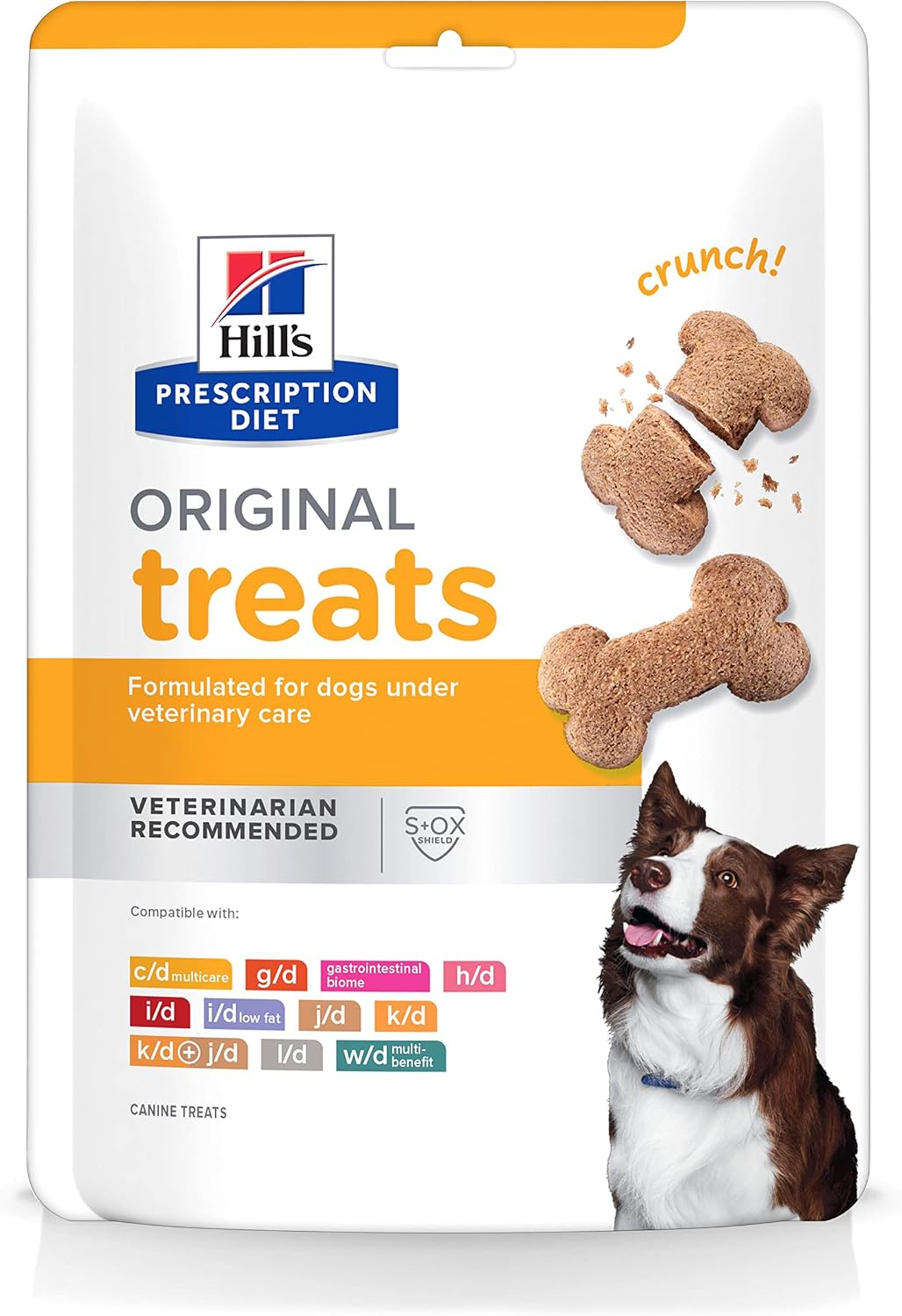
Prescription Weight Loss Foods
Prescription diets require a veterinarian’s authorization to purchase. The major options include:
- Hill’s Prescription Diet r/d — One of the most extensively researched weight loss dog foods available. High fiber content (approximately 14–22% DM depending on formulation), reduced calorie density, and feeding trial-validated. Also available in a canned version.
- Hill’s Prescription Diet Metabolic — A more recent formulation that uses a blend of fiber sources and specific nutrient ratios intended to modulate metabolism. Some studies show accelerated weight loss compared to standard low-calorie diets.
- Royal Canin Satiety Support — Emphasizes satiety through very high dietary fiber (around 20% DM), which physically fills the stomach and slows gastric emptying. Effective for dogs that appear persistently hungry on standard low-calorie food.
- Purina Pro Plan OM (Overweight Management) — High protein dog food, moderate fiber formulation. The higher protein content helps preserve lean muscle mass during caloric restriction, which matters for long-term metabolic health.
When do you actually need a prescription diet? A prescription food is the right choice when your dog is at BCS 7 or above, when they have a concurrent condition like diabetes or hypothyroidism, when previous OTC attempts have failed, or when your vet has specifically recommended it based on bloodwork or health status. For a mildly overweight dog (BCS 6) with no health complications, a well-chosen over-the-counter option can be equally effective.
What makes prescription formulas different from OTC? Several factors:
- Significantly higher dietary fiber (often 14–22% DM vs. 5–8% in OTC options)
- Lower calorie density per cup (often 220–280 kcal/cup vs. 300–360 kcal/cup for OTC light foods)
- Formulated to meet AAFCO nutritional requirements specifically at the reduced caloric intake level
- Validated through AAFCO feeding trials or nutrient profile testing for the specific intended use
- Consistent batch-to-batch quality control monitored more rigorously than the OTC category
Over-the-Counter Weight Loss and Light Formulas
The OTC market for weight management dog food is crowded and inconsistent. The word “light” on a bag has a loose regulatory meaning — it must have at least 25% fewer calories than the brand’s standard formula, but that baseline can vary enormously. A brand whose regular food is 400 kcal/cup can market a 300 kcal/cup food as “light.” Another brand’s regular food might be 330 kcal/cup, making their “light” version 248 kcal/cup — dramatically more effective for weight loss. The label claim is almost meaningless without checking the actual number.
What to look for when comparing OTC options:
- Calorie density: Look for the guaranteed analysis or the calorie statement on the bag (listed as kcal/cup or kcal/kg). Target 240–300 kcal/cup or below for effective weight loss feeding amounts. Anything above 320 kcal/cup labeled as “weight management” is unlikely to produce meaningful results without extremely small portions.
- Protein percentage (dry matter basis): Aim for 25% or higher on a dry matter basis. Higher protein helps preserve lean muscle during weight loss and contributes to satiety.
- Crude fiber: Look for 5–8% or higher. Fiber adds bulk without calories, slows digestion, and helps the dog feel fuller for longer.
- L-carnitine: An amino acid that supports fat metabolism and helps preserve muscle mass. Its presence in the formulation is a positive indicator, though the dose in food is lower than in therapeutic supplements.
Some OTC options that tend to perform well by these criteria include Purina Pro Plan Weight Management, Royal Canin Labrador Retriever Adult (breed-specific, with weight management), and Blue Buffalo Life Protection Healthy Weight. Always verify the calorie density on the specific lot rather than relying solely on brand reputation.
Wet Food as a Weight Loss Tool
Canned or wet food deserves serious consideration in a weight loss plan — not just as an alternative, but as a strategic tool. The reason is simple physics: wet food is typically 70–80% moisture. This dramatically reduces the caloric density per gram. A cup of dry kibble might contain 350 kcal. A cup of wet food from the same brand might contain 80–120 kcal. The dog’s stomach is physically fuller, satiety signals fire more readily, and the dog is less likely to spend the afternoon staring at the empty bowl.
Some practical approaches:
Full switch to wet: Effective for weight loss but costly for larger dogs. Works very well for small breeds where the volume difference is manageable on a budget.
Mixing wet and dry: Replacing 25–50% of the dry caloric allowance with an equal caloric portion of wet food — or simply adding water to kibble — increases meal volume without increasing calories. This is often the most practical approach.
Wet food as a topper: A small spoonful of a low-calorie wet food or unsalted broth as a dog food topper increases palatability and moisture, which can help dogs who seem uninterested in reduced portions of dry food.
The cost consideration is real. For a large breed dog, feeding primarily wet food for a five-month weight loss program can be expensive. Factor this into your decision-making.
Feeding Strategy for Weight Loss: Not Just What Food, But How
Choosing the right food is step one. But the strategy around how you feed has a significant impact on how successful the program actually is.
Meal Frequency
Most adult dogs are fed twice a day. During active weight loss, many veterinary nutritionists recommend increasing this to three meals if logistically possible. The total daily caloric allowance stays the same — you are dividing it into smaller, more frequent portions rather than increasing the total amount. The benefit is that the dog is never going more than 6–8 hours between meals, which reduces the hunger drive and the food-obsessive behavior that tends to appear during caloric restriction.
Slow Feeding Tools
The act of eating slowly activates satiety pathways more effectively than eating the same amount of food quickly. A dog who inhales their reduced portion in 45 seconds will feel hungrier than a dog who takes 10 minutes to eat the same amount. Tools that extend eating time include:
- Slow feeder bowls: Ridges and mazes built into the bowl force the dog to work around obstacles to access food. Extends meal time from seconds to several minutes.
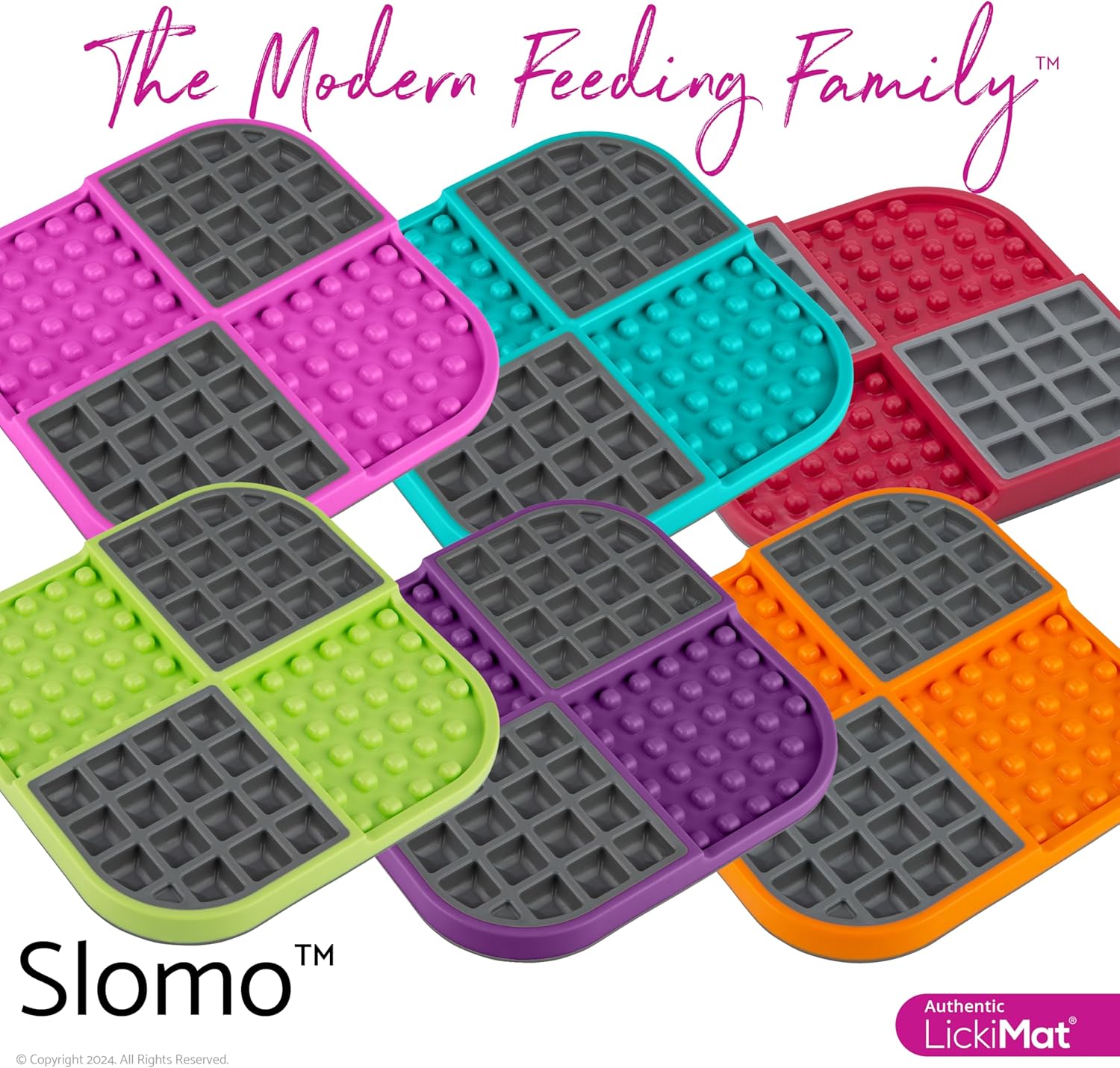
- Lick mats: Spreading wet food or a small amount of peanut butter or plain pumpkin puree on a lick mat extends the eating experience significantly and provides mental stimulation simultaneously.
- Food puzzle toys: Kibble can be loaded into puzzle feeders or interactive toys so that the dog has to manipulate the toy to release pieces. Some dogs eat their entire meal this way. It takes longer, burns a small number of extra calories through activity, and provides meaningful mental enrichment — a genuine benefit for dogs who are also getting reduced exercise due to joint issues.
- Snuffle mats: Hiding kibble in the fibers of a snuffle mat engages the dog’s nose and slows eating naturally.
The Treat Problem
Studies on human obesity show that people routinely underestimate their caloric intake by 30–50%. The same phenomenon happens with dog owners and treats. A medium-sized biscuit treat can contain 35–50 kcal. Three of those during the day plus some training treats represents 150–200 kcal added to a dog whose entire daily allowance might be 600 kcal. The treats alone can account for 25–35% of the target daily intake, essentially erasing the caloric deficit the measured meals were creating.
Solutions that work:
- Count treats as part of the daily caloric allowance: If you plan to give 50 kcal worth of treats, remove that many calories from the measured meal. This requires knowing the caloric content of your treats.
- Switch to low-calorie treat swaps: Baby carrots (4 kcal each), green beans (3–4 kcal each), cucumber slices (1–2 kcal each), and plain cooked chicken breast (45 kcal per oz) are all treats most dogs enjoy that allow generous treat-giving without significant caloric impact. Avoid grapes, raisins, onions, garlic, and macadamia nuts — these are toxic to dogs.
- Use the dog’s daily food allotment as training treats: If you are doing obedience work or enrichment training, portion out kibble from the daily allowance rather than adding extra treats. The dog is rewarded and engaged, and total daily calories stay on target.
The Persistently Hungry Dog
Some dogs — particularly Labradors, Beagles, and Pugs — seem constitutionally food-motivated and will act ravenous even when appropriately fed. If your dog is genuinely on the correct portion of a high-fiber weight loss food and is still showing persistent hunger behavior (whining at meal times, pacing, pawing at food storage areas), some strategies that help:
- Add a small amount of plain canned pumpkin (not pie filling) to meals — it is very high in fiber, extremely low in calories, and adds significant bulk to the meal.
- Add water to the kibble and let it expand — increases perceived meal volume.
- Consider switching to Royal Canin Satiety Support or another very high-fiber prescription formula.
- Talk to your vet about whether an underlying behavioral or medical component is contributing to the food-seeking behavior.
Feeding Separately from Other Pets
If you have multiple dogs or other pets in the household, feeding the weight loss dog in a separate room is non-negotiable. Even a few stolen bites from another animal’s bowl can significantly impact the caloric deficit you’re working to maintain. Feed separately, wait for both dogs to finish, then reintroduce. This habit also prevents resource guarding, which can intensify when a dog is on a restricted diet.
Exercise: The Other Half of Weight Loss
Exercise absolutely matters in a canine weight loss program — but it plays a different role than most owners expect. Understanding that distinction prevents both overconfidence and unnecessary frustration.

Exercise Alone Will Not Solve Obesity
The caloric math is unforgiving. A 90-pound dog jogging for 30 minutes burns approximately 200–250 extra calories. That same dog’s daily caloric excess — what got them to an obese weight in the first place — may have been 150–300 kcal per day above maintenance. Adding exercise brings those numbers close to even, but rarely creates the sustained deficit needed for meaningful weight loss. Diet is responsible for approximately 75–80% of the weight loss outcome. Exercise accounts for the remaining 20–25% at most.
Why Exercise Still Matters: Muscle Preservation
During any caloric deficit, the body does not exclusively burn fat. It also draws on muscle protein for energy, particularly if the diet is not high enough in protein and exercise is absent. In dogs, muscle loss during weight loss has real consequences: reduced resting metabolism (which makes maintaining the new weight harder), decreased joint support, and reduced functional strength and stamina.
Exercise preserves lean muscle mass during caloric restriction. This is the primary reason to maintain or increase activity during a weight loss program — not calorie burning, but muscle protection. The dog who finishes a five-month weight loss program with good muscle mass will be healthier and better able to maintain their new weight than one who lost the same number of pounds entirely through food restriction.
Safe Exercise for Overweight Dogs
Do not dramatically increase exercise the moment you start the new diet. An overweight or obese dog — particularly one who has been sedentary — is at real risk of joint injury, overheating, and cardiovascular overexertion if exercise is increased too rapidly.
- Start with short sessions: Begin with 10–15 minute walks, twice daily. This is appropriate even if the dog was previously doing more, because the combination of caloric restriction and new exercise simultaneously can cause significant fatigue in the early weeks.
- Increase gradually: Add approximately 5 minutes per week to total daily activity. After 4–6 weeks, most dogs can comfortably handle 30–40 minutes of walking per day split across two sessions.
- Watch for signs of overexertion: Excessive panting that does not resolve within a few minutes, lagging behind on walks, reluctance to continue, limping, or seeking shade and lying down during a walk are all signs you’ve pushed too hard. Reduce intensity and increase again more slowly.
Exercise for Dogs with Joint Disease
Overweight dogs frequently have arthritis or other orthopedic problems, precisely because excess weight accelerates joint degeneration. These dogs need modified exercise — not no exercise, but the right kind.
- Swimming and hydrotherapy: Water supports the dog’s body weight, virtually eliminating joint load while providing excellent muscular exercise and cardiovascular conditioning. If you have access to a dog-friendly pool, lake, or a veterinary hydrotherapy facility, this is ideal for arthritic obese dogs.
- Slow, flat walks on soft surfaces: Grass or packed dirt is more forgiving on joints than pavement. Keep the pace slow and steady — this is not about speed, it is about consistent low-impact movement.
- Avoid high-impact activity: Jumping, running on hard surfaces, fetch with repeated sharp turns and stops, and stair climbing should be minimized or avoided entirely in dogs with known joint disease until a healthy weight is reached.
Monitoring Progress and Adjusting the Plan
A weight loss program without monitoring is guesswork. Dogs do not lose weight in a perfectly linear way, and what the food label predicts and what your individual dog actually does can differ significantly based on metabolism, activity, and how accurately the food is being measured.
Adjusting Based on weight
- Losing faster than 2% of body weight per week: This is too aggressive. Increase the daily food allowance by 10% and recheck in four weeks.
- Losing at 1–2% per week: This is the target range. Maintain current feeding and continue monitoring.
- Losing less than 0.5% per week after 4 full weeks: The deficit is insufficient. Check that measurements are accurate — has portion size crept up? Are treats being counted? If portioning is confirmed accurate, reduce daily allowance by 10% and recheck.
- No loss at all: Audit everything. Treat calories, food shared from other pets, anyone else in the household supplementing the dog’s diet. Only after confirming strict adherence should the food amount be reduced further.
Plateaus: Why They Happen and How to Break Through
Weight loss plateaus are real in dogs, just as they are in humans. After several weeks of consistent weight loss, metabolism can adapt downward — the body becomes more efficient at operating on fewer calories. This is a survival mechanism, not a failure of the diet.
To break through a plateau:
- Reconfirm that all food is being accurately measured and treats are being accounted for.
- If measurements are accurate and a genuine plateau persists for more than 4–6 weeks, a 5–10% reduction in daily food may restart the loss.
- Adding a modest increase in exercise — particularly strength-building activities like slow hill walks — can also help break metabolic adaptation.
- Your vet may recommend a recheck of thyroid function if a plateau is prolonged and unexplained.
When to Call the Vet
Contact your veterinarian if:
- Your dog has shown no weight loss after 8 weeks of accurate, consistent dietary management
- Your dog is losing weight faster than 2% per week despite following the feeding plan
- Your dog develops lethargy, significant changes in water intake or urination, vomiting, or other symptoms during the weight loss program
- Your dog refuses to eat the new weight loss food for more than 2–3 days
- Your dog appears to be losing muscle mass but not body fat
Transitioning Off Weight Loss Food
Once your dog reaches their target weight (BCS 4–5), do not return to the food that contributed to the weight gain in the first place. The transition from weight loss food should be to a weight control maintenance formula — a food designed to maintain an ideal weight at normal feeding amounts, with a lower calorie density than standard maintenance food.
Make the transition gradually over 7–10 days, mixing increasing proportions of the new food with the weight loss food to avoid digestive upset. Continue monthly weigh-ins for at least six months after reaching the target weight — the tendency to regain is real and catching a few pounds of creep early is far easier than restarting a full weight loss program.
Frequently Asked Questions About Weight Loss Dog Food
How long does it take for a dog to lose weight?
At a safe loss rate of 1–2% of body weight per week, a mildly overweight dog may reach its goal in 8–12 weeks, while an obese dog may need 6–12 months. Losing weight too quickly can cause muscle loss, nutrient deficiencies, and metabolic changes that make long-term maintenance harder.
Can I just feed my dog less of their regular food to lose weight?
In most cases, no. Cutting regular food by 30–40% also reduces protein, vitamins, and minerals by the same amount. Weight-loss formulas are designed to provide complete nutrition with fewer calories. A small 10–15% reduction may be acceptable for a mildly overweight dog, but obese dogs generally need a purpose-formulated diet.
What is the fastest way for a dog to lose weight safely?
The safest fast approach combines a prescription weight-loss diet, calories set at about 80% of RER for ideal body weight, precise gram-based portions, low-calorie treats, and regular moderate exercise. Even then, weight loss should take months, and losing more than 2% of body weight per week is too aggressive.
Is wet food or dry food better for dog weight loss?
Both wet and dry food can work, but wet food’s higher moisture and lower calorie density may help dogs feel fuller. It can be especially useful for dogs that stay hungry on smaller dry-food portions, though it costs more for large dogs. A mixed wet-and-dry approach is often the most practical option.
My vet recommended prescription weight loss food — is it worth the cost?
For dogs with a BCS of 7+ or obesity-related health issues, prescription weight-loss food is often worth it. These diets offer higher fiber, lower calorie density, and more controlled formulations than most OTC foods. They can also improve results under veterinary supervision and may reduce long-term costs linked to obesity-related disease.
Can an overweight dog eat vegetables as snacks?
Yes. Low-calorie vegetables can help food-motivated dogs feel satisfied. Good options include baby carrots, green beans, cucumber, small amounts of broccoli, zucchini, and plain canned pumpkin. Avoid higher-starch choices like corn and peas, and never feed grapes, raisins, onions, garlic, leeks, or avocado.
How do I help my dog lose weight when I have other dogs at healthy weights?
Feed dogs separately using different rooms or a physical barrier, supervise meals, and remove all bowls afterward. A microchip-activated feeder can help prevent food sharing. Consistency matters, since even occasional access to higher-calorie food can disrupt weight loss.
At what point is dog obesity a medical emergency?
Obesity is a chronic condition, but urgent veterinary care is needed if a dog has trouble breathing at rest, collapses, shows severe exercise intolerance or pain, becomes suddenly lethargic, or gains weight rapidly without explanation. Dogs with a BCS of 9 should be evaluated promptly because severe obesity can lead to life-threatening heart and breathing complications.
Conclusion
Being told your dog needs to lose weight can feel overwhelming — particularly when you walk out of the appointment without a clear plan. But the framework is actually straightforward: get an accurate BCS assessment, calculate a realistic target weight and caloric goal, choose a food formulated for active weight loss (prescription if your vet recommends it, or a well-chosen OTC option for milder cases), measure everything precisely, and adjust monthly based on actual results.
The part that is genuinely hard is not the knowledge — it’s the consistency. Your dog will look at you with those eyes. People in the house who didn’t get the memo will offer bites of their dinner. Old habits with scooping will creep back. Keeping the program tight over the weeks and months it takes to reach a healthy weight requires the kind of commitment that doesn’t make headlines but absolutely makes a difference.
A dog who reaches a healthy body condition score lives longer. They hurt less. They play more. The investment of a few months of careful feeding, accurate measuring, and regular monitoring pays dividends in years — and in quality of life for both the dog and the people who love them.
Related Articles You May Find Helpful
Disclaimer: This article is intended for general informational purposes only and does not constitute veterinary medical advice. Every dog is different, and weight loss programs should be tailored to the individual animal’s health status, age, breed, and concurrent medical conditions. Always consult a licensed veterinarian before starting your dog on a caloric restriction program, particularly if your dog has any underlying health conditions or is taking medications. The caloric calculations and BCS descriptions in this article are general guidelines — your veterinarian may recommend a different approach based on your dog’s specific needs.