Invisible fences come in two main flavors: a wireless dog fence that uses a radio transmitter in your house, and a GPS fence that uses satellites and a phone app. They solve the same problem in very different ways. Here at The Pet Geek, this guide compares how each works, what it costs, and which dogs shouldn’t use either.
Affiliate disclosure: As an Amazon Associate, The Pet Geek earns from qualifying purchases, at no extra cost to you.
Quick answer: A wireless fence is cheaper and simple to set up, but it only makes a circle and works best on flat, open lots. A GPS fence can follow any shape on large or rural properties, but it costs more, may need a subscription and depends on daily charging. Neither is a physical barrier, and both need weeks of training.
Wireless vs. GPS vs. Underground at a Glance
| Feature | Wireless (radio) | GPS | Underground wire |
|---|---|---|---|
| Boundary shape | Circle around the transmitter | Any shape you draw in an app | Any shape you bury |
| Setup | Plug in, no digging | App and collar, no digging | Dig and bury a wire |
| Portable | Yes, needs power | Yes, works anywhere with open sky | No |
| Accuracy | Boundary can drift a few feet | Depends on sky view and trees | Most consistent |
| Ongoing cost | Collar batteries | Daily charging; some need a subscription | Collar batteries; wire repairs |
| Best for | Small, flat, open yards | Large, rural or odd-shaped land | Standard suburban yards |
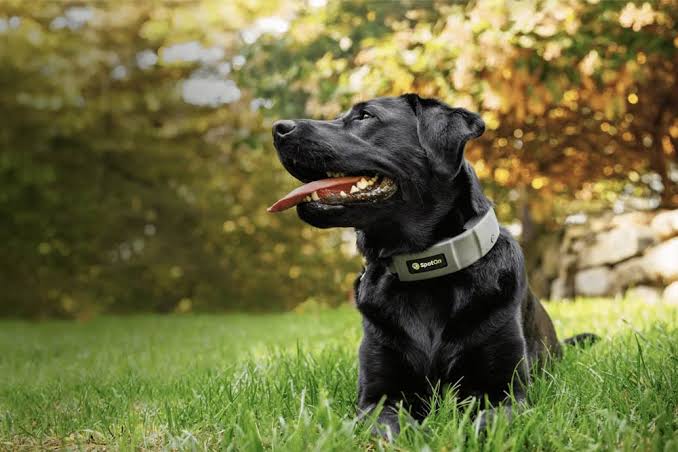
How a Wireless Dog Fence Works
A transmitter inside your home sends out a radio signal in a circle. Your dog wears a receiver collar. When the dog nears the edge, the collar beeps as a warning, then gives a correction, usually a static pulse, if the dog keeps going.
- Circle only. Long, narrow or L-shaped yards don’t fit well.
- Terrain matters. Hills, metal siding, cars and thick walls can bend the signal.
- The edge can drift a few feet, so set the boundary well inside roads.
The PetSafe wireless fence is the best-known example of this type.
How a GPS Dog Fence Works
A GPS collar reads its position from satellites. You draw the boundary on a map in the app, and the collar warns your dog when it nears that line. No transmitter or wire is needed.
- Works almost anywhere with a clear view of the sky, including camping trips and farms.
- Struggles under thick trees, between tall buildings and indoors.
- Needs charging, often every day or two. A dead collar is no fence at all.
- Subscriptions vary. Check current pricing before you buy.
Well-known GPS options include the Halo Collar, SpotOn, the PetSafe Guardian GPS and Garmin’s Alpha and Delta systems for hunting dogs.
Limits Every Owner Should Know
- Not a physical barrier. Other dogs, wildlife and people can still come in.
- Some dogs run through. Dogs with high prey drive may push past the correction when chasing, then refuse to come back across it.
- Correction-based training has welfare costs. The American Veterinary Society of Animal Behavior recommends reward-based training and advises against aversive tools like shock collars.
- Collar fit matters. Contact points must touch the skin, and the collar should come off at night to prevent sores.
Who should not use a wireless dog fence or GPS fence
- Fearful, anxious or reactive dogs
- Puppies under about 6 months
- Dogs with strong prey drive near busy roads
- Very small dogs if the collar is too heavy for them
Collar Fit and Daily Checks
- Fit the collar snugly enough that the contact points touch the skin, with one finger of space underneath.
- Take it off at night and check the neck for redness every day.
- Test the warning tone each week by walking the collar toward the boundary yourself.
- Replace batteries or charge on a fixed schedule so the fence never quietly stops working.
Training: The Part You Can’t Skip
- Weeks 1–2: Walk the boundary on a leash with flags in place. Reward your dog for turning back at the warning beep.
- Weeks 3–4: Use a long line and add mild distractions, always rewarding returns.
- Week 4 and after: Short, supervised off-leash time. Remove flags slowly over several weeks.
Many trainers keep the correction off entirely and rely on the warning tone plus rewards. If your system allows a tone-only mode, start there.
Is a GPS Dog Fence Worth the Cost?
Yes, if you have several acres, an odd-shaped property or travel often with your dog. No, if you have a standard rectangular yard under an acre. A physical fence or an underground wire is cheaper and more reliable there.
Who Should Not Use a GPS Dog Fence
GPS dog fencing is not the right solution for: dogs under 10–15 lbs (collar too heavy), toy and miniature breeds regardless of weight in many cases, owners who will not reliably charge the collar daily, small urban apartment situations where a contained outdoor space is already provided, and households on a tight budget where the ongoing subscription cost is not sustainable.
Setting Up a GPS Dog Fence
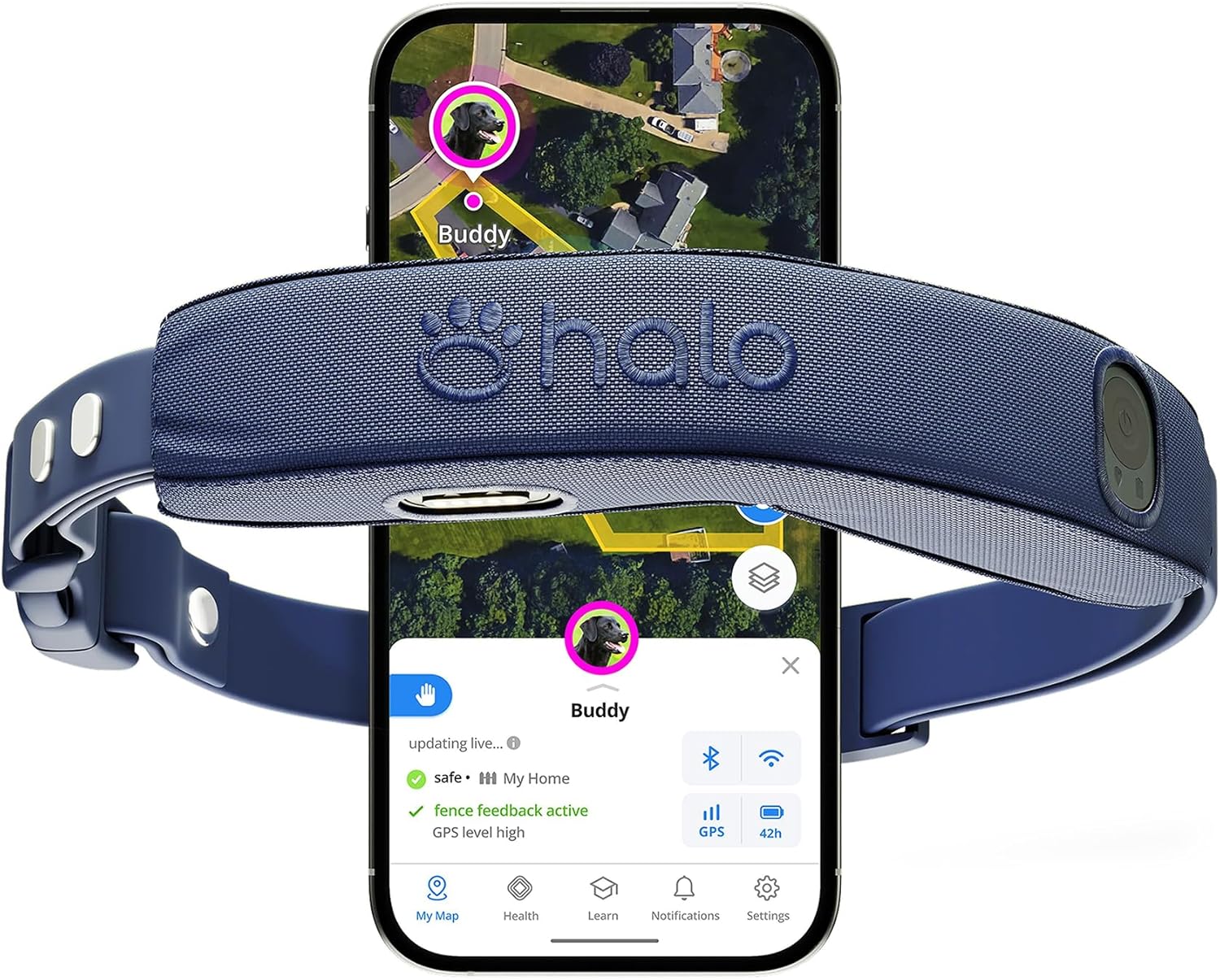
1. App Setup and Collar Registration
All GPS fence systems use a companion smartphone app. Initial setup involves downloading the app, creating an account, and pairing the collar via Bluetooth. The collar firmware may need an update before the system is operational. Most setups complete in 20–45 minutes.
2. Drawing the Boundary
You have two methods. The first is to draw the boundary on a satellite map view in the app — tap points to create the polygon. The second is to walk the perimeter while the app records your GPS path, which is more accurate where property edges do not align with visible map features. Whichever method you use, set the boundary several feet inside the actual property line and well away from roads or water.
3. Warning Zone vs. Correction Zone
Most GPS fence systems divide the boundary area into a warning zone (where the audio and vibration trigger) and a correction zone (where the static stimulation triggers). Setting an appropriate buffer between these zones — typically 10–20 feet of warning zone before the correction zone — gives the dog time to respond to the audio warning and turn back before receiving a static correction. Dogs that have been properly trained to the warning tone often avoid corrections entirely once conditioned.
4. Training Protocol
The training process for a GPS fence follows the same principles as underground or wireless dog fences: introduce the dog to the boundary on-leash with flags marking the warning zone, allow the dog to hear the warning tone with you guiding the response, then progress to supervised off-leash sessions before leaving the dog unattended. Most manufacturers provide a 10–14 day training guide. Skipping training and simply placing the collar on the dog without introduction is a setup for failure and unnecessary stress on the animal.
5. Subscription Management
Treat subscription renewal as a safety-critical task. Most systems continue to provide containment corrections after a lapse — GPS and the stored boundary still operate — but remote monitoring, live tracking, and escape alerts stop working. Set a calendar reminder for renewal regardless of whether the system sends expiry notifications.
Is a GPS Dog Fence Worth the Cost?
When the Answer Is Yes
A GPS dog fence makes financial and practical sense when you have a large property — one acre or more — where underground wire installation would cost $500–$2,000+ in professional labor or a significant DIY time investment. It makes sense for rural and farm settings where the property boundary is irregular, extensive, or changes seasonally. It is the right choice for people who travel regularly with their dogs and need portable containment. And it serves renters or people in homes where permanent fence installation is prohibited or impractical.
When the Answer Is No
A GPS dog fence is not cost-justified for a standard suburban yard of a quarter to half acre. An underground wire fence kit for that property costs $100–$350 DIY, works without satellite signal, has no subscription fees, and has no battery to forget to charge. An underground fence installed by a professional on the same property might cost $500–$1,500, still less than a premium GPS collar alone. The GPS system’s advantages — portability, shape flexibility, any-location use — do not add value if you have a fixed yard and stay home.
Long-Term Cost Comparison
Consider a rough three-year comparison: a mid-range GPS system ($400 collar + $10/month) totals $760; Halo ($999 + $30/month) totals $2,079; SpotOn (~$1,400, no subscription) stays at $1,400. A professionally installed underground fence runs $800–$1,500 one-time; a DIY kit, $150–$350.
For a fixed property, the underground fence wins on cost over any multi-year horizon. The GPS fence wins when portability, travel use, or large-property flexibility is part of the equation. The honest question is: do you actually need those GPS-specific features?
FAQ
Do wireless dog fences work?
For calm dogs on flat, open lots with good training, often yes. For determined escape artists, rarely on their own.
Can a wireless fence work through walls?
The signal passes through walls, but metal and thick masonry can weaken it. Place the transmitter centrally and away from appliances.
Do GPS fences work without Wi-Fi?
The boundary runs on the collar’s GPS, but app features and alerts usually need a cellular or Wi-Fi connection.
What happens if the power goes out?
A wireless transmitter stops working, so the boundary disappears. GPS collars keep working until their battery runs out.
The Bottom Line
A radio-based fence fits small, flat, open yards. A GPS fence fits big or irregular land. A physical fence is still the safest option for escape artists and busy roads.
Whatever you choose, add a backup. Our guide on how to attach an AirTag to a dog collar covers tracking. Our types of dog leashes guide covers long lines for training. Interactive dog toys help bored dogs stop looking for a way out. Train patiently, and treat any wireless dog fence as one layer of safety, not the only one.
We’re dog owners, not trainers or vets. Talk to a certified, reward-based trainer before using any correction collar.