It started with itching. Then came the ear infections — two in three months. Then the loose stools that never quite went away. The vet ran tests, ruled out parasites and infections, and said the words that send most dog owners down a rabbit hole they didn’t expect: “It might be a food sensitivity.” If that story sounds familiar, you’ve probably already heard the phrase limited ingredient dog food. But the more you research it, the more confusing it gets. Is it just a marketing term? Is it the same as grain-free? Does your dog actually need it, or is this just a premium food in disguise?
This guide cuts through all of it. What limited ingredient dog food really is, who genuinely benefits from it, how to read a label without getting tricked, and what the difference actually looks like in your dog’s bowl.
🐾 Quick Summary
- What it is: Dog food made with a minimal number of ingredients — typically one protein source and one or two carbohydrates
- Main purpose: Reducing the number of potential allergens your dog is exposed to at once
- Not the same as: Grain-free, hypoallergenic, raw, or prescription diets
- Best for: Dogs with suspected food sensitivities, chronic ear infections, itchy skin, or GI issues linked to diet
- Not necessary for: Dogs with no allergy or sensitivity symptoms doing fine on their current food
What Is Limited Ingredient Dog Food?
Limited ingredient dog food (often abbreviated to LID) is exactly what it sounds like: dog food formulated with a deliberately short ingredient list. Where a standard commercial kibble might contain 30–40 individual ingredients, a limited ingredient formula typically contains fewer than 10, and is built around:
- One animal protein source — usually a single meat or fish (e.g., salmon, duck, venison, lamb)
- One or two carbohydrate sources — often a single grain or starchy vegetable (e.g., sweet potato, peas, brown rice, oats)
- Essential vitamins and minerals to meet AAFCO nutritional standards
- Minimal or no artificial preservatives, fillers, dyes, or flavoring agents
The logic is straightforward: the fewer ingredients in the food, the fewer potential triggers your dog is exposed to at any meal. If your dog is reacting to something in their food, a limited ingredient diet makes it significantly easier to identify the culprit — and to rule out ingredients one by one.
It’s worth noting right away that “limited ingredient” is a marketing description, not a regulated term. The FDA and AAFCO don’t have a legal definition for it, which means any brand can label a product “limited ingredient” regardless of how many components it actually contains. This makes reading labels — rather than trusting packaging claims — critically important.
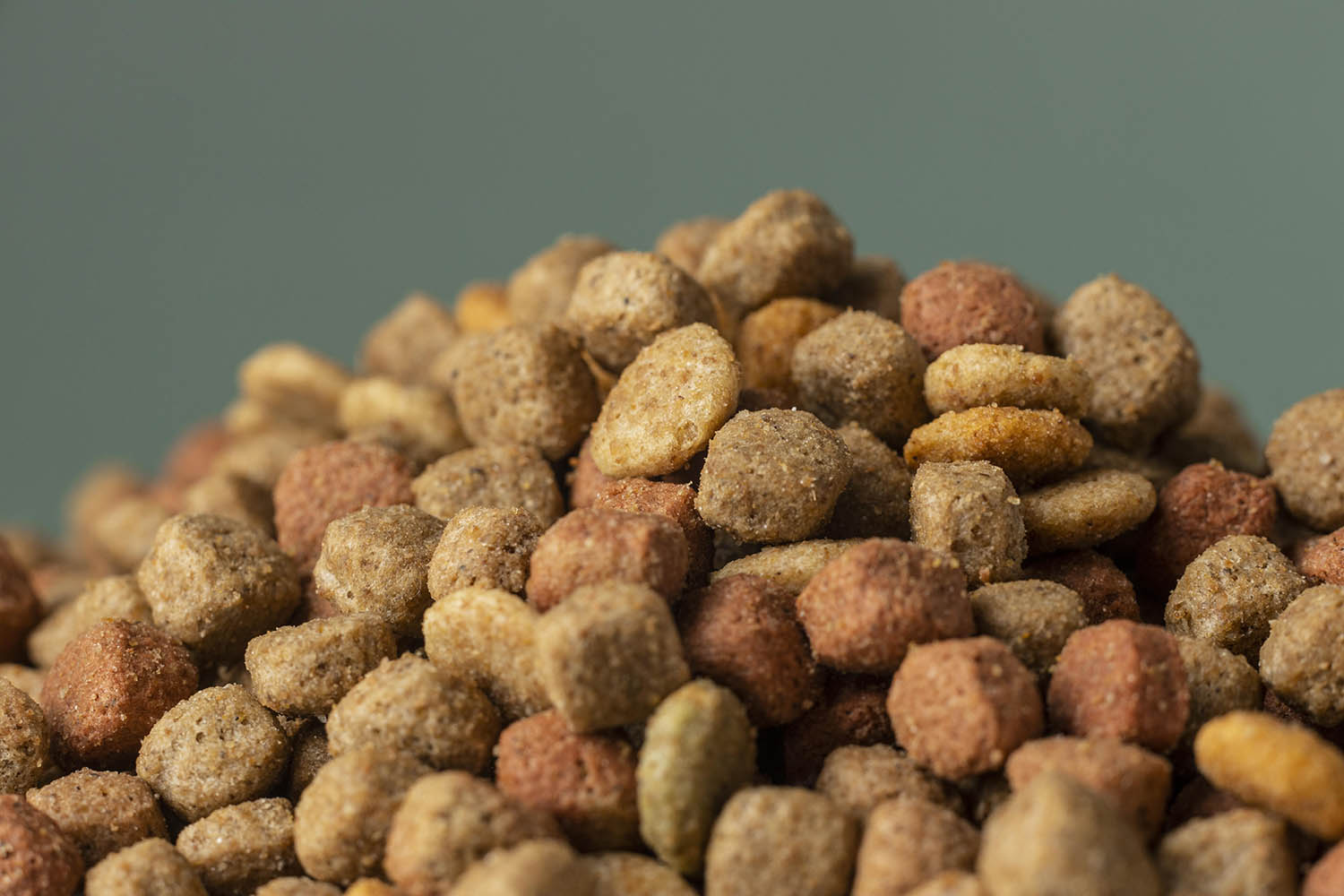
How Limited Ingredient Dog Food Differs from Regular Dog Food
| Standard Dog Food | Limited Ingredient Dog Food | |
|---|---|---|
| Number of ingredients | Often 30–50+ | Typically 5–15 |
| Protein sources | Multiple (chicken + beef + fish meal + egg) | Single (salmon only, or duck only) |
| Carbohydrate sources | Multiple (corn, wheat, rice, barley) | One or two (sweet potato, or oats) |
| Additives and fillers | May include artificial flavors, colors, preservatives | Typically minimal or none |
| Purpose | Complete nutrition for general population | Complete nutrition with reduced allergen exposure |
| Price point | Wide range | Generally higher due to novel proteins and simpler formulation |
| Regulated term? | N/A | No — buyer must verify by reading ingredients |
Why Do Dogs Develop Food Sensitivities?
Dog food allergies happen when the immune system reacts to a food protein the dog has eaten before. This means a dog can develop an allergy to ingredients like chicken or beef after repeated exposure over time.
Food intolerance is different. It is a digestive issue, not an immune reaction, and often causes gas, loose stools, or vomiting.
For pet owners, the next step is the same: find the trigger ingredient and remove it from the dog’s diet.
Source: Veterinary Dermatology, Zur et al. and Kennis et al., meta-analysis of published food allergy studies.
Who Actually Needs Limited Ingredient Dog Food?
Here’s the honest answer: not every dog. Limited ingredient dog food is a tool for a specific problem — and using it when there’s no problem to solve is expensive and unnecessary.
Your dog is a good candidate for limited ingredient food if they show persistent signs of food sensitivity, including:
- Chronic itching, especially around paws, ears, face, and groin
- Recurrent ear infections (more than twice a year) without another clear cause
- Skin redness, hot spots, or recurring skin infections
- Chronic loose stools, gas, or intermittent vomiting
- Symptoms that don’t improve with flea treatment, anti-fungals, or antibiotics alone
- Symptoms that worsen after eating and improve during fasting
Your dog probably does not need limited ingredient food if:
- They eat their current food with no GI issues and no skin or ear problems
- You’re switching because of marketing (“more natural,” “cleaner”) rather than symptoms
- Your vet has not identified or suspected a dietary component to your dog’s health issues
A common mistake is switching to a limited ingredient diet as a “preventive” measure or because the packaging looks appealing, without any underlying reason to do so. A well-formulated standard diet is nutritionally complete for healthy dogs. There’s nothing inherently superior about a shorter ingredient list if your dog has no sensitivities.
How to Actually Read a Limited Ingredient Label
Since “limited ingredient” isn’t regulated, the only way to know what you’re actually buying is to read the ingredient list yourself. Here’s what to look for:
Count the Protein Sources
A genuine LID should have one named animal protein. Watch for hidden protein sources that manufacturers often don’t highlight prominently:
- “Chicken fat” counts as a chicken-derived ingredient — significant for dogs with chicken sensitivity
- “Hydrolyzed chicken liver” is still chicken protein
- “Egg” adds a second protein source
- Fish meal can appear in a “salmon” food as a secondary protein
Truly limited ingredient food lists its single protein source once, consistently, without secondary meat-based ingredients hiding in the middle of the list.
Identify the Carbohydrate Sources
One or two starches is the target. Multiple grain sources (corn, wheat, rice, barley, oats) in the same formula significantly increases the complexity of the diet — fine for most dogs, but counterproductive if you’re trying to isolate potential triggers.
Look for “Broth” or “Natural Flavor”
“Natural flavor” on a dog food label is a blanket term that can legally include animal derivatives of any species. A food labeled “duck and sweet potato” with “natural flavor” in the ingredients may contain trace chicken or beef proteins through that additive. For dogs with severe allergies, this matters.
Check for AAFCO Compliance
A limited ingredient food must still be nutritionally complete. Look for the AAFCO statement: “formulated to meet the nutritional levels established by the AAFCO Dog Food Nutrient Profiles for [life stage].” No AAFCO statement means the food hasn’t been verified as complete and balanced.
What the Front of the Bag Doesn’t Tell You
Packaging often says things like “simple,” “pure,” or “single source” while the actual ingredient list tells a different story. Always read from the back. The front is marketing. The back is the contract.
Novel Proteins: The Core of a Limited Ingredient Strategy
The engine behind most limited ingredient diets is the novel protein concept. A novel protein is simply a protein your dog has never eaten before — meaning their immune system has had zero exposure and therefore cannot have mounted a reaction to it.
Common novel protein choices in LID formulas:
| Novel Protein | Notes |
|---|---|
| Duck | Widely available, well-tolerated, palatable for most dogs |
| Venison | Excellent lean protein; genuinely novel for most dogs in Western countries |
| Rabbit | Highly digestible, low fat, rarely encountered in commercial diets |
| Kangaroo | Extremely novel; virtually no dogs have prior exposure; lean and nutritious |
| Bison | Novel for most dogs; slightly higher fat than venison |
| Wild boar | Novel in commercial diets; becoming more available in LID formulas |
| Alligator / Crocodile | Unusual but genuinely available in some specialty LID brands; very novel |
| Salmon (when novel) | Only truly novel if your dog has never eaten fish-based food; common enough now that some dogs have already been sensitized |
The key principle: the novel protein must actually be novel for your specific dog. A dog that has eaten duck-based food for three years cannot benefit from a “novel duck” LID formula. You need to choose a protein your dog genuinely hasn’t been exposed to — which requires thinking about everything they’ve ever eaten, including treats, chews, and training rewards.
Limited Ingredient Dog Food vs. Grain-Free: They Are Not the Same Thing
This confusion is widespread — and it matters, because confusing the two can lead to poor decisions for your dog’s health.
Limited Ingredient Dog Food vs. Grain-Free
- Limited ingredient: fewer total ingredients; may still include grains like rice, oats, or barley.
- Grain-free: no wheat, corn, rice, oats, or barley; often uses peas, lentils, chickpeas, or potatoes instead.
- Key difference: grain-free does not always mean simple — many formulas still have 30+ ingredients.
For pet owners:
- Wheat/corn sensitivity → grain-free may help, but LID with rice may also work.
- Chicken allergy → grain-free won’t help unless the protein also changes.
- Most dog food allergies are protein-based, not grain-based.
- Use caution with legume-heavy grain-free diets due to the FDA’s ongoing DCM investigation.
Limited Ingredient Diet vs. Hydrolyzed Protein Diet vs. Prescription Diet
When food allergies are suspected, you might hear about multiple dietary approaches. Here’s how they differ:
| Diet Type | How It Works | Best For |
|---|---|---|
| Limited Ingredient Diet (LID) | Reduces number of ingredients; uses novel proteins your dog hasn’t encountered | Suspected sensitivities; first-line dietary change |
| Hydrolyzed Protein Diet | Proteins broken down to molecules too small for the immune system to recognize as allergens | Confirmed food allergies; when novel proteins have failed |
| Prescription Elimination Diet | Veterinary-prescribed diet used strictly for 8–12 weeks to diagnose specific allergens | Formal allergy diagnosis through elimination trial |
| Home-Cooked Elimination Diet | Vet-designed single-protein, single-carb diet prepared at home with complete control over every ingredient | Dogs who react to everything commercial; most reliable elimination |
A commercial LID is a reasonable starting point for dogs with mild to moderate suspected sensitivities. But if your dog has severe, persistent symptoms — or if a limited ingredient trial hasn’t resolved the issue — a proper veterinary elimination diet trial is the only way to definitively identify the culprit. This requires 8–12 weeks of strict adherence with zero deviation: no treats, no table scraps, no flavored medications, nothing other than the prescribed food.
How to Transition Your Dog to a Limited Ingredient Diet
Switching foods too quickly is one of the most common causes of digestive upset during dietary transitions — and it’s easily avoided with a gradual changeover. The standard protocol:
| Days | Old Food | New LID Food |
|---|---|---|
| Days 1–2 | 75% | 25% |
| Days 3–4 | 50% | 50% |
| Days 5–6 | 25% | 75% |
| Day 7+ | 0% | 100% |
For dogs with known sensitive stomachs or existing GI symptoms, extend each phase by an extra day or two. If loose stools worsen at any stage, slow down rather than push forward.
One important point: during a true elimination diet trial for allergy diagnosis, the transition period should be as short as clinically possible — you want to get to 100% new food quickly so the evaluation period starts from a clean baseline. Talk to your vet about the right protocol for your specific goal.

What to Do During the Waiting Period
Food allergies and sensitivities don’t resolve overnight. Even after a clean dietary transition, the immune system takes time to calm down and the skin barrier takes time to repair. Realistic expectations:
- GI symptoms (loose stools, gas) often improve within 2–4 weeks of dietary change
- Skin symptoms (itching, redness, ear infections) typically take 6–10 weeks to meaningfully improve
- Full resolution can take 12 weeks or longer in chronic cases
During this period: keep a simple symptom diary. Note itching frequency, stool consistency, ear condition, and energy levels. Having written data makes it much easier to evaluate whether the diet is actually working — and gives your vet useful information if you need to escalate.
A Practical Guide to Choosing a Limited Ingredient Dog Food
When you’re standing in the pet store or scrolling through options online, here’s a practical decision framework:
Step 1: List every protein your dog has ever eaten
Go back through every food, treat, chew, and flavored supplement your dog has ever had. Any protein on that list is potentially sensitized and should be avoided in your LID formula. This is the most important step and the one most people skip.
Step 2: Choose a protein from outside that list
If your dog has eaten chicken, beef, salmon, turkey, and lamb — you’re looking at duck, venison, rabbit, bison, or kangaroo as your novel protein candidates. Pick one. Commit to it for the trial period.
Step 3: Read the full ingredient list, not the front
Confirm the food contains only the stated protein source — no secondary meat ingredients, no “natural flavor,” no hidden poultry derivatives. Fewer than 15 ingredients is a good target.
Step 4: Confirm AAFCO compliance
The food must be complete and balanced for your dog’s life stage. A food that’s “great for food trials” but not nutritionally complete is not a long-term option.
Step 5: Make sure treats, chews, and toppers all match
A limited ingredient diet only works if everything your dog eats aligns. A perfectly formulated LID kibble is undermined by a chicken-flavored training treat or a beef bully stick given nightly. All food sources must share the same novel protein, or be protein-free — plain vegetable treats or novel-protein-matched chews are your safest options.
Novel proteins like venison or rabbit are often less aromatic than the chicken and beef your dog is used to, so some dogs initially hesitate at the bowl. This is where LID-compatible dog food toppers can help: a splash of single-protein bone broth, a spoonful of matching wet food, or a drizzle of warm water over the kibble can dramatically improve acceptance without introducing new allergens. The rule is simple — whatever topper you use must share the exact same protein source as the base food. A duck kibble paired with a duck broth topper is clean. A duck kibble paired with a chicken broth topper breaks the protocol entirely.
Step 6: Choose the right format — dry, wet, or freeze-dried
Limited ingredient dog food comes in several formats, and the right one depends on your dog’s tolerance, your budget, and how clean you need the formulation to be.
| Format | Pros | Cons |
|---|---|---|
| Dry kibble | Affordable, convenient, easy to measure, widely available | Lower moisture; palatability can be lower with novel proteins |
| Wet / canned | Higher moisture; more palatable; naturally shorter ingredient lists | More expensive per serving; must refrigerate after opening |
| Freeze-dried | Minimal processing; very short ingredient lists; highly palatable | Most expensive format; requires rehydration or careful portion control |
| Raw or fresh (LID) | Maximum ingredient control; minimal processing | Highest cost; food safety handling required; must be professionally balanced |
Dry kibble is the most practical starting point. Wet food is worth considering for dogs reluctant to accept a novel protein in kibble form. Freeze-dried LID suits dogs with very severe sensitivities who need the cleanest possible formulation — and it’s often the format that finally works when everything else has failed.
Step 7: Read the guaranteed analysis — and know what it doesn’t tell you
Every dog food bag includes a guaranteed analysis (GA) panel showing minimum crude protein and fat percentages, and maximum fiber and moisture percentages. Here’s how to interpret it for LID selection:
- Crude protein (min): Adult dogs generally need at least 18% on a dry matter basis. Novel proteins like rabbit and kangaroo are naturally lean — confirm the protein percentage still meets your dog’s activity level needs.
- Crude fat (min): Very lean proteins may be too low in fat for active dogs. A minimum of 10–12% fat dry matter is appropriate for most adults.
- Moisture: Kibble runs ~10%; wet food runs 70–80%. To compare formats fairly, convert to dry matter basis: divide the nutrient % by (100 minus moisture %) × 100.
- Fiber (max): 3–5% is standard. Higher fiber can help dogs with GI symptoms but reduces caloric density — watch this if your dog is already lean.
One important limitation: the guaranteed analysis doesn’t reveal ingredient quality. A 30% crude protein reading could come from high-quality single-source venison or from a blend of poor-quality by-products. This is why reading the full ingredient list remains essential even after checking the GA numbers — the analysis tells you how much, not what kind.
Simple Homemade Limited Ingredient Meals
If you want maximum control over your dog’s ingredients — or if your dog reacts to everything commercial — a home-cooked LID is the cleanest option. The formula is simple: one protein + one carbohydrate + dog essential supplements.
Basic single-protein LID template (consult a vet or veterinary nutritionist for full nutritional balance):
- 50% lean cooked protein (boiled rabbit, venison, duck, or turkey — no seasoning)
- 25% cooked starchy carbohydrate (white rice, sweet potato, or oats)
- 25% dog-safe vegetables (green beans, cooked zucchini, carrots)
- A calcium source (finely ground eggshell: approximately ½ tsp per pound of food, or a vet-approved calcium supplement)
- A veterinary-approved omega-3 supplement if using a lean protein without fat
This is suitable for a short-term elimination trial but is not nutritionally complete for long-term use without professional formulation. If you want to feed home-cooked long-term, work with a board-certified veterinary nutritionist to balance the recipe properly. A recipe that appears healthy but is missing key micronutrients can cause deficiencies over months.
Frequently Asked Questions
How long does it take for limited ingredient dog food to work?
GI symptoms typically improve within 2–4 weeks. Skin and ear symptoms take longer — expect 8–12 weeks before meaningful improvement is visible. Commit to a full 12-week trial before evaluating whether the diet is working.
Can I use limited ingredient dog food for a dog without allergies?
Yes, it’s safe — but unnecessary. A high-quality standard food is nutritionally equivalent for a dog with no sensitivities. The only practical difference is cost (LID is typically more expensive) and potentially reduced palatability (novel proteins are sometimes less aromatic than the chicken and beef most dogs are used to).
Is limited ingredient dog food the same as hypoallergenic dog food?
Not exactly. “Hypoallergenic” is another unregulated marketing term. True hypoallergenic dog food in the clinical sense refers to hydrolyzed protein diets — where proteins are broken into fragments too small to trigger an immune response. A commercial LID is not hypoallergenic in that sense, though it reduces allergen exposure through simpler formulation.
My dog does well on limited ingredient food. Can I switch back to regular food?
You can, but do it strategically. If you want to identify which ingredient was causing the problem, reintroduce one new ingredient at a time after the LID trial and monitor for 2 weeks per ingredient. This process (called a “food challenge”) identifies the specific trigger so you know exactly what to avoid going forward — letting you choose from a much wider range of foods.
Does limited ingredient dog food help with environmental allergies?
Not directly. Environmental allergies (pollen, dust mites, mold) are a separate mechanism from food sensitivities. However, many dogs have both food and environmental components to their allergies simultaneously — reducing dietary triggers can make overall symptoms more manageable even when environmental allergens can’t be removed.
Are more expensive LID foods better?
Price correlates with protein novelty and quality, not necessarily with formulation quality. A more expensive kangaroo-based LID from a reputable brand isn’t inherently better than a well-formulated duck and oat formula — it’s just using a rarer, costlier protein. Focus on the ingredient list and AAFCO compliance, not the price tag.
Can I feed limited ingredient food to a puppy?
Yes, provided the food is formulated and AAFCO-approved for “growth” or “all life stages.” Some LID formulas are adult-only — these are not appropriate for puppies. Always confirm the life stage statement on the packaging before feeding a puppy any food.
The Bottom Line
Limited ingredient dog food is a genuinely useful tool — for the right dog, used the right way. For a dog with chronic itching, recurring ear infections, or diet-linked GI issues, switching to a properly chosen LID with a truly novel protein can be transformative. Clear skin. Normal ears. Consistent stools. A dog who seems like a different animal.
Need a pet care advice for a dog with no symptoms? It’s an expensive solution to a problem that doesn’t exist.
The key is getting the process right: choose a protein your dog has never eaten, read every ingredient on every food and treat, give the diet a full 12 weeks, and keep consistent records. If symptoms don’t resolve, escalate to a proper veterinary elimination trial rather than cycling through more LID formulas hoping one will work.
Your dog’s skin and gut will tell you whether you made the right call. That response is the only metric that actually matters.
📋 Related Guides from The Pet Geek
This article is for informational purposes only. Always work with your veterinarian before changing your dog’s diet, especially if your dog has ongoing health issues. A board-certified veterinary dermatologist or internal medicine specialist is the appropriate referral for complex food allergy cases.