If your dog has ever demolished a couch cushion, barked at nothing for 20 minutes, or stared at you with that specific “I am bored and this is your fault” look — you already know the problem. A tired dog is a good dog, but physical exercise alone isn’t always enough. That’s where interactive dog toys come in.
At The Pet Geek, we’ve tested and researched dozens of options across six categories. This guide gives you the full picture: what interactive toys actually are, how they differ, how to choose the right one for your dog, and our top picks for every type and life stage.
Quick Answer
Interactive dog toys are toys that require active mental or physical participation from your dog to get a reward. The six main types are: puzzle feeders, treat-dispensing toys, snuffle mats, lick mats, tug/chase toys, and automatic electronic toys. The best choice depends on your dog’s chew style, intelligence, and play goal. Most veterinary behaviorists recommend 15–20 minutes of daily mental stimulation to reduce boredom and destructive behavior.
1. What Are Interactive Dog Toys — And Why Do They Matter?
Here’s the simplest definition: an interactive dog toy is any toy that requires your dog to do something — think, sniff, push, lick, or problem-solve — in order to get a reward. That’s what separates them from passive toys like a squeaky plush, which a dog can chew without any mental engagement.
The science behind this is well-established. Dogs evolved as working and foraging animals — their brains are wired to seek, problem-solve, and earn their food. When they don’t get enough mental stimulation, that energy doesn’t just disappear. It goes somewhere else.
| 15 min of mental play ≈ 1 hour of physical exercise in mental fatigue | 80% of destructive behaviors linked to boredom or under-stimulation |
The practical benefits for your dog (and honestly, for you) are significant:
- Reduces destructive chewing and digging — gives their brain a legal job to do
- Supports dogs with separation anxiety — a treat-stuffed KONG creates a positive association with alone time
- Slows fast eaters — puzzle feeders can extend a 30-second meal to 15–20 minutes, reducing bloat risk in large breeds
- Keeps senior dogs cognitively sharp — mental engagement slows age-related cognitive decline
- Strengthens your bond — tug games and guided puzzle sessions build trust and communication
The Pet Geek Take
We’re firm believers that every dog needs both physical and mental exercise daily — not just a walk or a backyard run. Interactive toys are the most practical way to deliver that mental workout, especially on rainy days, in apartments, or when you simply can’t get outside.
2. The 6 Types of Interactive Dog Toys — Explained
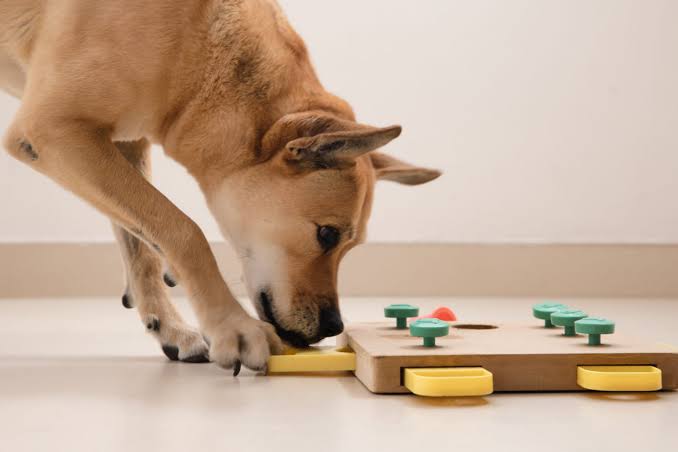
Not all interactive dog toys work the same way. Before jumping to product picks, it helps to understand what each type actually does — and which dog it’s built for.
| Type | How it works | Best for |
|---|---|---|
| Puzzle feeders / boards | Slide, flip, or spin compartments to release treats | Smart breeds, fast eaters |
| Treat-dispensing toys | Roll or chew the toy → treats fall out randomly | All dogs, solo play |
| Snuffle mats | Sniff out hidden treats in fabric strips | Scent hounds, anxious dogs |
| Lick mats | Lick spread food off textured surface | Anxious dogs, calming |
| Tug & flirt pole | Human-dog interactive chase/tug play | High-energy dogs, bonding |
| Automatic / electronic | Self-moving toy dog plays with alone | Busy owners, indoor play |
Type 1: Puzzle Feeders & Puzzle Boards
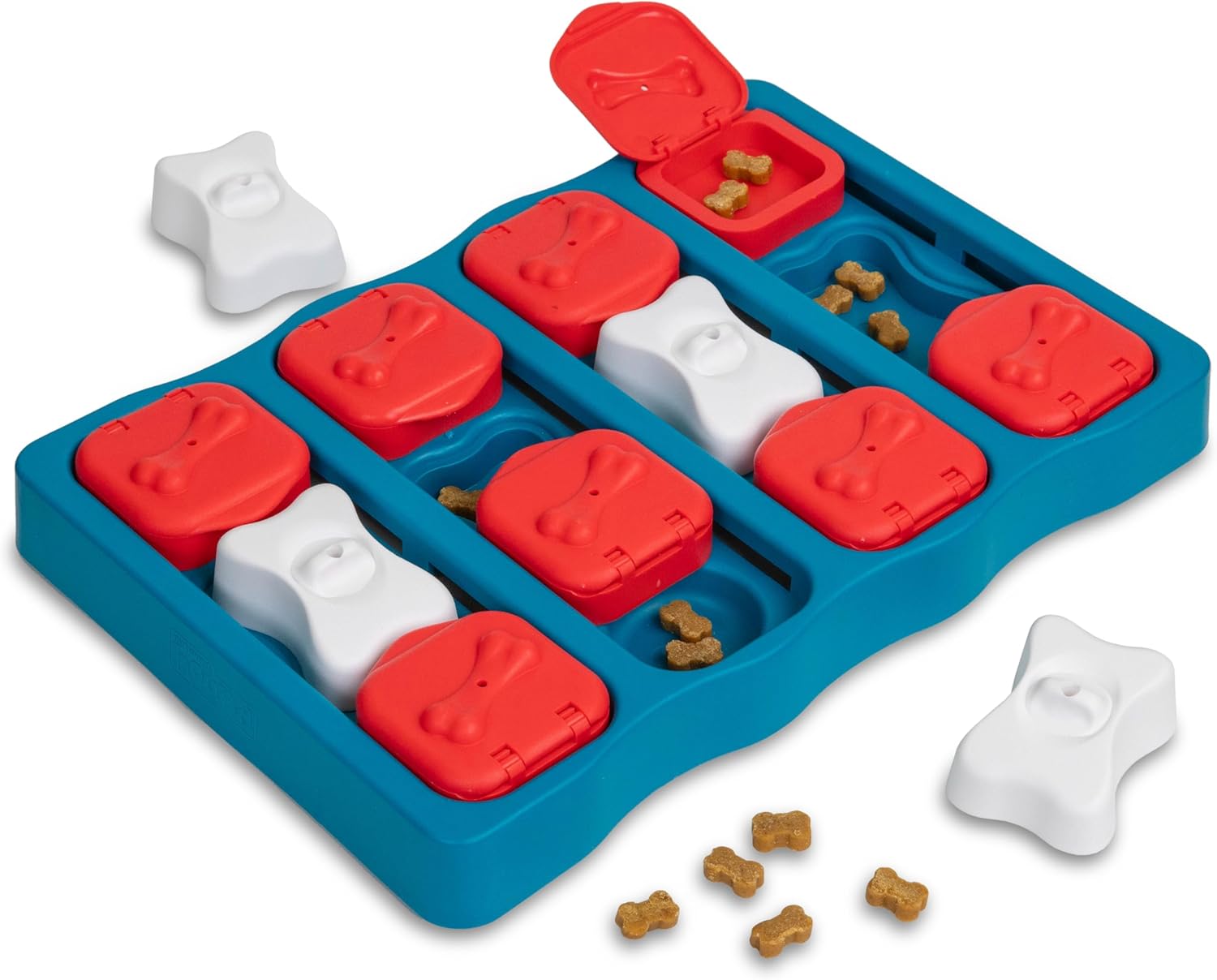
What it is: A flat or multi-level board with compartments, sliders, and spinners that hide treats. Your dog has to figure out the correct sequence of moves to uncover the food.
The gold standard in this category is the Nina Ottosson system by Outward Hound, which uses a 4-level difficulty scale: Level 1 (Beginner) through Level 4 (Expert). Use this as your framework when shopping.
Difficulty Levels Explained (Nina Ottosson)
Level 1: Single-action moves. Flip or slide one piece. Great for first-timers.
Level 2: Two-step actions — spin a disc, then lift a bone. Ideal for most adult dogs.
Level 3: Three-step sequences, removable pegs, multiple obstacles.
Level 4: Complex multi-action boards for problem-solving breeds like Border Collies and Poodles.
Best for: Border Collies, German Shepherds, Labradors, Poodles, Golden Retrievers, and any dog that finishes their food in under 10 seconds.
Not ideal for: Dogs who’ve never done enrichment work — they’ll get frustrated and disengage. Start with Level 1, always.
Our Tip
The most common puzzle toy mistake is buying a Level 3 board for a dog who’s never seen one. A dog who can’t solve it doesn’t try harder — they walk away. Start easy, build confidence, then level up over 2–4 weeks.
Type 2: Treat-Dispensing Toys
What it is: A rubber or plastic toy with an interior chamber your dog fills with kibble or soft treats. As your dog rolls, bats, or chews the toy, treats fall out through a small opening — unpredictably, which is the key to keeping engagement high.
Unlike puzzle boards, these don’t require logical problem-solving — just persistence. That makes them suitable for every intelligence level and age group. The KONG Classic is the most widely recommended toy in this category by veterinarians worldwide.
Important note for large breeds: For dogs predisposed to gastric dilatation-volvulus (GDV/bloat) — Great Danes, German Shepherds, Dobermans — slowing meal consumption from 30 seconds to 15–20 minutes isn’t just enrichment. It’s a clinical recommendation from veterinary internists.
Best for: All dogs. KONG Classic for moderate chewers. KONG Extreme (black) for aggressive chewers.
Type 3: Snuffle Mats
What it is: A mat made of a rubber base and dense fabric strips in which you hide kibble or small treats. Your dog uses their nose to sniff out every hidden piece.
Dogs have over 300 million olfactory receptors — 40 times more than humans. Sniffing is genuinely one of the most mentally tiring activities a dog can do. A 10-minute snuffle session can leave a dog calmer and more satisfied than a 30-minute fetch game.
Best for: Scent hounds (Beagles, Basset Hounds, Bloodhounds), anxious dogs, senior dogs with reduced mobility, dogs who eat too quickly.
Not ideal for: Dogs who chew or eat fabric. Always supervise the first few sessions.
Bonus Use
We love recommending snuffle mats for hyperactive dogs before crate time — even 5–8 minutes of snuffling noticeably brings arousal levels down. It’s one of the most underrated calming tools in the interactive toy world.
Type 4: Lick Mats
What it is: A flat mat with a textured surface where you spread soft food (peanut butter, plain yogurt, wet dog food, banana). Your dog licks the surface to get every last bit.
The mechanism here is behavioral: licking triggers the release of serotonin and endorphins — the same calming chemicals activated by grooming. This makes lick mats particularly powerful for anxiety management, not just enrichment.
Best for: Anxious dogs, dogs with separation anxiety, during bath time or nail trims, puppies, senior dogs.
Critical: Always check your spread ingredients for xylitol — an artificial sweetener found in many peanut butter brands that is highly toxic to dogs, even in small amounts.
Pro Tip
Freeze your lick mat after spreading. A frozen lick mat extends engagement from ~5 minutes to 20–30+ minutes. Prep 3–4 at a time and store in the freezer for easy daily use.
Type 5: Tug Toys & Flirt Poles
What it is: Tug toys are rope or rubber toys for human-dog play. Flirt poles are a long pole and cord with a lure that you animate to trigger your dog’s prey drive without using your hands.
These are the only category that primarily require you to be an active participant. The payoff: a great bonding session plus your dog burns physical and mental energy through the strategy of chase and anticipation.
Training bonus: Tug games are one of the best natural environments to teach “drop it” and “leave it” — your dog is already highly motivated, so compliance gets immediately rewarded by restarting the game.
Best for: High-energy breeds — Terriers, Huskies, Belgian Malinois, Vizslas, Border Collies. Also great for puppies who need a legal outlet for mouthing.
Safety Note
Don’t let your dog win every single time — this can escalate arousal and reinforce poor impulse control. End each session on your terms, asking for a sit or a drop before putting the toy away.
Type 6: Automatic & Electronic Toys
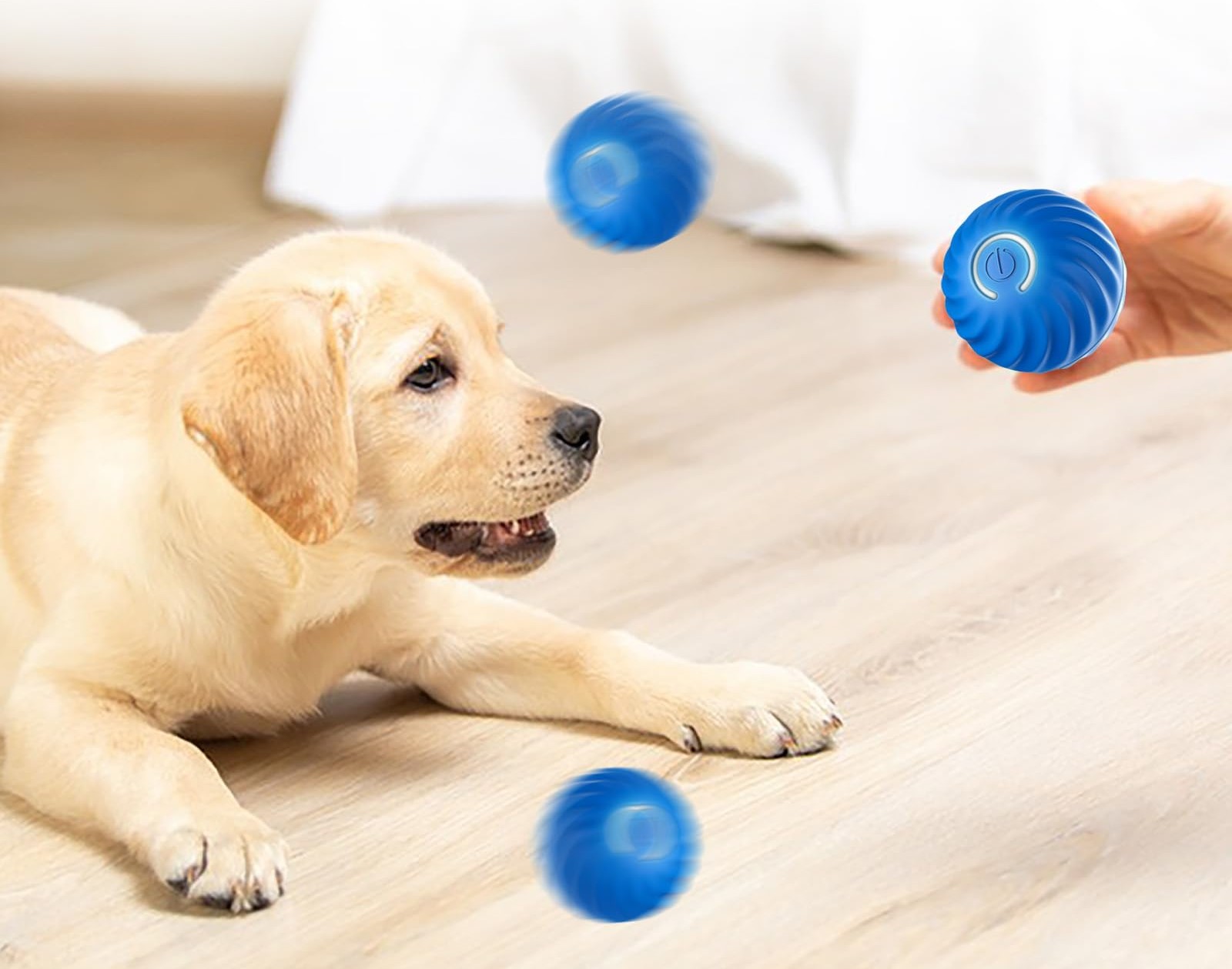
What it is: Self-moving balls, rotating launchers, or sensor-activated toys that your dog can play with independently, without you holding the other end.
The best electronic toys in 2025 use irregular, unpredictable movement patterns — not a simple circle — because predictable movement loses a dog’s interest within minutes. Look for USB-C rechargeable models over battery-powered ones.
Best for: Busy owners, dogs that self-play well, high-energy breeds needing indoor exercise.
Limitations: Not substitutes for human interaction. And not designed for aggressive chewers — motors, sensors, and casings are not chew-proof.
3. How to Choose the Right Interactive Dog Toys: 5 Criteria
Before you click “add to cart”, run your dog through these five filters. They’ll save you money on toys that get ignored or destroyed in the first session.
Criterion 1: Chew Style (the most important filter)
| Chew Style | Description | Safe Interactive Toy Types |
|---|---|---|
| Gentle nibbler | Soft contact, not destroying toys | All types — full range available |
| Moderate chewer | Chews regularly, occasionally damages softer toys | KONG Classic, Level 1–2 puzzles, snuffle mats, lick mats |
| Aggressive / power chewer | Destroys most toys within minutes | KONG Extreme, West Paw Zogoflex only — skip puzzles & electronics |
Criterion 2: Intelligence & Enrichment Experience
Never judge this by breed alone — it’s about your individual dog’s experience with enrichment. A Border Collie who’s never seen a puzzle will struggle just as much as a Bulldog.
- First-timer: Level 1 puzzle boards, basic rubber treat balls. Keep sessions to 5–10 min.
- Some experience: Level 2 puzzles, multi-chamber treat dispensers.
- Enrichment veteran: Level 3–4 boards, combination toys, advanced snuffle mats.
Criterion 3: Play Goal
| Your goal | Best toy type |
|---|---|
| Reduce boredom during alone time | Treat-dispensing toy (KONG), automatic ball |
| Calm anxiety / overstimulation | Lick mat, snuffle mat |
| Slow down a fast eater | Puzzle feeder, PetSafe Kibble Nibble |
| Burn indoor energy on a rainy day | Flirt pole, automatic ball |
| Bond and train simultaneously | Tug toy, flirt pole |
| Cognitive support for senior dogs | Level 1 puzzle, lick mat |
| Mental enrichment for smart breeds | Level 2–4 puzzles, combination toys |
Criterion 4: Material Safety Checklist
- Non-toxic, BPA-free, phthalate-free — look for this explicitly on packaging
- No small detachable parts — screws, plastic eyes, button noses are all choking hazards
- Food-grade ABS plastic for puzzle boards — contact with treats should be food-safe
- Natural rubber preferred over cheap PVC for chew toys
- Electronic toys: verify battery compartment is secured against determined paws
Criterion 5: Budget Guide
| Budget | What you get | Our recommendation |
|---|---|---|
| Under $15 | Lick mat, basic snuffle mat, simple treat ball | Excellent entry point — start here for first-timers |
| $15–$30 | Nina Ottosson Level 1–2, KONG Classic, good snuffle mat | Sweet spot for most dog owners |
| $30–$60 | Advanced puzzles, premium lick mats, automatic balls | Worth it for high-intelligence dogs |
| $60+ | Premium auto-launchers, smart toys | For specific needs (fetch training, high-drive apartment dogs) |
4. Our Top Picks by Category
We selected these eight products based on veterinary recommendations, verified user reviews from thousands of real dog owners, and hands-on testing data from the pet review community. Every pick is available in the US, Canada, and Australia via Amazon.
4.1. Puzzle Boards
Best Overall Puzzle — Level 2
Nina Ottosson Dog Tornado by Outward Hound
Three spinning disc layers, each hiding treats in compartments underneath. Your dog has to rotate each layer to reveal the rewards — a satisfying multi-step challenge that most dogs can learn in 2–3 sessions.
Pros: Three layers of increasing difficulty in one toy. Dishwasher-safe. Works for beginners and intermediates.
Watch out: Not suitable for power chewers who’ll try to flip the board. Use on a non-slip mat.
Price: ~$12
Explore a treat puzzle toy for dogs that makes feeding time fun! It’s great for their mental stimulation and a fun challenge for them here
Nina Ottosson Dog Brick by Outward Hound
Brick-shaped board with flip lids and sliding bones covering treat compartments. Simpler layout than the Tornado — great for dogs being introduced to puzzle play for the first time. Get it now
Pros: Intuitive layout, builds confidence before moving to harder puzzles. BPA-free, dishwasher-safe.
Watch out: Can feel too easy for dogs who’ve done any enrichment before. Step up to Level 3 within a few weeks.
Price: ~$13
4.2. Treat-Dispensing Toys
Best Overall Treat Toy
KONG Classic (Get discount link)
The KONG needs no introduction — it’s been the vet’s go-to recommendation for over 40 years. The hollow interior fits kibble, wet food, peanut butter, and KONG-specific pastes. Freeze it for a 20–30 minute solo play session.
Pros: Near-indestructible natural rubber for moderate chewers. Available in 6 sizes. Freezable. Endorsed by vets, trainers, and shelters worldwide.
Watch out: Not designed for true aggressive chewers — use the black KONG Extreme instead.
Price: ~$8
Best for Aggressive Chewers
KONG Extreme (Black) (Get discount link)
Same design as the Classic, but made from ultra-durable black rubber — the toughest in the KONG line. Designed specifically for dogs who destroy standard KONG Classics. Still stuffable, still freezable.
Pros: Toughest rubber in the KONG lineup. Same versatile design. Vet and shelter recommended for power chewers.
Watch out: Slightly less flexible than Classic — go Extreme only if Classic shows wear.
Price: ~$26
4.3. Snuffle Mats
Best Scent & Foraging Toy
AWOOF Pet Snuffle Mat
A generously sized snuffle mat with multiple fabric heights and densities — some sections easy to sniff, others requiring more focused searching. Non-slip rubber backing keeps it in place even with enthusiastic noses.
Pros: Large coverage area, non-slip base, machine washable, good fabric density for extended engagement.
Watch out: Some dogs initially try to flip or mouth the mat — supervise first 2–3 sessions. Not for fabric chewers.
Price: ~$12
4.4. Lick Mats
Best Calming & Anxiety Toy
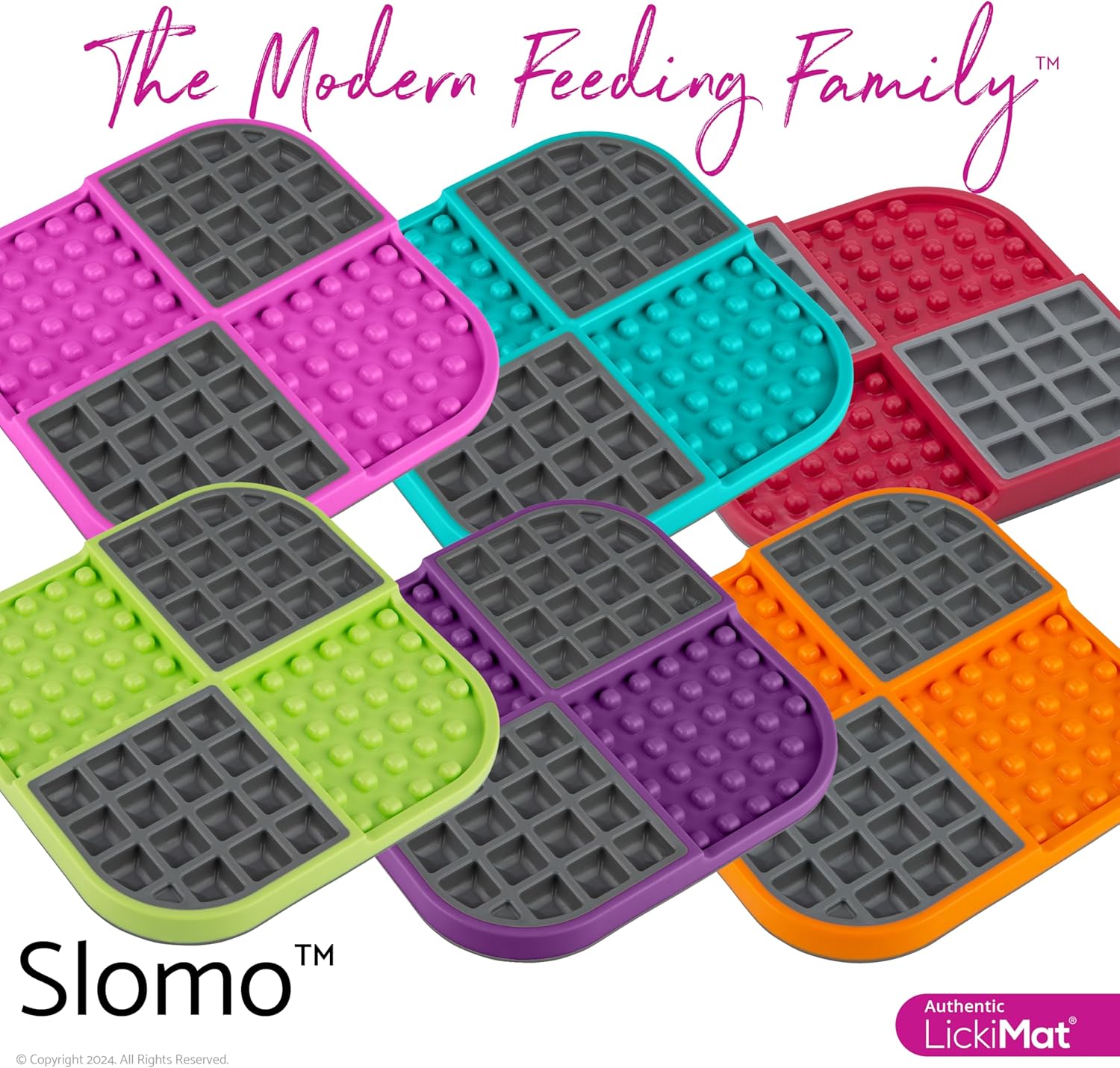
LickiMat Classic Buddy
The original lick mat with a square grid texture — simple, effective, and the most imitated design in the category. Spread peanut butter (xylitol-free), plain yogurt, or wet food across the surface and watch your dog settle for 10–20 minutes.
Pros: Dishwasher-safe, freezer-safe, non-toxic TPR material. Vet-recommended for pre-vet anxiety, bath time, and separation training.
Watch out: Smaller dogs can finish it quickly if the spread is too thin. Apply generously, or freeze for extended use.
Price: ~$17
4.5. Tug & Chase Toys
Best for High-Energy Dogs
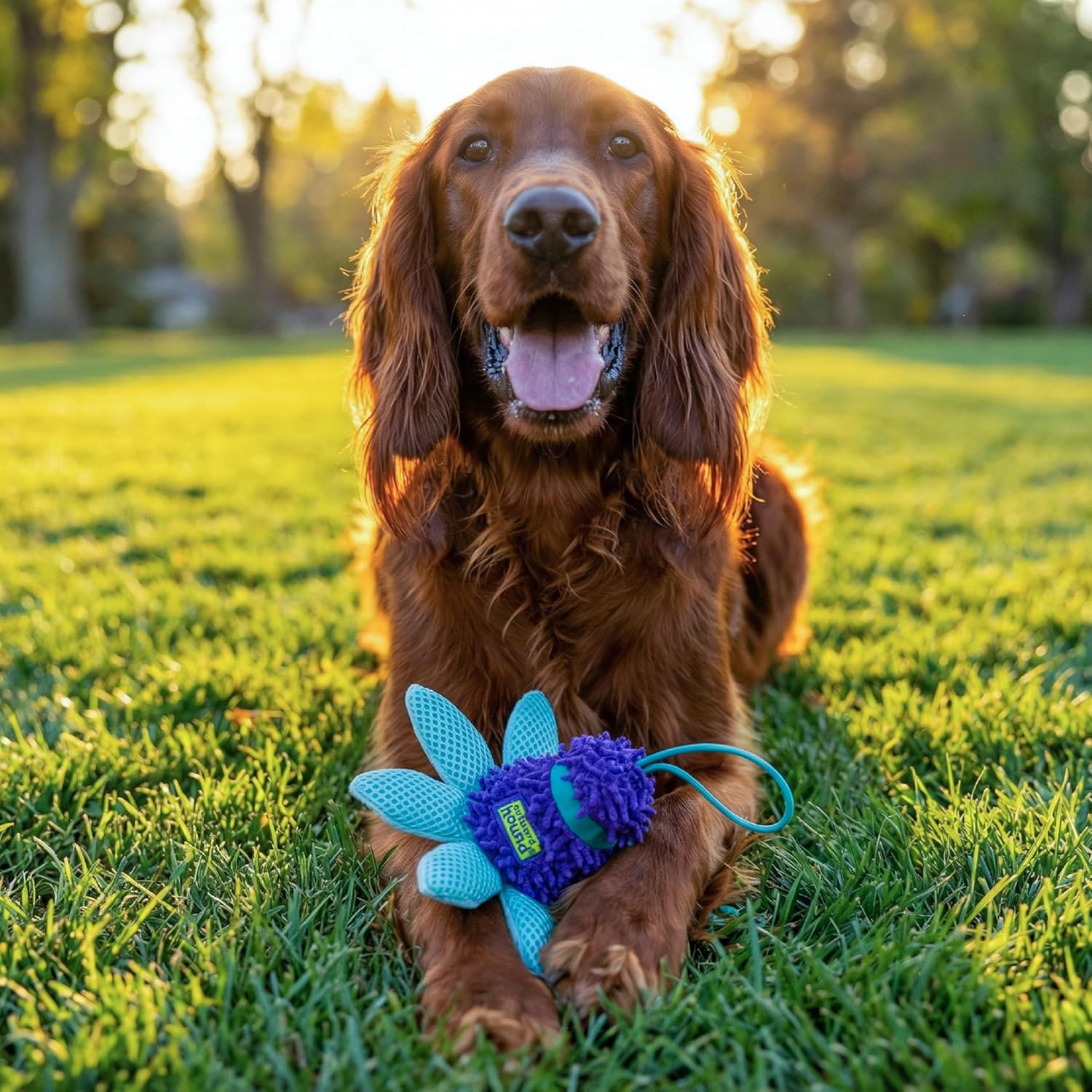
Outward Hound Tail Teaser Flirt Pole
A 24-inch wand with a cord and fabric lure that you sweep along the ground. Triggers prey drive without your hands anywhere near the action — great for working breeds, puppies, and dogs learning bite inhibition.
Pros: Affordable, durable wand, replacement lures available separately. Safe distance between your hand and your dog’s teeth.
Watch out: Requires an active human — not a solo toy. Keep sessions to 5–10 minutes to avoid overheating.
Price: ~$11
4.6. Automatic & Electronic Toys
Best Automatic Toy
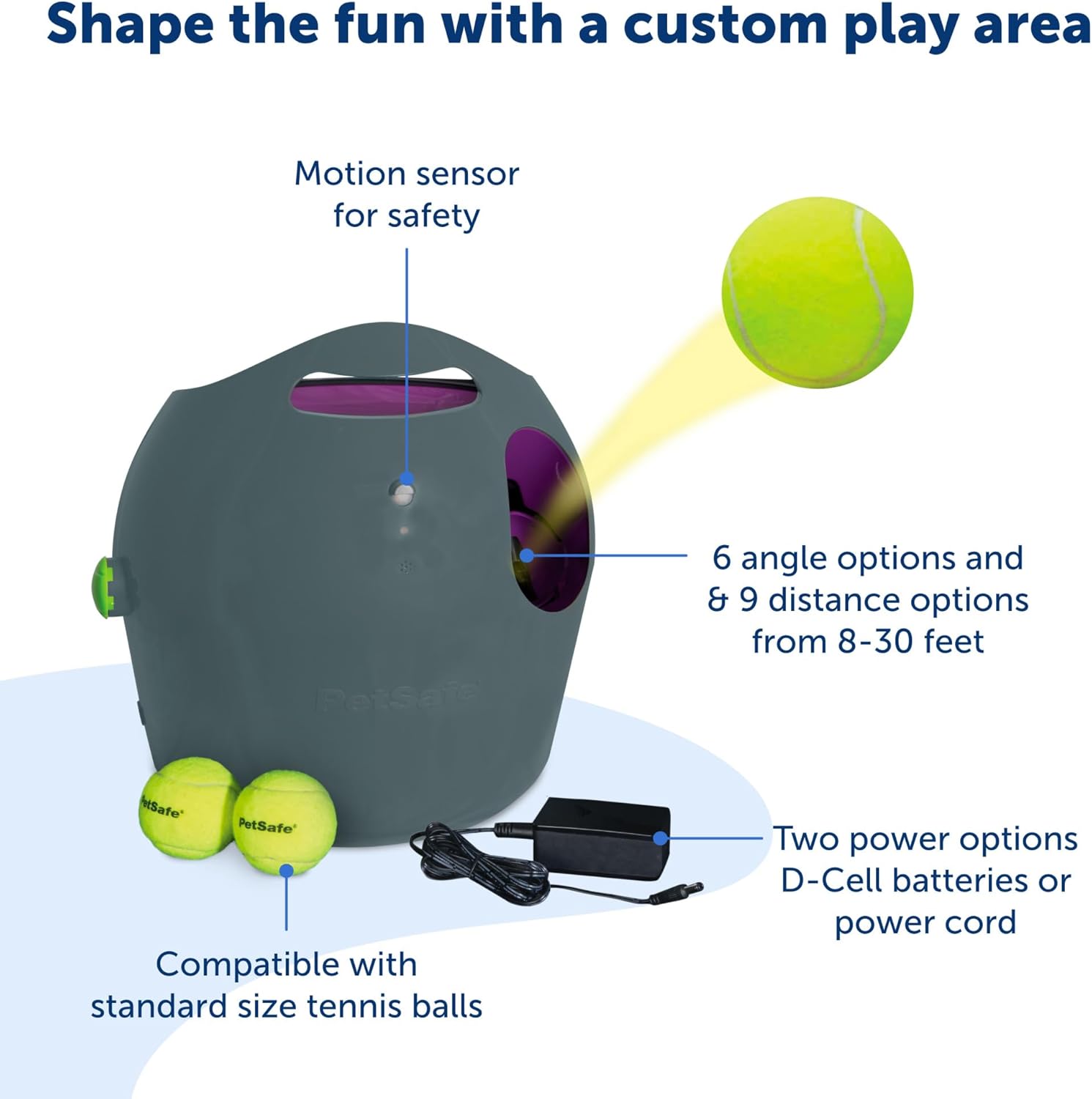
PetSafe Automatic Ball Launcher
Launches standard tennis balls at adjustable distances (6–30 feet) and angles. Motion-sensor activated — your dog drops the ball in, the launcher throws it again. Works indoors and outdoors.
Pros: Adjustable distance and angle. Works indoors. Most dogs learn the drop-and-launch cycle within 1–2 sessions.
Watch out: Premium price point. Takes up floor space. Not for dogs who’d rather chew the ball than retrieve it.
Price: ~$150
Affiliate disclosure: The Pet Geek participates in the Amazon Associates Program. We earn a small commission at no extra cost to you. All product selections are editorially independent.
5. Interactive Toys by Dog Size
Size matters more than most buyers realize — both for safety (choking risk) and engagement (a toy too large for a small dog is frustrating; one too small for a large dog is a choking hazard).
| Size | Weight | Best Types | Avoid |
|---|---|---|---|
| XS / Toy | Under 10 lbs | Mini puzzles, small lick mats, soft snuffle mats | Full-size boards (overwhelming) |
| Small | 10–25 lbs | Level 1–2 puzzles, KONG S/M, mini snuffle mats | Full-size flirt poles |
| Medium | 25–60 lbs | Full range — Level 2–3 puzzles, KONG Classic M/L | N/A — most products fit this range |
| Large | 60–100 lbs | KONG Extreme L, large puzzles, large flirt poles | Thin plastic puzzle boards |
| XL / Giant | 100+ lbs | KONG Extreme XL, large snuffle mats, heavy rope toys | Electronic toys (not built for this jaw force) |
6. Interactive Dog Toys by Life Stage
Puppies (0–12 months)
Puppies are in a critical socialization and learning window, but their attention spans are short (3–5 minutes per session) and adult teeth aren’t fully set until around 6 months. Prioritize soft, safe materials and easy challenges to build confidence — not difficulty.
- Best picks: KONG Puppy (softer pink/blue rubber), Level 1 puzzle boards, baby snuffle mats, soft lick mats
- Freeze it: a frozen KONG with kibble and wet food is the single best tool for crate training and teething relief
- Avoid: advanced puzzles (frustration), hard nylon, electronic toys (overstimulation), toys with detachable small parts
Adult Dogs (1–7 years)
This is the age range with the widest options. We recommend starting with a treat-dispensing toy and a Level 2 puzzle as your foundation, then adding a snuffle mat or lick mat based on your dog’s personality. Rotate toys every 2–3 days to maintain novelty.
- Combination approach: KONG during alone time + puzzle board during supervised play + snuffle mat before crate = well-rounded daily enrichment
- High-drive breeds: add a flirt pole 3–4× per week for a physical + mental outlet
Senior Dogs (7+ years)
Senior dogs need mental enrichment more, not less — but the format needs to adapt. Reduced mobility means less jumping, spinning, and chasing. The goal shifts to gentle daily cognitive engagement.
- Best picks: Lick mats (zero physical effort, maximum calming), Level 1 puzzles, flat snuffle mats
- Easy upgrade: serve meals on a lick mat or Level 1 puzzle board instead of a regular bowl
- Avoid: flirt poles and automatic balls (joint strain), advanced multi-level puzzles requiring sustained standing
The Pet Geek Recommends
For senior dogs, we particularly love the LickiMat + frozen KONG Classic combo as a daily routine. The lick mat goes down when you’re busy; the frozen KONG comes out at rest time. Simple, vet-endorsed, and your senior dog will be visibly calmer.
7. Interactive Dog Toys Safety Guide
Even the best toys can become hazards if used incorrectly. Here’s what we always tell our readers before introducing any new interactive toy:
Always Do This
Supervise the first 2–3 sessions with any new toy before trusting it for solo play.
Match size to your dog — large enough not to be swallowed, manageable to carry.
Check for wear before every session — cracks in rubber, broken plastic pieces, fraying fabric are all discard signals.
Use food-safe treat fillings — always check peanut butter and spreads for xylitol.
| Toy Type | Key Safety Check | When to Discard |
|---|---|---|
| Puzzle boards | Check for cracked, sharp plastic edges and loose pieces | Any crack, sharp edge, or piece that breaks off |
| Rubber treat toys | Inspect interior cavity for tears; surface for deep gouges | When chunks begin to separate or toy shows through-and-through wear |
| Snuffle mats | Check fabric strips for chewing, loosening, or separation from base | Loose strips or significant fabric chewing |
| Lick mats | Check for bite marks or pieces lifted from surface | Any chunk missing — ingesting silicone causes GI obstruction |
| Electronic toys | Verify battery compartment integrity; check cords on flirt poles | Exposed batteries, frayed cords, or motor components accessible to chewing |
A Note on “Indestructible” Claims
No interactive toy is truly indestructible. “Indestructible” on a product label means “more durable than average” — not “will survive a determined power chewer unsupervised.” When in doubt: supervise.
Key Takeaways
- Interactive toys engage your dog’s brain — 15 min of mental play ≈ 1 hour of physical exercise.
- The 6 types: puzzle feeders, treat dispensers, snuffle mats, lick mats, tug/flirt poles, automatic toys.
- Match the toy to your dog’s chew style first — power chewers should not use puzzle boards or electronics.
- Always size-match and introduce supervised — discard at first sign of wear.
- Best all-round combo: KONG Classic (alone time) + Nina Ottosson Level 2 (supervised) + LickiMat (calming).
8. Frequently Asked Questions
What are interactive dog toys?
Interactive dog toys are toys that require active engagement from your dog — through sniffing, problem-solving, licking, or chasing — in order to receive a reward. They’re designed to provide mental stimulation beyond what physical exercise alone offers.
How long should a dog play with interactive toys per day?
Most veterinary behaviorists recommend 15–20 minutes of dedicated mental enrichment per day as a minimum, ideally broken into two sessions. High-energy or high-intelligence breeds may benefit from more.
Are interactive dog toys good for separation anxiety?
Yes — with caveats. Interactive toys are a helpful management tool, not a treatment. A frozen KONG or lick mat can create a positive association with your departure and reduce distress during short absences. For moderate to severe separation anxiety, we recommend working with a certified veterinary behaviorist alongside enrichment tools.
What’s the difference between a puzzle toy and a treat-dispensing toy?
A puzzle toy requires your dog to execute a specific sequence of actions — slide this, flip that — to uncover treats. A treat-dispensing toy releases treats randomly as your dog rolls or chews it, without requiring logical problem-solving. Puzzle boards are more cognitively demanding; treat dispensers are suitable for any intelligence level.
What are the best interactive dog toys for a smart dog?
For dogs with high problem-solving ability, we recommend the Nina Ottosson Dog Twister (Level 3) or the Nina Ottosson Dog Casino (Level 3). If your dog solves Level 3 in under 2 minutes, move to Level 4 or combine multiple puzzle boards simultaneously.
Are puzzle toys good for senior dogs?
Absolutely — with the right difficulty level. Level 1 puzzles and lick mats are particularly good for seniors because they provide cognitive engagement without strenuous physical movement. Daily mental enrichment helps slow cognitive decline in aging dogs.
How often should I rotate my dog’s toys?
We recommend rotating every 2–3 days. Dogs habituate to objects quickly — the same toy every day loses its novelty. Keep 6–8 toys in rotation and bring out 2–3 at a time to maintain the “new toy” excitement level without buying more toys.
Related Guides from The Pet Geek
Sources: American Kennel Club; VCA Animal Hospitals; Outward Hound / Nina Ottosson enrichment research; Pet Professional Guild; Veterinary behaviorist guidelines on canine cognitive enrichment.