You are camping in a national forest with your dog, or managing a rural property where burying hundreds of feet of wire is not practical. A GPS dog fence uses satellite positioning to create a virtual boundary of any shape, anywhere you have open sky — no wire, no radio transmitters, no fixed installation. The dog wears a GPS collar that tracks its real-time position and delivers a progressive warning and correction when it approaches the boundary you defined on your smartphone.
This guide covers how GPS fencing actually works, which products do it well, where the technology falls short, and whether the cost makes sense for your situation.
How GPS Dog Fences Work
Satellite Positioning
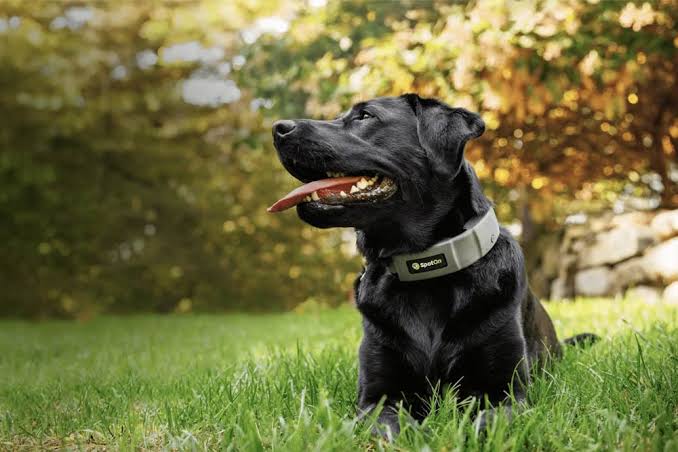
The collar contains a GPS receiver — and in higher-end units, a multi-constellation GNSS receiver that uses signals from GPS (U.S.), GLONASS (Russia), Galileo (Europe), and BeiDou (China) simultaneously. More satellite signals mean faster position lock and better accuracy. The collar calculates its own position continuously and compares that to the boundary stored in its memory or received from the connected app.
Boundary Creation
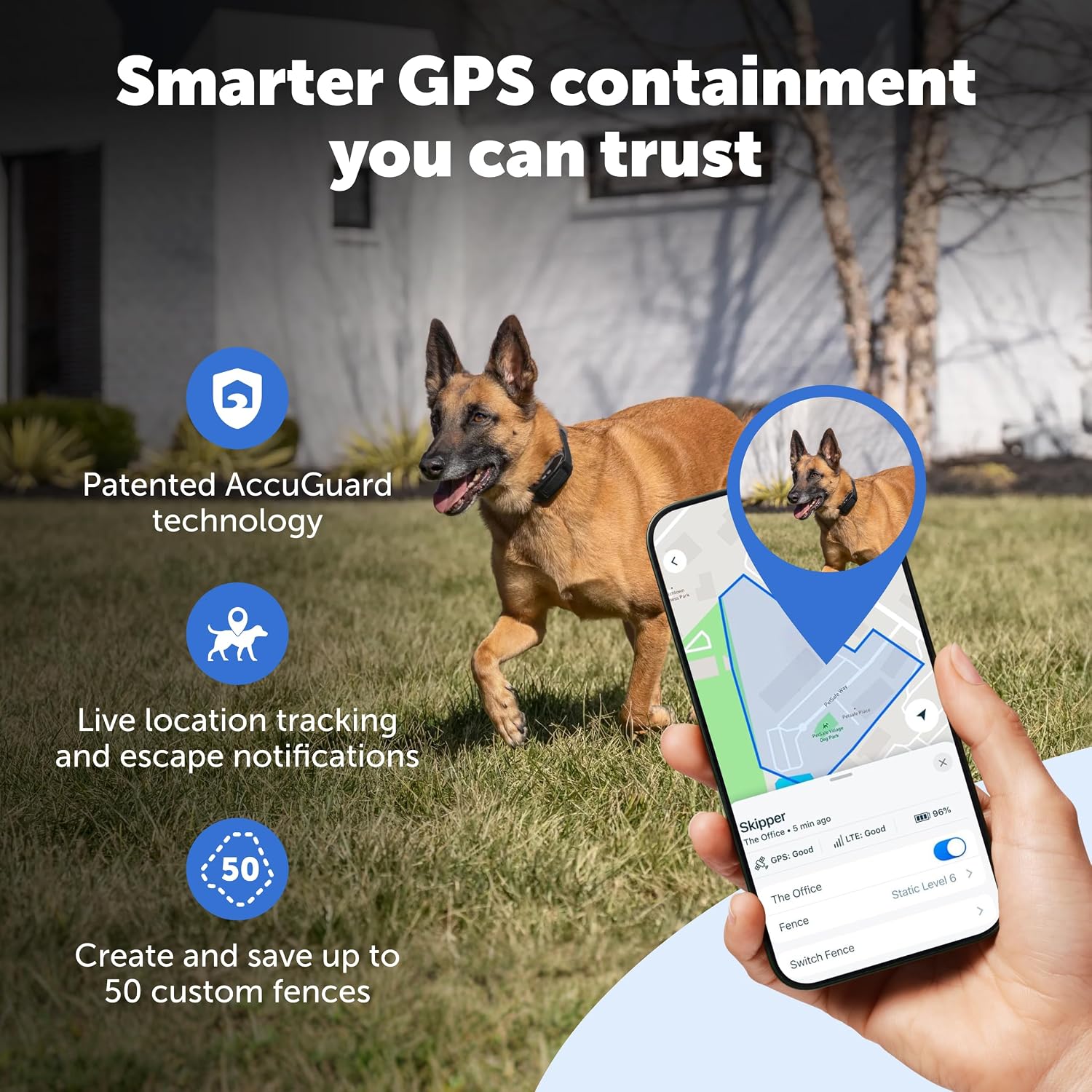
You define the boundary in a smartphone app. Most platforms give you two options: draw the boundary on a satellite map view by tapping points, or physically walk the perimeter with your phone while the app records your path using your phone’s GPS. The second method is more accurate on large properties because it captures the real edge of terrain features, tree lines, and structures. Once saved, the boundary is pushed to the collar. Higher-end systems like SpotOn store multiple boundaries on the collar itself so they activate automatically by location — useful if you travel to the same places repeatedly.
Warning and Correction Sequence
When the dog approaches the boundary, the collar delivers a progressive response: first an audio tone or beep, then a vibration, then a static correction (also called a stimulation). The intensity and timing of each stage are adjustable in the app. The buffer between the warning zone and the correction zone matters — you want the dog to hear the warning and turn back before reaching the correction. Most systems let you set this buffer distance, typically 5–30 feet inside the boundary.
Accuracy and Why It Matters at the Boundary
Modern GPS dog fences are accurate to approximately 3–9 feet under open sky with good satellite lock. That sounds precise, but at the boundary it has direct consequences: if your correction zone is set exactly at the boundary line and accuracy is variable by 6 feet, the effective correction zone shifts by that amount on any given position update. Setting the boundary several feet inside the property line you actually want to enforce helps account for this variation. Most manufacturers recommend placing your virtual boundary at least 10 feet inside any physical hazard — road, creek, drop-off — for this reason.
Position Refresh Rate
The collar recalculates position every 1–3 seconds in quality units. A dog moving at 15 mph covers roughly 22 feet per second, meaning at a 2-second update interval the collar’s last known position is already up to 44 feet out of date. This is why fast dogs — particularly sight hounds, herding breeds, and working breeds — are more likely to overshoot the boundary before a correction registers. Refresh rate is one of the most under-discussed specifications when comparing GPS fence products.
Connectivity Architecture
Most GPS fences use a combination of Bluetooth (for close-range app connection and collar configuration) and cellular data (for remote tracking and boundary sync when you are away from home). Bluetooth alone does not carry the real-time tracking data across distances — you need cellular for that. This is why most GPS fence systems require a monthly subscription: the collar uses a cellular data plan, similar to a small IoT device, to communicate with the companion app and cloud servers.
The containment function — warning and correcting the dog at the boundary — typically works without cellular, because the boundary is stored on the collar and the GPS receiver operates independently of the internet. Where cellular matters is remote monitoring, live tracking, and escape alerts.
Works Anywhere With Open Sky
Because GPS is a passive receive-only technology, the collar works anywhere satellites are visible: farms, beaches, campgrounds, forest clearings, large estates in any country — without dependence on transmitters, buried wire, or home Wi-Fi.
The Highlighted GPS Fence Products
Halo Collar
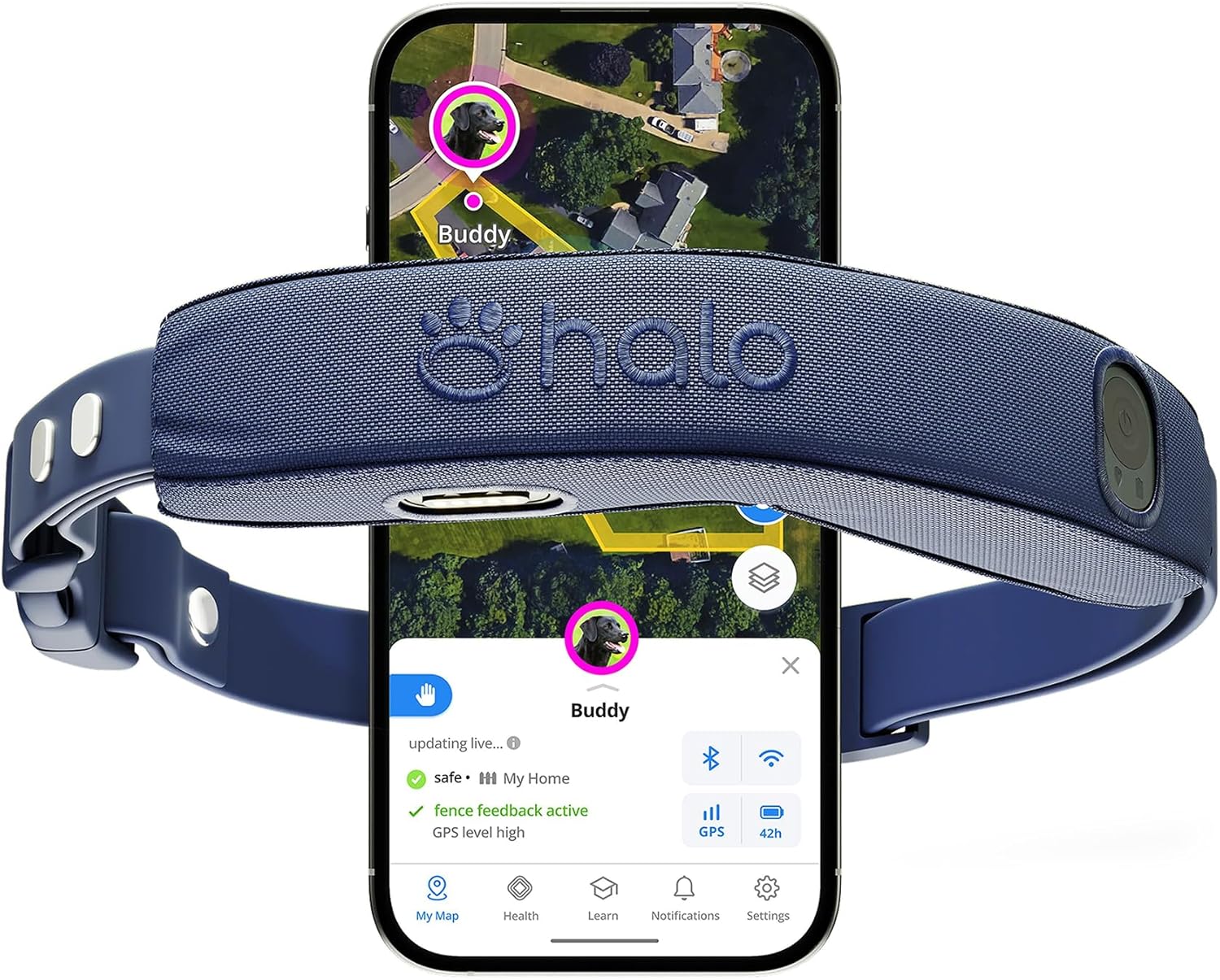
The Halo Collar is probably the most visible GPS fence product due to its association with trainer Caesar Milan, whose training philosophy is integrated into the companion app as a structured behavior program. The collar uses GPS plus cellular connectivity and supports both circular boundaries and custom polygon boundaries. It holds multiple saved boundary presets.
Price is approximately $999 for the collar plus a required monthly or annual subscription (roughly $30–$100/month depending on plan tier). The subscription unlocks cellular tracking, remote monitoring, and the training program content.
Best for: Owners who want an integrated training and containment system, are comfortable with an ongoing subscription cost, and have dogs over roughly 20 lbs.
Limitations: The subscription makes this one of the highest long-term cost options. The containment function depends on consistent GPS signal, and the training program — while well-produced — does not replace working with a professional trainer for dogs with serious behavioral issues.
SpotOn GPS Fence
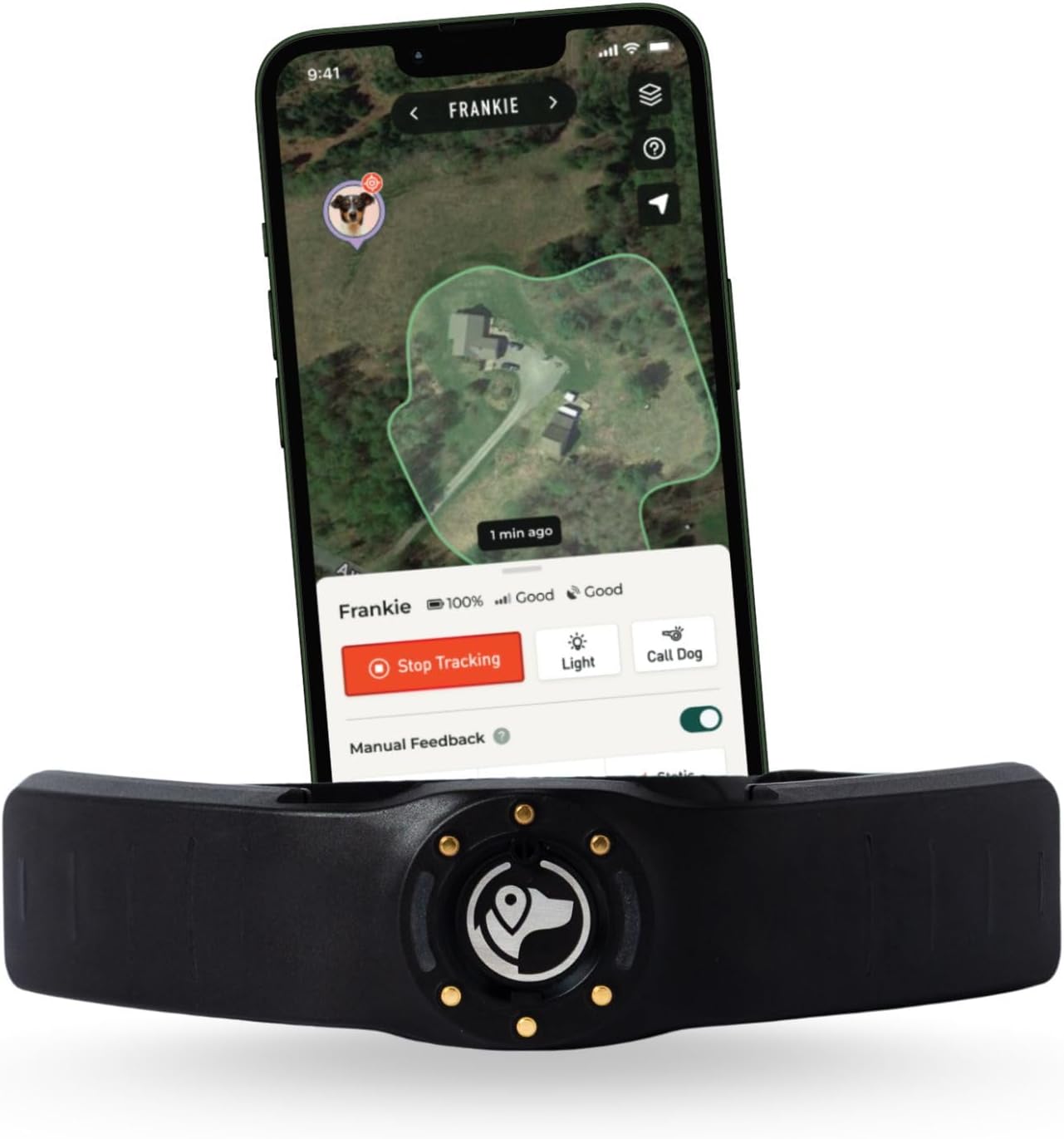
SpotOn is the most technically rigorous GPS fence system available for consumer use. It uses true GPS and supports genuinely arbitrary boundary shapes — you walk the perimeter and the app traces it. No subscription is required after purchase, which is a significant differentiator. Multiple boundaries can be stored on the collar and activate automatically by location. The system uses a multi-constellation GNSS receiver for better accuracy in challenging conditions.
The collar costs roughly $1,400–$1,500 at launch pricing (prices have varied). The higher price and no subscription model means SpotOn tends to be more economical over a 3+ year ownership horizon than subscription-based alternatives.
Best for: Large rural properties and farms, serious outdoor users, owners who want the most accurate and shape-flexible boundary without ongoing fees.
Limitations: The collar is physically large and heavy — not appropriate for smaller dogs. Initial setup requires patience and understanding of how GPS accuracy works.
PetSafe Guardian GPS Dog Fence
The PetSafe Guardian GPS represents the more accessible price tier in GPS dog fencing, typically running $200–$350 for the collar and using a subscription for cellular features. It uses GPS and cellular connectivity with app-based boundary setting and supports circular or custom boundaries depending on the configuration.
Best for: Owners who want GPS-based containment without the premium pricing of Halo or SpotOn and are comfortable with the trade-off in accuracy and boundary flexibility.
Limitations: Accuracy is less precise than the SpotOn system, and the boundary shape flexibility is more limited. The cellular subscription is required for remote monitoring. Not recommended for large properties over a few acres where boundary precision matters at distance.
Garmin Alpha and Delta Series
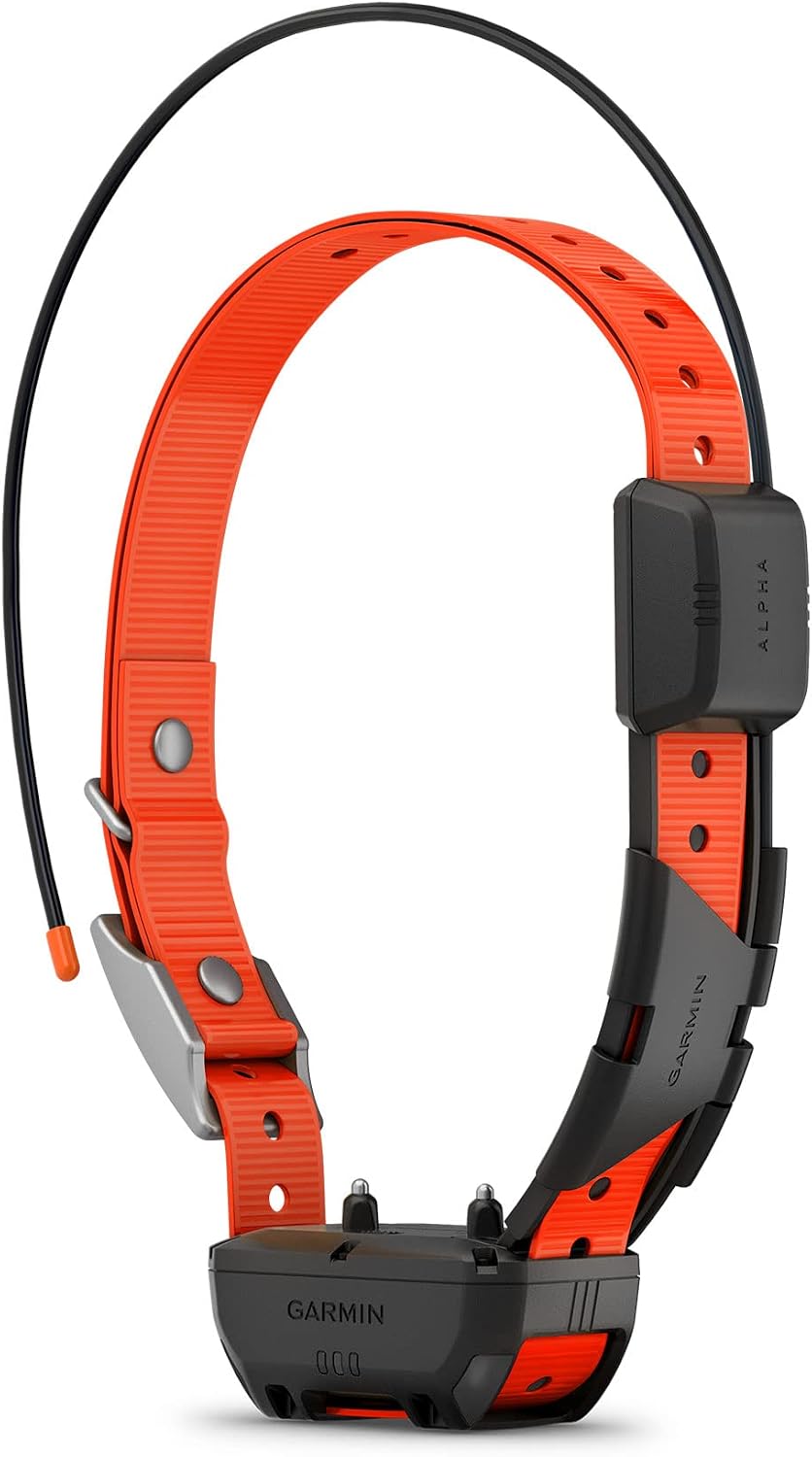
Garmin’s Alpha and Delta systems are worth mentioning because they appear in GPS dog fence comparisons regularly — but they are not dedicated containment fences. They are GPS tracking and training systems primarily designed for hunting dogs. They include geofence alert features (you get a notification if the dog leaves a defined area) but do not deliver progressive boundary corrections in the way a containment fence does. If your primary goal is containment rather than tracking, Garmin is not the right category of product.
Limitations of GPS Dog Fences
Cost
GPS dog fences are the most expensive category of pet containment. Entry-level systems start around $200–$300 for the collar alone. Premium systems like SpotOn and Halo run $999–$1,500. Compare this to an underground wire fence kit for a standard yard at $100–$350 installed as a DIY project, or a wireless radio fence at $100–$250. The cost differential is significant.
Subscription Fees
Most GPS fence systems require a monthly or annual cellular data subscription ranging from roughly $7–$30 per month, or $80–$360 per year depending on the system. Over three years, a $10/month plan adds $360 to your total cost. A system like Halo at $30/month adds $1,080 over three years on top of the collar purchase price. SpotOn’s no-subscription model looks expensive upfront but is often cheaper by year two or three.
Accuracy Limitations and Fast Dogs
The 3–9 foot accuracy range combined with 1–3 second position update intervals creates a real problem for fast dogs. A border collie or husky at full sprint can cover 20–30 feet in the time between position updates. This means a correction may trigger after the dog has already crossed the boundary — or not at all if the dog moves quickly enough through the correction zone. GPS dog fences work more reliably for dogs with a moderate pace and dogs that respond to warning tones before reaching the correction zone.
Battery Life
GPS is power-intensive. Most GPS dog fence collars offer 2–8 hours of active use on a single charge depending on GPS update frequency, cellular usage, and whether correction hardware is active. A collar used 4–6 hours daily needs to be charged every day or every other day. A dead collar provides zero containment. This is not a minor operational inconvenience — it is a safety-critical maintenance task.
Collar Size and Weight
GPS collars contain a GNSS receiver, cellular modem, battery, speaker, vibration motor, and static correction electrodes. All of that hardware adds up. Most GPS fence collars weigh 80–160 grams and are physically large. The minimum recommended dog weight for most GPS fence systems is 10–15 lbs, with some systems recommending 20 lbs minimum. For toy breeds, small terriers, and miniature spaniels, GPS fence collars are not appropriate — the collar would be disproportionately large relative to the dog’s neck and overall size.
Urban Canyons and Dense Tree Canopy
GPS signal requires clear line of sight to multiple satellites. Dense urban environments with tall buildings on multiple sides — a condition called “urban canyon” — reduce satellite visibility and degrade accuracy significantly. Dense forest canopy, particularly evergreen canopy, also attenuates GPS signals. If your property is heavily wooded or surrounded by tall structures, expect degraded accuracy and potentially unreliable corrections near the boundary. This is one reason underground wire fences remain the better choice for many wooded suburban properties.
Who Should Not Use a GPS Dog Fence
GPS dog fencing is not the right solution for: dogs under 10–15 lbs (collar too heavy), toy and miniature breeds regardless of weight in many cases, owners who will not reliably charge the collar daily, small urban apartment situations where a contained outdoor space is already provided, and households on a tight budget where the ongoing subscription cost is not sustainable.
Setting Up a GPS Dog Fence
1. App Setup and Collar Registration
All GPS fence systems use a companion smartphone app. Initial setup involves downloading the app, creating an account, and pairing the collar via Bluetooth. The collar firmware may need an update before the system is operational. Most setups complete in 20–45 minutes.
2. Drawing the Boundary
You have two methods. The first is to draw the boundary on a satellite map view in the app — tap points to create the polygon. The second is to walk the perimeter while the app records your GPS path, which is more accurate where property edges do not align with visible map features. Whichever method you use, set the boundary several feet inside the actual property line and well away from roads or water.
3. Warning Zone vs. Correction Zone
Most GPS fence systems divide the boundary area into a warning zone (where the audio and vibration trigger) and a correction zone (where the static stimulation triggers). Setting an appropriate buffer between these zones — typically 10–20 feet of warning zone before the correction zone — gives the dog time to respond to the audio warning and turn back before receiving a static correction. Dogs that have been properly trained to the warning tone often avoid corrections entirely once conditioned.
4. Training Protocol
The training process for a GPS fence follows the same principles as underground or wireless dog fences: introduce the dog to the boundary on-leash with flags marking the warning zone, allow the dog to hear the warning tone with you guiding the response, then progress to supervised off-leash sessions before leaving the dog unattended. Most manufacturers provide a 10–14 day training guide. Skipping training and simply placing the collar on the dog without introduction is a setup for failure and unnecessary stress on the animal.
5. Subscription Management
Treat subscription renewal as a safety-critical task. Most systems continue to provide containment corrections after a lapse — GPS and the stored boundary still operate — but remote monitoring, live tracking, and escape alerts stop working. Set a calendar reminder for renewal regardless of whether the system sends expiry notifications.
Is a GPS Dog Fence Worth the Cost?
When the Answer Is Yes
A GPS dog fence makes financial and practical sense when you have a large property — one acre or more — where underground wire installation would cost $500–$2,000+ in professional labor or a significant DIY time investment. It makes sense for rural and farm settings where the property boundary is irregular, extensive, or changes seasonally. It is the right choice for people who travel regularly with their dogs and need portable containment. And it serves renters or people in homes where permanent fence installation is prohibited or impractical.
When the Answer Is No
A GPS dog fence is not cost-justified for a standard suburban yard of a quarter to half acre. An underground wire fence kit for that property costs $100–$350 DIY, works without satellite signal, has no subscription fees, and has no battery to forget to charge. An underground fence installed by a professional on the same property might cost $500–$1,500, still less than a premium GPS collar alone. The GPS system’s advantages — portability, shape flexibility, any-location use — do not add value if you have a fixed yard and stay home.
Long-Term Cost Comparison
Consider a rough three-year comparison: a mid-range GPS system ($400 collar + $10/month) totals $760; Halo ($999 + $30/month) totals $2,079; SpotOn (~$1,400, no subscription) stays at $1,400. A professionally installed underground fence runs $800–$1,500 one-time; a DIY kit, $150–$350.
For a fixed property, the underground fence wins on cost over any multi-year horizon. The GPS fence wins when portability, travel use, or large-property flexibility is part of the equation. The honest question is: do you actually need those GPS-specific features?
Final Thought
We’ll be straight with you: a GPS dog fence is a genuine piece of engineering, and when it fits the right situation, it solves a problem nothing else really can. Being able to draw a boundary of practically any shape, anywhere, without digging a trench or burying a single wire — that’s a real advantage for a specific kind of owner: people on sprawling rural land, families who move or travel often, renters who can’t tear up someone else’s yard, or anyone whose property is too oddly shaped or hilly for a fence to make sense.
That said, we wouldn’t tell most suburban dog owners with a standard rectangular yard to run out and buy one. Underground wire fencing costs less upfront, doesn’t need daily charging, keeps working even when satellite signal gets flaky, and never comes with a monthly bill. If your property’s under an acre and isn’t shaped like a puzzle piece, wire is usually just the more sensible pick.
We’ve also noticed the technology has a sweet spot. It tends to work best on dogs who actually respect an audio warning, who are medium-to-large sized, and whose owners are disciplined about charging the collar every single day — miss that, and the whole system stops protecting anyone. Where it struggles is with fast, prey-driven dogs who won’t slow down for a beep, very small dogs, and yards buried under heavy tree cover that messes with the signal.
So ask yourself honestly which camp you’re in. If the things GPS actually offers — portability, custom shapes, working anywhere — genuinely apply to your life, the cost earns its keep. If they don’t, you’ll likely get better, cheaper results from something simpler.
This article is for informational purposes only. Always supervise dogs during the initial training period with any electronic containment system. GPS dog fences should not be used as the sole safety measure near roads, waterways, or other hazards. Consult your veterinarian before using any electronic collar on a dog with health conditions.
Frequently Asked Questions
How accurate is a GPS dog fence?
Most consumer GPS dog fence systems are accurate to 3–9 feet under good satellite conditions — open sky, no dense canopy, no tall obstructions. Multi-constellation GNSS receivers (GPS + GLONASS + Galileo) in premium units like SpotOn perform at the better end of this range. Dense tree cover and urban environments with tall buildings will degrade accuracy. For this reason, the effective correction zone should always be set well inside any physical hazard like a road.
Do GPS dog fences work without WiFi?
Yes. GPS is a passive receive-only technology — the collar receives satellite signals without internet access. The containment function (warning and correction) works without WiFi or cellular data; the boundary is stored on the collar. What requires cellular is remote monitoring, live tracking, and escape alerts. At a campsite with no signal, containment still operates.
Can a GPS dog fence work in the woods?
It depends on canopy density. Open woodland with a partial canopy allows enough satellite visibility for acceptable accuracy. Dense evergreen forest with a closed canopy will degrade signal significantly. Test the specific system’s accuracy in similar conditions before relying on it for containment, and check whether the manufacturer publishes signal performance notes for wooded terrain.
What is the best GPS dog fence on the market?
SpotOn GPS Fence is widely regarded as the most technically capable consumer GPS fence, with true arbitrary-shape boundaries, multi-constellation GNSS, no subscription requirement, and on-collar boundary storage. The Halo Collar is the best option for owners who prioritize an integrated training program and are comfortable with ongoing subscription costs. PetSafe Guardian GPS is the most accessible entry point. “Best” depends on your property size, budget model (upfront vs. subscription), and whether you need portability or just a yard solution.
Does the Halo dog fence require a subscription?
Yes. A Halo subscription is required for cellular tracking, remote monitoring, and the training program — roughly $30–$100 per month depending on plan tier. Basic containment may function locally without an active plan in some configurations, but the features that justify most of the Halo’s cost require an active subscription. Factor the multi-year subscription total into your budget before purchasing.
Can GPS dog fences be used for multiple dogs?
Yes. Most platforms — Halo, SpotOn, PetSafe Guardian — support multiple collars under a single account, each tracked independently with its own boundary settings. The practical constraint is cost: each additional collar requires its own purchase price and, on subscription-based systems, its own monthly plan. The costs compound quickly in a multi-dog household.
What happens if my dog runs past the GPS boundary fast?
Fast movement is the most common failure mode in GPS containment. The correction may trigger after the boundary is already crossed, or the dog may pass through the correction zone before the collar can respond. Mitigation strategies: set a wider warning buffer so the audio alert triggers well before the boundary, and ensure the dog is conditioned to turn back on the audio tone. GPS fences are less reliable for high-prey-drive and high-speed breeds. Some owners treat GPS fencing as a backup to physical management for dogs likely to bolt rather than a standalone containment solution.