The safest pet detergents for dog toys are white vinegar diluted with water, plain fragrance-free dish soap such as Dawn Free & Clear, and baby bottle detergents like Dapple. These options clean effectively without leaving behind the synthetic fragrances, optical brighteners, or antibacterial chemicals that show up in most standard household cleaners — the same chemicals that end up in your dog’s mouth every time they pick up a toy.
Here’s the thing most people don’t think about: dogs don’t just play with their toys, they mouth them, chew them, drag them around the yard, and fall asleep with one wedged under their chin. Whatever you clean that toy with doesn’t just sit on the surface waiting to dry off — it gets licked and swallowed in tiny amounts, day after day, for as long as that toy is in rotation. That’s really why picking the right pet safe detergent for dog toys matters more than it seems at first glance — it’s not a one-time cleaning decision, it’s something your dog is quietly exposed to on a near-daily basis.
Why Regular Dish Soap and Household Detergent Can Be Harmful
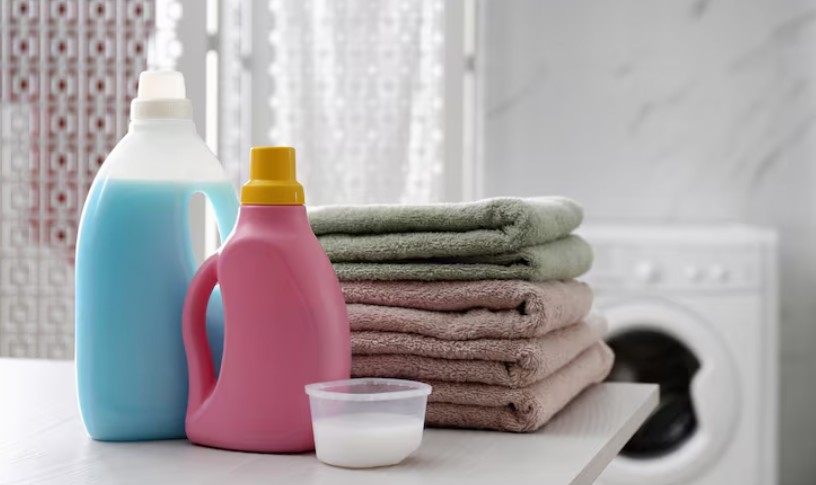
It’s tempting to grab whatever soap is under the sink and scrub a dirty dog toy. Most standard dish soaps and household detergents are designed for surfaces used by adults who aren’t putting them in their mouths afterward. Interactive dog toys are a different category entirely. Standard cleaning products often contain a mix of ingredients that are problematic for dogs:
- Synthetic fragrances — “Fragrance” on a label can represent dozens of undisclosed chemical compounds. Many are irritants or allergens, and dogs are far more sensitive to these than humans due to their more sensitive olfactory and gastrointestinal systems.
- Optical brighteners (UV brighteners) — Engineered to remain on fabric after washing and never fully rinse out. On plush dog toys, they stay embedded in the fibers and get licked off repeatedly.
- Phosphates — A common cleaning agent that helps break down grease. Phosphates are an irritant and can disrupt your dog’s digestive system in sufficient quantities.
- Bleach and chlorine compounds — Effective disinfectants, but harsh on both toy materials and dogs. Even after rinsing, bleach residue can remain on porous surfaces like rubber, rope, and fabric, where it presents an ongoing toxicity risk.
- Antibacterial agents (triclosan, triclocarban) — Widely used in products labeled “antibacterial.” Triclosan is linked to hormonal disruption in animals and is absorbed through the gastrointestinal tract.
Toys Retain Residue Even After Rinsing
The issue isn’t only what you apply to the toy — it’s what stays on it after rinsing. Porous materials like rubber, rope, and foam are especially problematic. Even thorough rinsing leaves trace amounts of surfactants and fragrances in these surfaces, and those traces accumulate over days and weeks of regular use.
Signs of Detergent Exposure in Dogs
Watch for these signs of detergent exposure:
- Excessive drooling or foaming at the mouth
- Nausea or vomiting
- Lethargy or sudden loss of interest in playing
- Pawing at the mouth or face
- Diarrhea or loose stools
Mild, temporary symptoms after a one-time exposure often resolve on their own. If symptoms are severe or persistent, contact your veterinarian or the ASPCA Animal Poison Control Center (888-426-4435) immediately.
“Fragrance-Free” vs “Unscented” — They Are Not the Same
This distinction matters more than most people realize. “Fragrance-free” means the product contains no added fragrance compounds at all. “Unscented” means the product has no detectable scent — but it may still contain masking fragrances, which are chemical compounds added to neutralize the odor of other ingredients. Those masking chemicals are still present on the toy after washing. Always choose fragrance-free rather than simply unscented when selecting a dog safe detergent.
What Makes a Detergent Pet Safe
Not every product labeled “natural” or “gentle” qualifies as a safe soap for dog toys. Here is what actually matters.
Key Criteria for a Pet-Friendly Detergent
- No synthetic fragrance — Fragrance compounds are among the most common irritants in household products and one of the least regulated ingredient categories.
- No optical brighteners or UV brighteners — Engineered to stay in fabric permanently. They have no place on something a dog chews daily.
- No phosphates — A digestive irritant at higher doses, common in older and industrial detergent formulas.
- No bleach or chlorine (in most contexts) — Diluted bleach can be used for hard, non-porous toy disinfection when followed by a thorough rinse and complete air dry, but it should not be used on rubber, rope, plush, or foam materials where residue cannot be fully removed.
- No antibacterial additives — Triclosan and similar compounds are unnecessary for toy cleaning and introduce chemical risk without meaningful benefit in a home cleaning context.
- Biodegradable surfactants — Plant-derived surfactants are less irritating than petroleum-based alternatives and break down safely in the environment.
- pH close to neutral (6–8) — Strongly alkaline or acidic cleaners are more irritating to mucous membranes if consumed. Neutral-pH formulas are gentler on both toy materials and your dog.
How to Read a Product Label
When evaluating whether a detergent is safe for dog toys, watch for these red-flag ingredients:
| Ingredient to Avoid | Why It’s a Problem |
|---|---|
| Fragrance / Parfum | Undisclosed chemical mix; a common irritant and allergen |
| Optical brighteners / fluorescent whitening agents | Designed to stay on fabric permanently, not rinse out |
| Triclosan / Triclocarban | Antibacterial agent linked to hormonal disruption in animals |
| Sodium hypochlorite (bleach) | Toxic residue risk on porous materials even after rinsing |
| Phosphates (STPP) | Digestive irritant at sufficient doses |
| Quaternary ammonium compounds (quats) | Common in disinfectants; toxic to dogs and cats at certain concentrations |
Best Pet Safe Options for Washing Dog Toys
The following are the most reliable choices when selecting what to wash dog toys with. Each has different strengths depending on toy material and level of grime.
White Vinegar and Water (1:1 Solution)
White distilled vinegar diluted 1:1 with water is one of the safest and most effective options available. Vinegar is naturally acidic, which gives it mild antibacterial properties without introducing any synthetic chemicals. If any residue remains on the toy after use, it is completely non-toxic to dogs.
Vinegar has a strong odor while wet, but it dissipates completely once the toy is dry — there is no lasting smell.
Best for: Rubber toys, hard plastic toys, silicone chews. Not ideal for rope toys, which absorb liquid deeply, or plush, where it may affect texture.
Limitations: Not a heavy-duty degreaser. For toys with significant built-up grime, combine with a baking soda scrub before the vinegar rinse.
Baking Soda Paste
Baking soda (sodium bicarbonate) mixed with a small amount of water forms an effective mild abrasive and deodorizer. It is completely non-toxic to dogs — it is used in small amounts in some dog toothpastes. A baking soda paste scrubs away surface grime without scratching rubber or hard plastic surfaces.
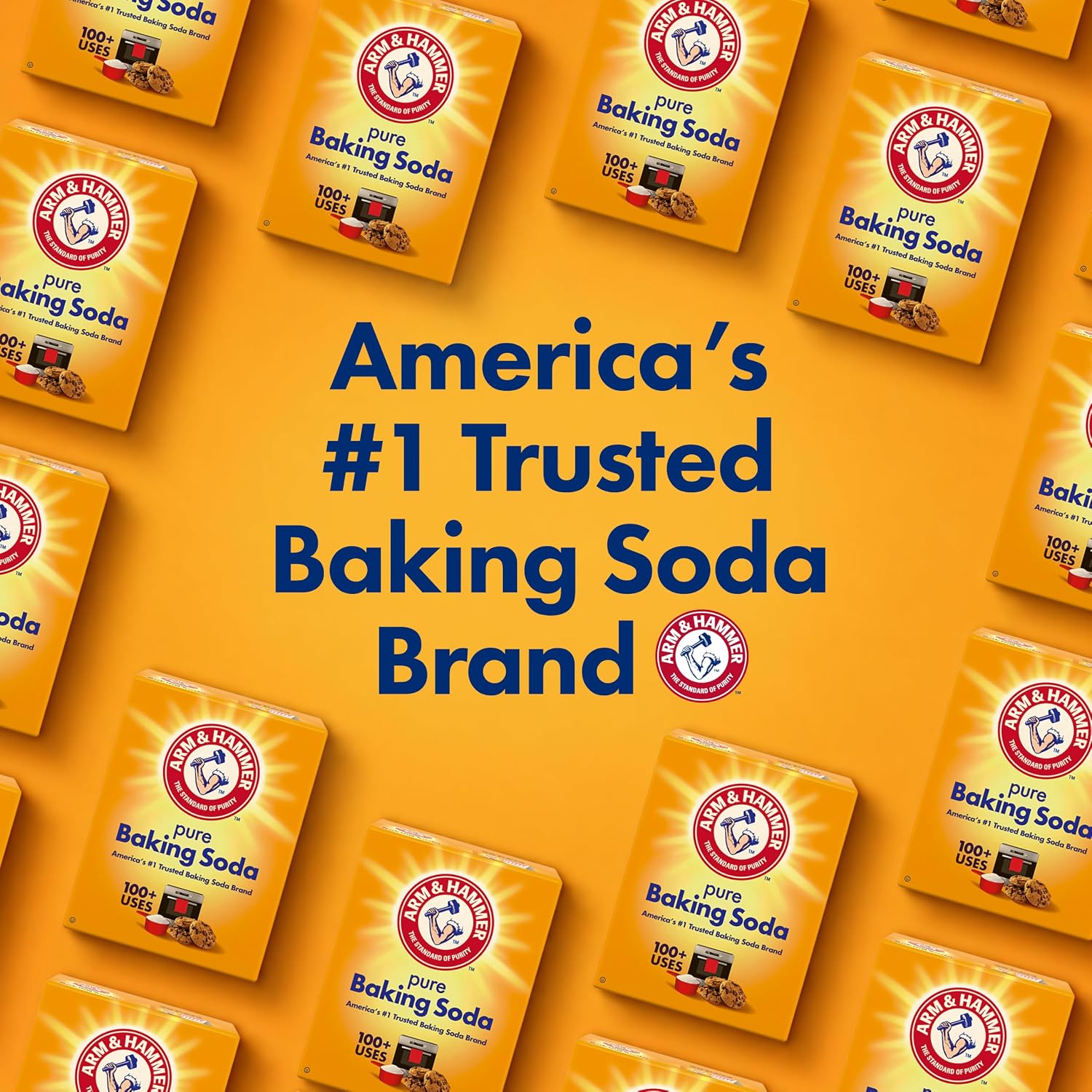
Best for: Scrubbing surface grime and deodorizing rubber or hard plastic toys. Works well as a pre-treat before a vinegar rinse.
Limitations: Not effective as a standalone soak. Best used alongside another cleaning agent for heavily soiled toys.
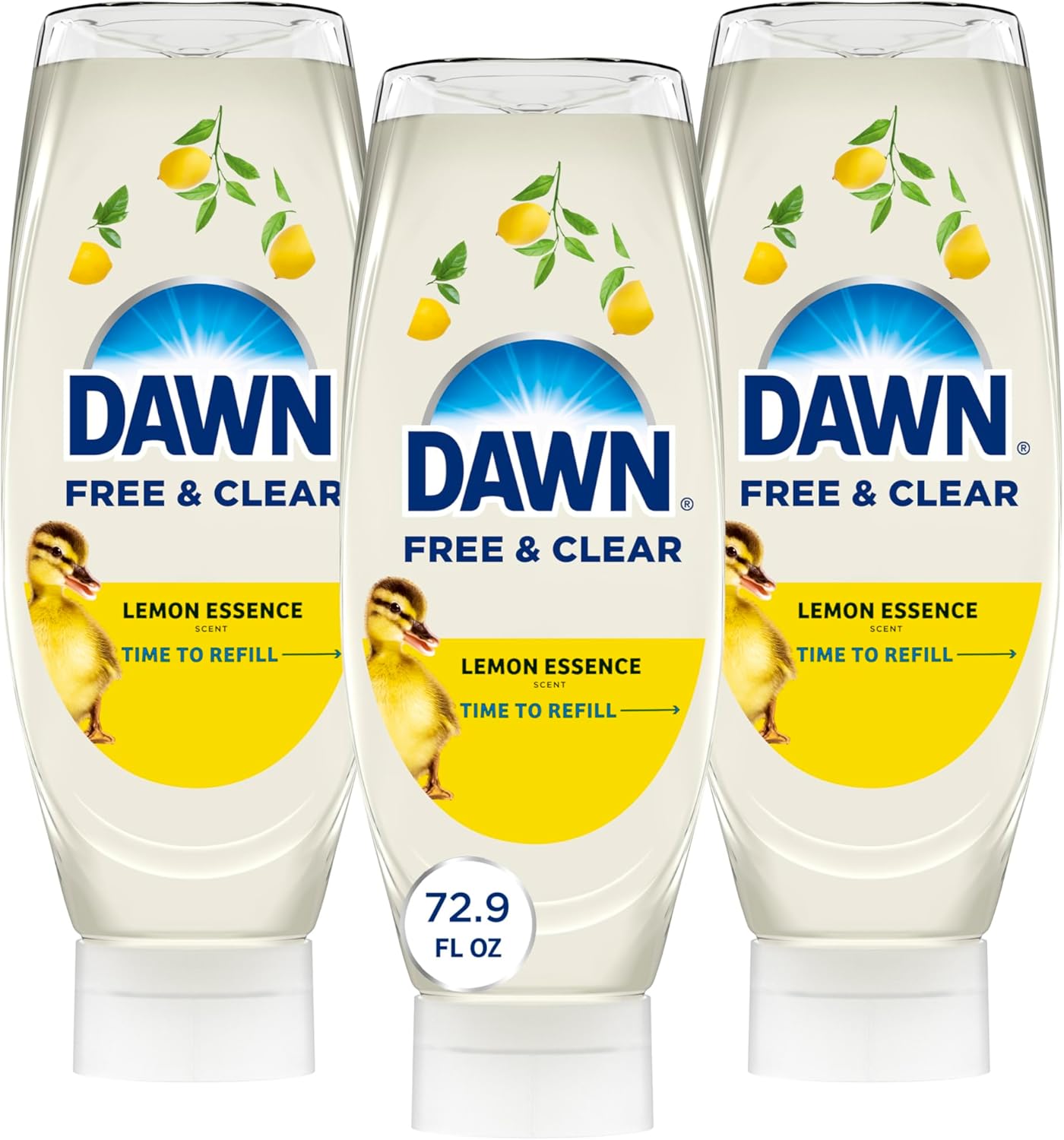
Plain Fragrance-Free Dish Soap (Dawn Free & Clear or Similar)
Dawn Free & Clear is a widely available fragrance-free, dye-free dish soap with no synthetic fragrances, no dyes, and no antibacterial agents. When used in a diluted solution and rinsed thoroughly under running water, it is a low-risk choice for most hard toy types. Surfactant residue on porous surfaces can cause mild gastrointestinal irritation, so thorough rinsing is important.
Best for: Rubber toys, hard plastic toys, latex chews.
Limitations: Requires thorough rinsing. Not ideal for plush toys, where soap can become trapped deep in fibers.
Baby Bottle Detergent (Dapple, Babyganics, or Similar)
Baby bottle detergents are specifically formulated to be residue-free and non-toxic for items that go directly into infants’ mouths — making them an excellent pet friendly detergent for dog toys for exactly the same reason. They are typically free from synthetic fragrances, dyes, parabens, sulfates, and optical brighteners, and offer the greatest peace of mind for owners of heavy chewers.
Best for: All toy types, including plush and fabric toys when diluted properly. Particularly well-suited for chew toys and teethers that see constant use.
Limitations: Higher cost than alternatives. Formulations vary by brand — read labels.
Pet-Specific Toy Cleaners
A growing category of products is specifically marketed for cleaning pet toys, typically using plant-based surfactants, no synthetic fragrances, and no harsh chemical additives. When evaluating any product in this category, still read the ingredient label — “pet-safe” is not a regulated claim, and some products still contain fragrance compounds or essential oils that are not appropriate for dogs.
Best for: Any toy type, depending on the specific product formulation.
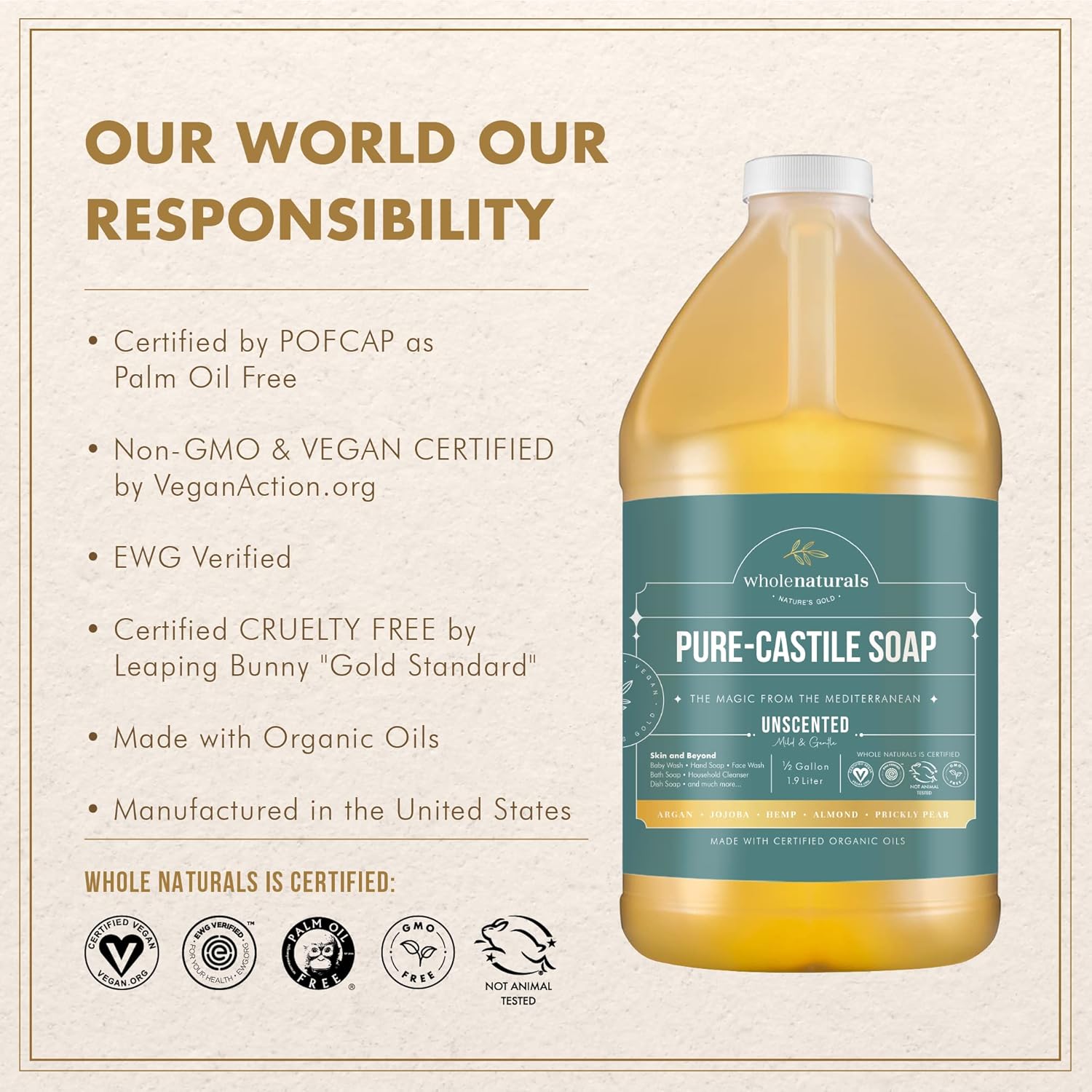
Fragrance-Free Castile Soap
Castile soap — a plant-based soap made from coconut, olive, or hemp oil — is biodegradable and uses naturally derived surfactants. It is available in fragrance-free formulas from brands like Burt’s Bees and others. Look specifically for the fragrance-free version. Many castile soap products contain essential oils (lavender, peppermint, citrus) that are not safe for dogs and must be avoided.
Best for: Rubber, hard plastic, and silicone toys. Dilute well before use.
Limitations: Requires thorough rinsing. Any formula containing essential oils is disqualified for use on dog toys.
What to Avoid Completely
Some products are fundamentally incompatible with safe dog toy cleaning, regardless of how they are labeled or marketed.
Laundry detergents with optical brighteners
Even “free and clear” laundry detergents often contain optical brighteners that bond permanently to fabric fibers and cannot be rinsed out. Do not use laundry detergent on plush dog toys unless you have confirmed the specific product contains none — most major brands and their “gentle” lines still include them.
Fabric softener
Fabric softener works by coating fabric fibers with chemicals that produce a soft, smooth feel. Those chemicals remain on the fabric by design. On plush dog toys, that coating is licked and ingested with every interaction. Fabric softener should never be used on anything a dog mouths.
Bleach on rubber or plush
Bleach degrades rubber over time, causing cracking that can create choking hazards. On plush, bleach residue is trapped in fibers and cannot be fully rinsed out. Material damage plus residue risk makes bleach the wrong choice for most dog toy types.
Essential oil-based “natural” cleaners
Many natural cleaning products contain essential oils — tea tree, eucalyptus, lavender, peppermint, and citrus are common. All are toxic to dogs at varying concentrations, and tea tree oil is particularly dangerous. Do not use any cleaner containing essential oils on dog toys.
Dishwasher pods for hand-washing
Dishwasher pods are highly concentrated and designed for use inside a dishwasher’s full hot-water cycle. Using one to hand-wash a toy leaves a concentrated residue that cannot be effectively removed by manual rinsing, especially on porous surfaces.
Plush vs Rubber vs Rope Toys: Which Cleaners Work Where
The material of your dog’s toy matters when deciding what to wash dog toys with. Different materials absorb, retain, and release cleaning products in very different ways.
| Toy Type | Best Cleaning Product |
|---|---|
| Plush / fabric | Baby bottle detergent or fragrance-free castile soap — rinses cleanly from fibers without leaving optical brightener residue |
| Rubber / silicone | Diluted white vinegar or Dawn Free & Clear — effective on surface grime, non-toxic if any trace remains |
| Rope toys | Diluted white vinegar or plain water — rope fibers absorb and hold liquid deeply, making soap residue difficult to fully remove |
| Hard plastic | Dawn Free & Clear or baby bottle detergent — non-porous surface rinses clean easily |
Plush toys present the greatest challenge because their fabric fibers trap cleaning product deep in the material and squeezing during rinsing cannot always flush it all out. Baby bottle detergent is the best choice for plush precisely because it is formulated to leave no harmful residue even when rinsing is imperfect.
Rope toys are porous in a different way — their twisted fibers create channels where liquid pools and stays. Minimizing soap on rope toys is the safer approach; a diluted vinegar soak or a thorough plain water rinse handles regular maintenance. If a rope toy is heavily contaminated, replacement is often a better option than a chemical clean on a material that cannot fully release residue.
The Bottom Line
Choosing a pet safe detergent for dog toys comes down to a straightforward principle: if it could harm your dog when ingested in small amounts, it should not go on something your dog mouths every day. Most standard household detergents — including many marketed as “free and clear” or “natural” — contain synthetic fragrances, optical brighteners, or antibacterial agents that accumulate in your dog’s system through daily toy contact.
The most reliable options are those with short, transparent ingredient lists: diluted white vinegar, plain fragrance-free dish soap, baby bottle detergent, and baking soda paste. Pay attention to toy material — plush, rubber, and rope respond differently to different products. And treat “natural” and “pet-safe” label claims as starting points for investigation, not conclusions.
This article is for informational purposes only and does not constitute veterinary advice. If your dog shows signs of illness after contact with a cleaning product, contact your veterinarian immediately.
For step-by-step instructions on how to actually wash each type of toy, see our guide: How to Wash Dog Toys
Frequently Asked Questions
Can I use Dawn dish soap to wash dog toys?
Yes, with one qualifier: use Dawn Free & Clear (fragrance-free, dye-free) rather than the original formula or any “antibacterial” version. The original contains fragrances and dyes that are unnecessary and potentially irritating. The Free & Clear version is a low-risk option for rubber and hard plastic toys when rinsed thoroughly.
Is vinegar safe for cleaning dog toys?
Yes. White distilled vinegar diluted 1:1 with water is one of the safest options available. It has mild antibacterial properties and is completely non-toxic — the strong smell while wet dissipates entirely once the toy dries. It is not a heavy-duty degreaser, but for regular maintenance cleaning of rubber and hard toys it works well.
Can I put dog toys in the dishwasher?
Hard rubber and solid plastic toys without stuffing, electronics, or batteries can go on the top rack of the dishwasher — but use a pet-safe or residue-free detergent, not a standard dishwasher pod or powder. The hot water cycle can degrade rubber over time, so this approach is best reserved for hard plastic toys. Never put plush, rope, or squeaky toys in the dishwasher. Check the toy manufacturer’s care instructions when in doubt.
Are “natural” or essential oil cleaners safe for dog toys?
Not necessarily. “Natural” is an unregulated marketing claim that does not guarantee safety for pets. Many natural cleaning products contain essential oils — lavender, tea tree, peppermint, eucalyptus, and citrus — all of which are toxic to dogs at varying concentrations. Always read the ingredient list of any natural or botanical cleaner before using it on dog toys. The presence of any essential oil is disqualifying.
What is the safest homemade cleaner for dog toys?
A 1:1 solution of white distilled vinegar and water is the safest and simplest homemade option. It requires no special ingredients, and any residue left on the toy is non-toxic. For tougher grime, apply a baking soda and water paste before the vinegar rinse — the two together handle the vast majority of dog toy cleaning needs without any chemical risk.
Read more: Wireless dog fence guide