We used to think our dog’s five-second dinner routine was just a funny quirk — inhale, lick the bowl clean, wander off looking mildly betrayed that it’s over. It wasn’t until a vet asked about it during a routine checkup that we actually looked into what that kind of speed-eating can lead to, and why a dog slow feeder ended up being one of the cheapest, most effective changes we made to our dog’s routine.
So here’s the real question The Pet Geek team need you to answer first: why do dogs eat like this in the first place, and is it actually something to worry about, or just a personality thing?
Why Dogs Eat So Fast in the First Place?
Some of it really is just instinct left over from a time when meals weren’t guaranteed on a schedule. In the wild, and in multi-dog households where food felt scarce or contested, eating fast was a survival advantage — the dog who finished first didn’t have to worry about a sibling stealing the rest. Even dogs who’ve never once had to compete for food can carry that wiring, which is part of why fixing it isn’t as simple as “just feed them more.”
Boredom plays a role too, and it’s an easy one to miss. If mealtime is the single most exciting five seconds of a dog’s day, there’s no reason for them to slow down and savor it — there’s nothing to savor for. Genuine underfeeding is worth ruling out as well; a dog who’s consistently a little hungry between meals is going to attack the bowl with more urgency than one who’s actually getting enough calories. And for some dogs, it’s honestly just a breed or personality trait, no different from some people eating faster than others at the same table.
The Actual Risk: Bloat (GDV)
This is the part that turns “funny quirk” into “worth addressing.” Bloat, formally called gastric dilatation-volvulus (GDV), happens when a dog’s stomach fills with gas and, in the worst cases, twists on itself — cutting off blood flow and turning into a life-threatening emergency within hours. Eating too fast is one of several recognized risk factors, especially in large, deep-chested breeds like Great Danes, German Shepherds, and Standard Poodles, alongside things like eating one large meal a day and vigorous exercise right after eating.
We’re not going to pretend a dog slow feeder eliminates that risk entirely, because it doesn’t, and any breed prone to bloat deserves a broader conversation with a vet about meal timing and exercise too. The American College of Veterinary Surgeons has a solid, non-alarmist breakdown of what GDV actually is and which dogs are most at risk, and it’s worth a read if your dog fits the profile.
Smaller but Real: Choking, Vomiting, and Weight Gain
Bloat gets most of the attention, but it’s not the only reason speed-eating matters day to day. Dogs who barely chew before swallowing are more prone to choking on larger pieces of kibble, and gulping down a full meal in seconds tends to come right back up minutes later — regurgitation, not actual digestion, which means the dog isn’t even getting the nutrition from that meal. Fast eating also makes it easier to eat past the point of being full, since the body’s “I’m satisfied” signal takes a few minutes to catch up with the stomach — by the time it does, a fast eater has usually already finished. Over time, that gap between speed and satiety signal is a quiet contributor to weight gain, on top of everything else.
How a Dog Slow Feeder Actually Works
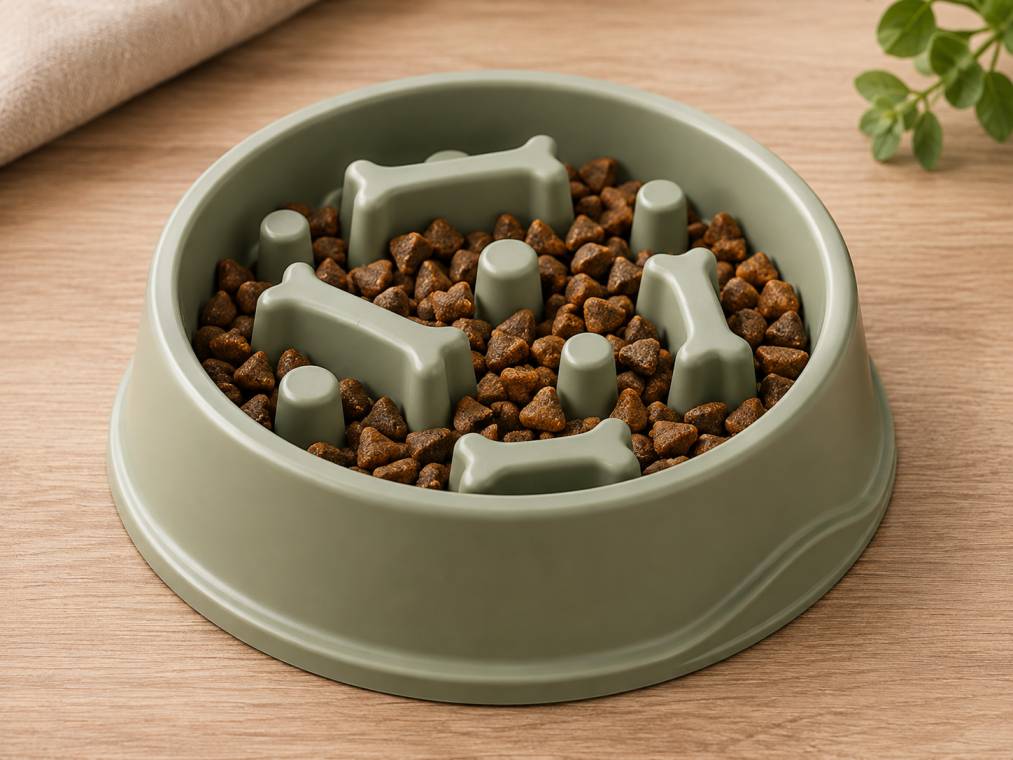
The mechanism is almost embarrassingly simple: a slow feeder bowl uses raised ridges, mazes, or scattered nubs molded into the bottom so a dog physically can’t scoop up a full mouthful at once. Instead of one big gulp, they’re forced into smaller bites, more nose-work, and noticeably more chewing — which naturally stretches a five-second meal into several minutes without any training involved. Some dogs adapt to the pattern almost instantly; others get briefly frustrated the first time or two before figuring out how to navigate it, which is normal and usually resolves within a few meals.
What to Look for in One
Not every dog slow feeder is created equal, and the wrong one can undo the whole point. A maze that’s too shallow won’t slow anything down, while one that’s too complex can genuinely frustrate a dog into giving up on the meal entirely — worth watching for in the first few tries. Material matters more than people expect too: stainless steel and hard silicone hold up far better than thin, brittle plastic that cracks under determined nosing. And size has to match the dog in front of you, not just their weight class — a large-breed maze bowl handed to a small dog can leave them barely able to reach the food at all.
Our Top Slow Feeder Picks by Situation
Once you’re sold on the idea, the shopping part is where a lot of people get stuck — mostly because maze patterns range from “gently rippled” to “genuinely looks like a labyrinth,” and matching that to your specific dog matters more than grabbing whatever has the most reviews.
For the aggressive, determined fast eater
The dog who treats a normal slow feeder like a minor inconvenience rather than an obstacle — you want to go deep and complex from the start rather than working up to it. A shallow ridge pattern gets scooped around within a week by a dog like this, so look for a maze with real height to its walls and tight, winding channels, ideally molded in stainless steel or hard silicone rather than thin plastic that can crack or flex under a persistent nose.
These dogs are also the ones most likely to eventually flip a lightweight bowl in frustration, so a wider, heavier base is worth the extra few dollars.
For large or deep-chested breeds already at higher risk for bloat
The feeder itself is only half the fix. Look for a wide, stable base sized properly for the dog’s weight class — not just “large breed” as a vague label, but genuinely wide enough that a big dog isn’t hunching awkwardly to reach the bottom.
Just as important is pairing that feeder with smaller, more frequent meals instead of one large bowl a day, since portion size and eating speed both factor into bloat risk together, not separately.
For small dogs and puppies
Most of the deep, complicated mazes built for large breeds are genuinely the wrong tool — a small mouth can’t navigate walls that tall, and what should be a helpful obstacle turns into a frustrating wall instead. A shallower, gentler ridge pattern does the same job at a scale that actually fits a smaller jaw, and it’s worth sizing down even if the “large breed” version happens to be on sale.
For households feeding wet or mixed food
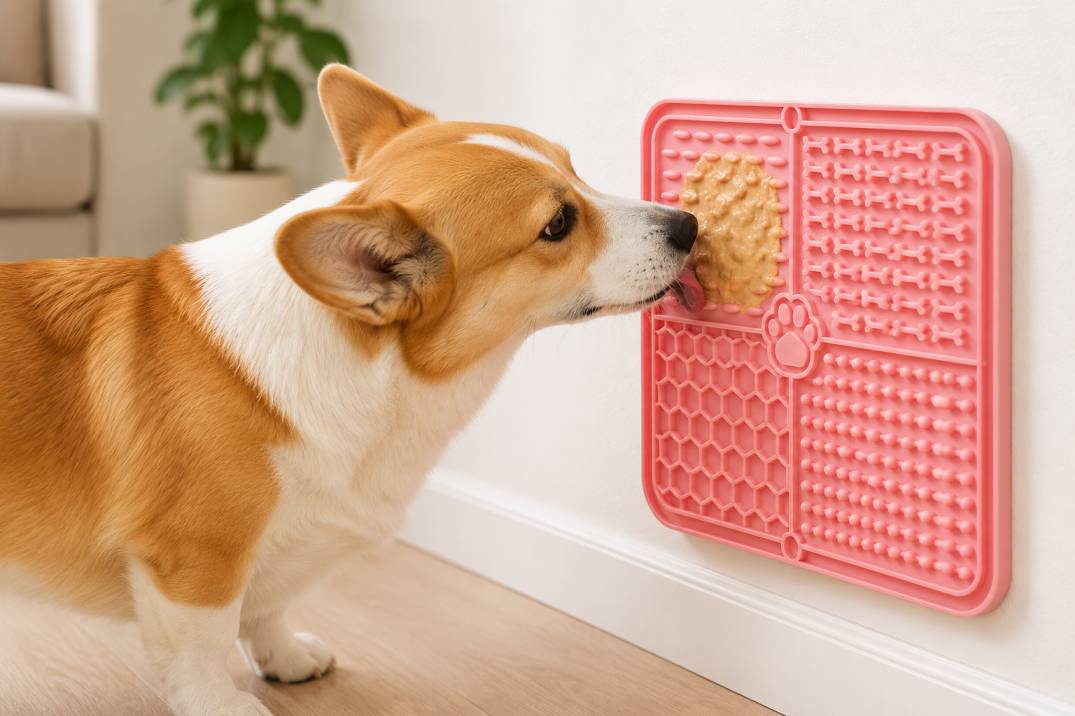
A rigid maze bowl built for kibble often doesn’t work the way you’d expect — wet food just pools in the low spots instead of forcing the dog to navigate around raised walls. A silicone mat-style feeder, with shallow wells and ridges spread across a flat surface, handles wet and mixed textures far better than a traditional stainless steel dog bowl.
For a budget-conscious first try
It’s fair to not want to spend $30+ on something your dog might hate. A basic molded plastic maze bowl is the reasonable entry point here — not the most durable long-term option, but cheap enough that testing whether your specific dog even responds to the concept doesn’t feel like a real financial risk.
Introducing One Without the Drama
The fastest way to sour a dog on a slow feeder is switching cold, with no transition. We’d start with just a portion of a normal meal in the new bowl alongside the rest served as usual, letting the dog build a positive association before it becomes the only way food shows up. If frustration shows up early — walking away, pawing at it, obvious stress rather than curiosity — a shallower maze pattern is usually the fix, not giving up on the concept altogether. Most dogs land on a comfortable rhythm within a week or two, and from there it just becomes part of the routine, the same way any other bowl would.
The Bottom Line
A dog that eats in under a minute isn’t just amusing to watch — it’s a pattern worth understanding, especially given what’s actually at stake for bloat-prone breeds. A slow feeder won’t fix every underlying cause, but it directly addresses the speed itself, which turns out to be one of the more manageable pieces of the whole picture.
Frequently Asked Questions
Do all fast-eating dogs need a slow feeder?
Not strictly, but it’s a low-cost, low-risk change worth trying for most dogs who eat in under a minute, especially larger or deep-chested breeds where bloat risk is already elevated.
Can a slow feeder actually prevent bloat?
It can reduce one contributing factor — eating speed — but bloat has multiple risk factors, including genetics, meal timing, and exercise habits. A slow feeder helps; it isn’t a guarantee on its own.
Is it normal for a dog to seem frustrated by a slow feeder at first?
Yes, mild frustration in the first couple of tries is common and usually settles once the dog figures out the pattern. Ongoing distress, though, means the maze is probably too complex for that dog and a simpler design is worth trying instead.
Can I use a dog slow feeder for wet food?
Some designs work fine with wet or mixed food, though many mazes are built primarily with dry kibble in mind — check the specific product before assuming it’ll handle a wet-food routine well.
Looking more items for your dog?
Our guides on larged dog bed, wireless dog fence and top picks for dog essentials