Most dog owners forget to wash toys until they look visibly disgusting — but bacteria, mold, and yeast build up long before you can see or smell them. Washing dog toys every one to two weeks, and immediately after any outdoor use, is enough to keep most toy types safe and clean. The method of how to wash dog toys depend on the material, and getting it wrong — especially skipping proper drying — can make things worse rather than better.
This guide covers every major toy type: plush and fabric, rubber and hard plastic, rope, and squeaky toys. You will also find guidance on how often to wash, when to throw a toy out instead of cleaning it, and answers to the most common questions dog owners ask.
How Often Should You Wash Dog Toys?
There is no single universal schedule, because different toy materials attract bacteria at very different rates. Here is a practical breakdown by type.
| Toy Type | Recommended Wash Frequency |
|---|---|
| Soft and plush toys | Every 1–2 weeks, or immediately after outdoor use |
| Rubber and hard plastic toys | Every 1–2 weeks |
| Rope toys | Weekly — rope fibers trap moisture and bacteria fastest |
| Water toys | After every single use — standing water accelerates bacterial growth rapidly |
Beyond the schedule, certain signs mean a toy needs washing immediately regardless of when it was last cleaned:
- Visible dirt or mud from outdoor play
- Slimy texture — that slick coating is biofilm, a mix of bacteria and organic matter from your dog’s saliva
- Bad smell — especially a sour or musty odor
- Visible mold spots, usually appearing as dark or greenish patches on fabric or inside rubber toys
A useful rule of thumb: if you would not put it in your own mouth, wash it. Your dog mouths their toys constantly, so the hygiene standard should be higher than you might initially think.
How to Wash Plush and Fabric Dog Toys
Plush toys are among the easiest to wash but also the most likely to grow mold if they are not dried properly. Before washing, check for any battery-powered squeakers or electronic components — the vast majority of standard squeaker mechanisms will survive a gentle machine wash, but any toy with batteries, lights, or electronic sound chips needs to be hand washed only.
Machine Wash Method
- Place the toy inside a mesh laundry bag to protect it from getting snagged or losing stuffing.
- Wash on a cold water, gentle cycle using a pet-safe detergent for dog toys
- Do not use fabric softener — it can leave a residue that irritates dogs’ mouths and skin.
- Remove promptly after the cycle ends so the toy does not sit damp.
Hand Wash Method
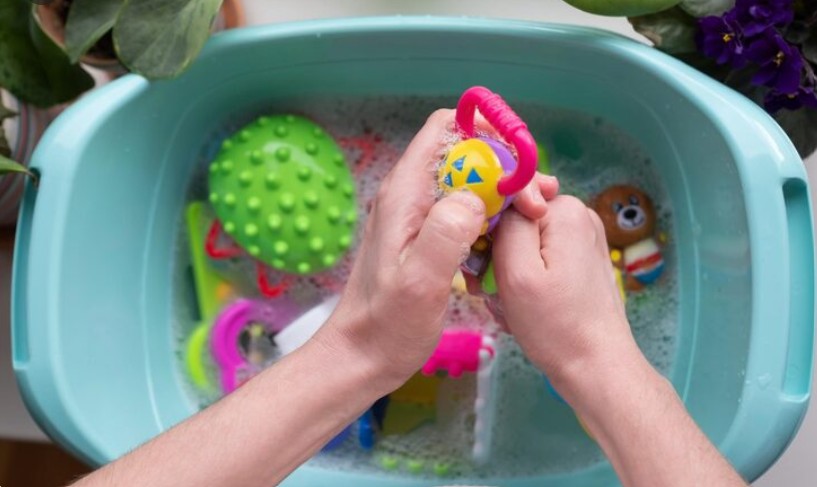
- Fill a basin or sink with warm water and add a small amount of mild unscented soap.
- Submerge the toy and squeeze soapy water through the fabric repeatedly, working it through the stuffing.
- Rinse thoroughly under running water, squeezing until the water runs completely clear with no suds. Soap residue left inside stuffing is a common mistake — it can irritate a dog’s digestive system if ingested.
Drying Plush Toys
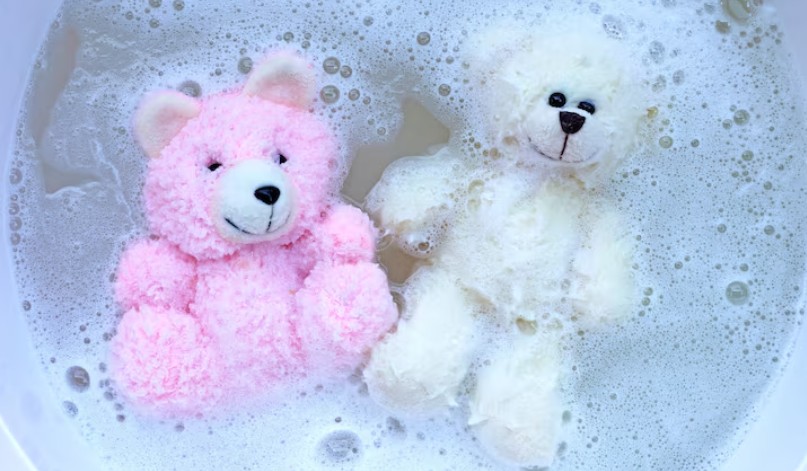
This step is critical. Never return a plush toy to your dog while it is still damp. Moisture trapped inside the stuffing creates ideal conditions for mold, and mold can establish itself within 24 to 48 hours.
- Tumble dry on low heat is fine for most plush toys, but squeakers can be damaged or deformed by heat. When in doubt, air dry.
- Air dry by laying the toy flat or hanging it in a well-ventilated spot. Give it a squeeze test before returning it — if any part of the interior still feels damp, keep drying.
How to Wash Rubber and Hard Plastic Toys
Rubber and hard plastic toys are generally the easiest to clean. Because they are non-porous, bacteria sit on the surface rather than penetrating deep into fibers, which makes removal more straightforward. The main challenge is textured surfaces and treat-dispensing cavities where food debris can collect.
Dishwasher Method (Fastest)
Most solid rubber toys are dishwasher safe. Place them on the top rack only and run a normal cycle. Critically, turn off the heated dry setting — high heat can warp or degrade rubber over time. Let toys air dry after the wash cycle completes.
Check the toy manufacturer’s guidance if you are unsure whether a specific toy is dishwasher safe. Some cheaper hard plastic toys may warp even on the top rack.
Hand Wash Method
- Fill a sink or basin with warm water and add a small amount of mild unscented soap.
- Use a bottle brush or old toothbrush to scrub all textured surfaces, ridges, and holes. Bacteria and food debris accumulate in exactly the spots that are hardest to reach by hand alone.
- Rinse thoroughly, running water through every hole and opening until no soap remains.
Cleaning Kong and Treat-Dispensing Toys
Dried food residue inside a Kong or similar toy is notoriously stubborn. The key is to soak first.
- Soak the toy in warm water for 20 to 30 minutes to loosen dried food.
- Use a bottle brush (Kong makes dedicated cleaning brushes sized for their toys) to scrub the interior.
- Rinse thoroughly through all openings — food debris trapped inside creates a warm, moist environment where bacteria and mold thrive quickly.
- Air dry upside down so water drains out of all holes rather than pooling inside. Do not cap or seal a Kong while it is still wet.
How to Wash Rope Toys
Rope toys are the hardest type to fully clean. The tightly woven fibers are excellent at trapping bacteria, food particles, and moisture deep inside the strands — places where soap and rinsing water struggle to reach. Weekly washing is important precisely because contamination builds up faster here than in any other toy type.
Method 1: Microwave (Recommended for Surface Bacteria)
This method is fast and effective for killing surface bacteria without fully saturating the rope.
Step 1: Wet the rope toy thoroughly under running water — it must be fully saturated, not just damp. A dry rope toy in the microwave is a fire hazard.
Step 2: Place it on a microwave-safe plate.
Step 3: Microwave on high for one minute.
Step 4: Let it cool completely before handling or returning it to your dog.
Important: This method only works for rope toys with no metal parts — no metal rings, clips, or wire reinforcements. Check the toy carefully before microwaving.
Method 2: Hand Wash
Fill a basin with hot water that is as hot as practical, then add a small amount of mild, unscented soap. Fully submerge the rope toy and work the soapy water through all the strands by separating and gently squeezing the fibers. Rinse the toy thoroughly afterward, as soap residue can remain trapped in the rope and may irritate your dog’s mouth. Rinse longer than you think is necessary to ensure all soap is removed.
Drying Rope Toys
Drying is the most important step with rope toys. A damp rope toy will begin to mold within hours, not days. Hang the toy in direct sunlight or in front of a fan and allow it to dry completely — this can take several hours. Squeeze and check the interior strands before returning it to your dog.
When to Throw Out a Rope Toy Instead of Washing It
- The strands are fraying badly and your dog is pulling off and potentially ingesting fibers
- There is a persistent musty or mold smell that does not go away after washing and fully drying
- The toy has visible mold growth embedded in the fibers that you cannot physically remove
How to Wash Squeaky Toys
Squeaky toys split into two categories, and the wash method follows the material, not the squeaker itself.
- Plush squeaky toys (fabric exterior with an internal squeaker mechanism): Treat these exactly like any other plush toy — machine wash gentle with cold water and pet-safe detergent, or hand wash in warm soapy water. Air dry or tumble dry low. The squeaker mechanism inside is usually a simple plastic air bladder that survives gentle washing, but avoid high heat.
- All-rubber squeaky toys (solid rubber with a squeaker hole): Treat these like any rubber toy — dishwasher top rack without heated dry, or hand wash with warm water and a brush.
After washing any squeaky toy, test the squeaker before returning the toy to your dog. Squeeze it several times to confirm it still functions. If the squeaker is cracked, broken, or if the mechanism has become loose and accessible, discard the toy. A loose squeaker is a choking hazard.
When to Throw the Toy Away Instead of Washing It
Not every dirty toy is worth cleaning. Some toys have deteriorated to the point where they are a safety risk, and washing them will not change that. Replace a toy if any of the following apply:
- Visible mold that will not wash off — especially mold embedded deep in rope or plush stuffing
- Rope toys with heavy fraying that your dog is actively chewing off and ingesting
- Cracked rubber with sharp edges — cracks also harbor bacteria in ways that are impossible to clean properly
- Plush toys with stuffing coming out through tears — the stuffing is an ingestion hazard, not just a mess
- Any toy that has been in contact with wildlife feces or a sick animal — the contamination risk is too high to manage with household cleaning
The general principle: if washing does not restore the toy to a reasonably clean and intact condition, replace it. Toys are inexpensive. Veterinary bills are not.
Frequently Asked Questions
Can you put dog toys in the washing machine?
Yes — most plush and fabric dog toys are machine washable. Use cold water, a gentle cycle, a pet-safe detergent, and place the toy in a mesh laundry bag to protect it. Avoid fabric softener and high heat. Do not machine wash toys with battery-powered electronics. Rubber and hard toys are not suitable for the washing machine but can go in the dishwasher (top rack, no heated dry).
How do you dry dog toys after washing?
The drying method depends on the material. Plush toys can be air dried flat or tumble dried on low heat — avoid high heat if the toy has a squeaker. Rubber and hard toys should air dry completely, particularly upside down if they have holes, so water drains out rather than pooling inside. Rope toys must be hung in direct sunlight or in front of a fan and allowed to dry completely before use — damp rope grows mold within hours. Never return any toy to your dog until it is fully dry.
Can you put rubber dog toys in the dishwasher?
Yes, most solid rubber dog toys are dishwasher safe. Place them on the top rack only and turn off the heated dry setting — sustained high heat can warp or degrade rubber. Let them air dry after the wash cycle. If you are unsure whether a specific toy is dishwasher safe, check the manufacturer’s guidance or hand wash it instead.
How do you clean a Kong dog toy?
Soak the Kong in warm water for 20 to 30 minutes first to loosen any dried food inside. Then use a bottle brush — ideally one sized for the Kong’s interior — to scrub the inside walls thoroughly. Rinse through all openings until the water runs clear. Air dry upside down so water drains out through the holes rather than pooling at the bottom. Do not seal or cap the toy until it is completely dry inside.
How do you get mold off dog toys?
For rubber and hard toys, hand wash with hot water and a brush, scrubbing the mold directly. Rinse thoroughly. For plush toys, machine wash on a warm or hot setting (if the toy’s care label allows) with a pet-safe detergent. For rope toys, the microwave method can kill surface mold — wet the rope thoroughly and microwave on high for one minute, then allow to dry completely. If mold is embedded deeply in plush stuffing or rope fibers and the smell or spots persist after washing, discard the toy. Mold that has penetrated deeply cannot be fully removed at home.
Conclusion
Washing dog toys does not need to be complicated, but it does need to happen regularly. The method varies by material — machine wash for plush, dishwasher or brush scrub for rubber, microwave or hot hand wash for rope — but the most important step with every type is the same: dry completely before returning the toy to your dog. Trapped moisture is almost always the reason a clean toy quickly becomes a moldy one.
Build washing into your routine rather than waiting for toys to look dirty. Most bacteria and yeast growth is invisible until it is already a problem. A quick wash every week or two takes far less effort than replacing a toy that has grown mold through the stuffing — or dealing with the health issues that come from a dog playing with genuinely contaminated toys.
Read more about our Pet care advice
This article is intended for general informational purposes only and does not constitute veterinary or medical advice. If your dog shows signs of illness or you have concerns about toy safety, consult a licensed veterinarian.