Picture this: a rescue dog arrives at your door, ribs visible through her coat, spine poking up like a ridge, hip bones jutting out with no soft padding to protect them. Or maybe your dog has just come through a serious illness, and the dog who bounded into the vet’s office three weeks ago now looks hollowed out and fragile. The right dog food for weight gain can help an underweight dog rebuild safely — but how you feed matters just as much as what you feed.
This guide covers everything you need to know: what to look for in a high-calorie dog food, how to feed an underweight dog without causing harm, and when to loop in your vet.
Quick Answer: Best Dog Food for Weight Gain
- Choose a high-calorie dog food with 450+ kcal per cup and named meat as the first ingredient.
- Look for high fat content — fat delivers more than twice the calories per gram compared to protein or carbohydrates.
- Always rule out medical causes (parasites, EPI, IBD) before starting a weight-gain feeding plan.
- Feed 3–4 small meals per day rather than one large meal to maximize nutrient absorption.
- Increase portions gradually over 10 days — sudden large meals can cause dangerous digestive upset in severely thin dogs.
Why Is Your Dog Underweight? Rule Out Medical Causes First
Before you change a single thing about what your dog eats, make a vet appointment. This is non-negotiable, and here is why: unexplained weight loss or a failure to gain weight despite adequate food intake is often a symptom of an underlying condition. Treating the symptom — thinness — without addressing the cause is at best ineffective and at worst dangerous.

Common medical reasons a dog stays thin include:
Intestinal Parasites
Roundworms, hookworms, and whipworms can interfere with your dog’s ability to absorb nutrients. A routine fecal test at the veterinarian can help identify most intestinal parasites.
Exocrine Pancreatic Insufficiency (EPI)
EPI occurs when the pancreas does not produce enough digestive enzymes, causing food to pass through the digestive tract without being properly digested. Dogs with EPI may have a strong appetite but still remain unusually thin.
Inflammatory Bowel Disease (IBD)
Chronic inflammation in the intestines can interfere with normal digestion and nutrient absorption. This may contribute to ongoing weight loss, especially when accompanied by digestive problems.
Cancer
Some cancers can increase a dog’s metabolic demands or reduce their appetite, leading to unexplained weight loss. Weight loss in a middle-aged or older dog should be evaluated by a veterinarian.
Dental Disease
Painful teeth, gums, or other mouth problems can make eating uncomfortable. Some dogs may simply eat less rather than showing obvious signs of pain.
Hyperthyroidism
Hyperthyroidism is uncommon in dogs and is much more frequently seen in cats. When it does occur, an abnormally fast metabolism can contribute to weight loss.
What Does Underweight Actually Look Like? Understanding Body Condition Score
Veterinarians use a Body Condition Score (BCS) to assess a dog’s weight on a scale of 1 to 9, where 4–5 is ideal. A dog scoring 1–3 is medically underweight:
- BCS 1 (Emaciated) — ribs, spine, and hip bones are plainly visible from across the room; no muscle mass or fat can be felt.
- BCS 2 (Very Thin) — ribs easily visible; minimal muscle; loss of waist definition.
- BCS 3 (Thin) — ribs easily felt with no fat covering; top of spine visible; some waist definition remains.
If your dog scores 1 or 2, veterinary supervision of the refeeding process is strongly recommended before any dietary changes.
Behavioral and Situational Causes of Thinness
Not every underweight dog has a disease. Some common non-medical reasons include:
Multi-pet competition: a timid dog in a multi-dog household may be consistently losing meals to a more assertive housemate.
Food anxiety or picky eating: some dogs, particularly those with a history of food insecurity or stress, develop eating reluctance that isn’t about the food itself.
Recent stress or environmental change: moving home, a new baby, or the loss of a companion animal can trigger appetite suppression for weeks.
Post-illness or post-surgery recovery: reduced appetite, nausea from medication, and general fatigue all suppress food intake during recovery; muscle wasting sets in quickly when a dog isn’t eating.
High-energy working and sporting dogs: herding dogs, sled dogs, hunting breeds, and agility dogs can expend far more energy than a standard feeding amount replaces, especially during active seasons.
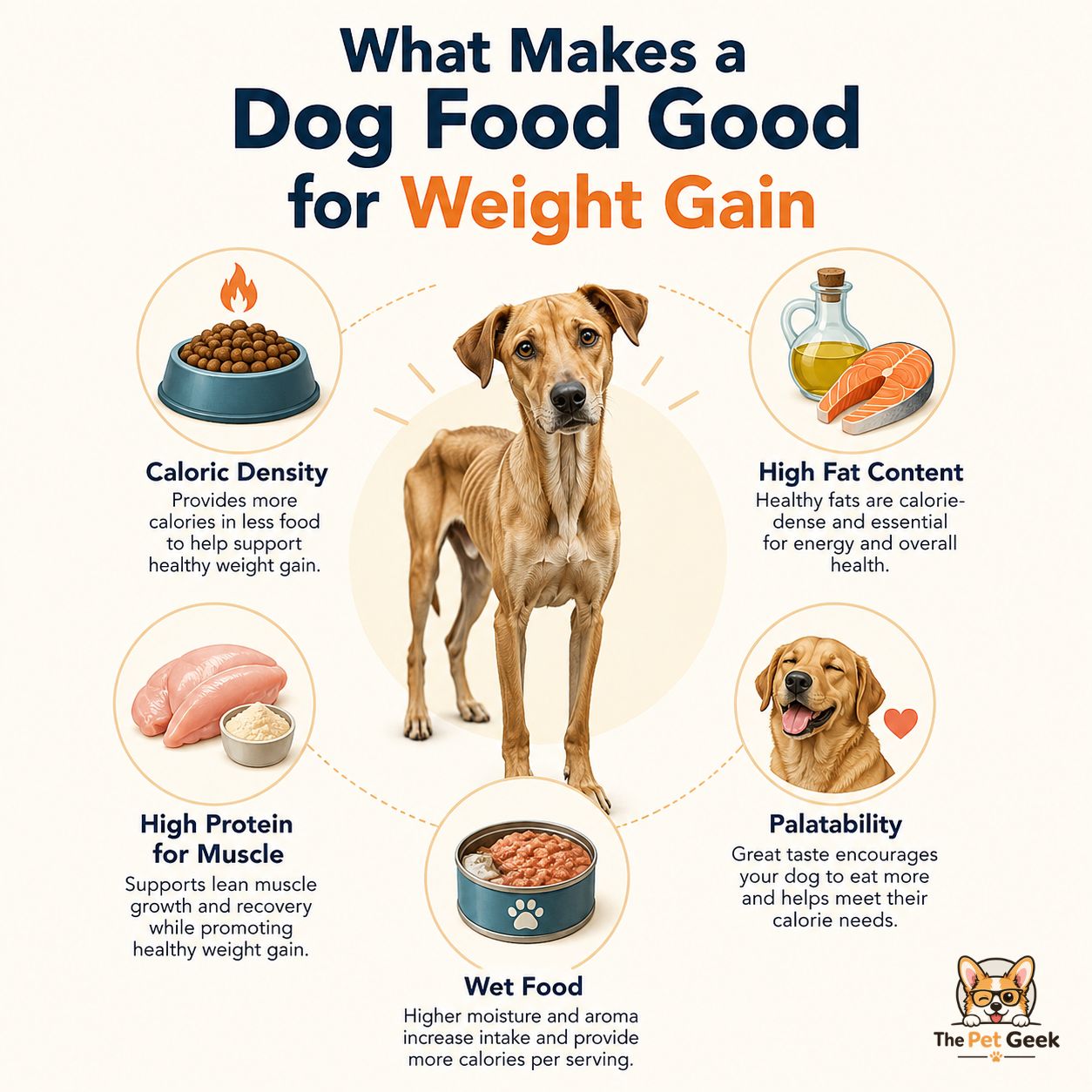
What Makes a Dog Food Good for Weight Gain
Not every high-quality dog food is right for an underweight dog. The features that make a food excellent for weight maintenance — moderate fat, high fiber, controlled calories — are exactly the features you want to avoid. Here is what to look for instead.
1. Caloric Density: The Most Important Number on the Bag
Calories per cup (kcal/cup) is the single most useful number when choosing a dog food to gain weight. A standard adult maintenance food typically delivers 340–380 kcal per cup. For active weight gain, you want 450 kcal per cup or higher. Some performance and working dog formulas reach 550–600 kcal per cup.
This number is usually printed on the back of the bag under “Calorie Content.” If it isn’t, the manufacturer is required to provide it upon request, and many post it on their website.
2. High Fat Content: The Primary Calorie Lever
Fat contains approximately 8.5 kcal per gram — more than twice the 3.5 kcal per gram provided by protein or carbohydrates. This makes fat the most efficient way to add calories without dramatically increasing meal volume. For weight gain, look for a food where fat comprises at least 18–20% of dry matter content. Named fat sources — chicken fat, salmon oil — are preferable to vague listings like “animal fat.”
3. High Protein for Muscle, Not Just Fat
The goal isn’t just to add weight — it’s to add healthy weight, which means rebuilding lean muscle mass alongside replenishing fat stores. Protein provides the amino acids necessary for muscle repair and growth. Look for a high protein dog food with at least 28–30% crude protein on a dry matter basis, with a named meat — chicken, beef, lamb, salmon — as the first ingredient. Protein quality matters too: animal-sourced proteins have a more complete amino acid profile than plant proteins.
4. Palatability: A Dog Who Won’t Eat Can’t Gain Weight
Many underweight dogs have complicated relationships with food — reduced appetite from illness, anxiety around mealtimes, or simply weeks of eating too little has made them disinterested. Palatability (how appealing a food smells and tastes) becomes critically important. Foods with higher fat content and strong meat aroma tend to be more appealing to dogs. Wet food generally outperforms dry kibble on palatability, which is why mixing strategies are so effective.
5. Puppy Food as a Weight Gain Strategy
Puppy formulas are designed to fuel rapid growth — they are calorie-dense, high in protein, and highly palatable. For healthy adult dogs who need to gain weight quickly, puppy food is an acceptable short-term strategy (typically 4–8 weeks). It should not be used long-term in adult dogs, and it is not appropriate for dogs with kidney disease or certain other conditions — check with your vet first. Choose a formula labeled “All Life Stages” as it meets both puppy and adult nutritional requirements.
Check out: Best puppy chow dog food
6. Wet Food: Palatability and Caloric Delivery
Wet food has several advantages for underweight dogs. It is more aromatic and palatable than most dry kibble, which helps stimulate a reluctant appetite. It also has a high moisture content, which can be beneficial for dogs who are dehydrated after illness. The caloric density of wet food is lower per ounce than dry kibble, but mixed into dry food it dramatically improves palatability and increases overall intake.
How to Feed an Underweight Dog Safely
The instinct to pile extra food into the bowl is understandable — you want to help your dog recover quickly. But overfeeding too fast, particularly in severely starved or emaciated dogs, can cause serious harm. Safe weight gain requires a structured approach.
Refeeding Syndrome: A Real Risk in Severely Starved Dogs
Refeeding syndrome occurs when a severely malnourished dog is given large amounts of food suddenly. The rapid shift in metabolism can cause dangerous drops in blood phosphorus, potassium, and magnesium, potentially leading to cardiac and neurological complications. If your dog is BCS 1 or 2, refeeding should be managed by a veterinarian, starting at 25–33% of calculated resting energy requirements and increasing slowly over days to weeks.
For dogs who are merely thin (BCS 3–4) rather than emaciated, the risk is lower, but a gradual increase is still the right approach.
Feed Smaller, More Frequent Meals
Instead of feeding once or twice a day, shift to 3–4 smaller meals spread throughout the day. This approach:
- Reduces the volume of food hitting a shrunken stomach at once, minimizing digestive upset
- Maintains more consistent blood glucose levels
- Maximizes nutrient absorption in a digestive system that may not be working at full capacity
- Keeps mealtimes positive — shorter meals are often eaten more enthusiastically
Transitioning to a Higher-Calorie Food: A 10-Day Schedule
Even when switching to a better food, a gradual transition protects against digestive upset.
| Days | Ratio (Old Food : New Food) |
|---|---|
| Days 1–3 | 75% old / 25% new |
| Days 4–6 | 50% old / 50% new |
| Days 7–9 | 25% old / 75% new |
| Day 10 onward | 100% new food |
Calorie-Dense Toppers That Boost Weight Gain
Adding whole dog food toppers to meals is an effective and safe way to increase caloric density without dramatically changing your dog’s base diet. The following options are all dog-safe and nutrient-rich:
- Cooked eggs — one large egg adds approximately 70 kcal and delivers complete protein with an excellent amino acid profile. Scrambled or hard-boiled, served without salt or seasoning.
- Canned sardines in water — a small tin adds 100–150 kcal, plus a significant dose of omega-3 fatty acids. Use sardines in water, not oil or brine, and choose brands with no added salt.
- Plain cooked chicken — boneless, skinless, no seasoning. Boiled or baked chicken is highly digestible, calorie-dense, and almost universally appealing to dogs.
- Coconut oil — approximately 120 kcal per tablespoon. Use in small amounts (start with 1/4 teaspoon for small dogs, 1 teaspoon for large dogs) to avoid loose stools. Some dogs find the flavor unpalatable, so introduce slowly.
- Plain full-fat yogurt or kefir — adds calories and live cultures that support gut health, which is especially useful in dogs whose digestive systems are recovering. Choose unsweetened, plain varieties with no xylitol.
Mixing Wet and Dry Food
One of the most practical strategies for increasing both palatability and caloric load is mixing wet food into dry kibble. The wet food’s aroma and moisture content makes the whole meal more appealing, and most dogs who leave dry kibble untouched will clean a bowl that has wet food mixed in. Start with a tablespoon or two and adjust based on your dog’s response.
Tracking Progress: Weigh-Ins and BCS Reassessment
Healthy weight gain in an adult dog is typically 0.5–1% of body weight per week. For a 40-pound dog, that’s roughly 3–6 ounces per week. Faster than this and you risk adding excess fat without sufficient muscle. Weigh your dog weekly using the same scale, at the same time of day. Reassess BCS monthly using the 9-point scale. If your dog isn’t gaining after 3–4 weeks of consistent effort, go back to the vet — you may be dealing with a medical cause that hasn’t been identified yet.
Best Ingredients to Look For in High Calorie Dog Food
Reading a dog food label well means knowing which ingredients to seek out and which to avoid when your goal is healthy weight gain.
What to Look For
- Named animal protein as first ingredient — chicken, beef, lamb, salmon, turkey. The first ingredient by weight should be a whole meat or meat meal, not a grain or plant protein.
- Named animal fat — chicken fat and salmon oil are excellent sources of energy and essential fatty acids. These should appear early in the ingredient list.
- Digestible carbohydrates — brown rice, oatmeal, and sweet potato provide sustainable energy and are gentle on a recovering digestive system. These are preferable to corn or wheat in dogs with sensitive digestion.
- Omega-3 fatty acids — underweight dogs frequently have dull, brittle coats as a result of nutritional deficiency. Foods with salmon oil, flaxseed, or fish meal will help restore coat quality as weight returns.
- Moderate fiber — some fiber supports gut health, but excessive fiber reduces caloric density and can accelerate GI motility, reducing nutrient absorption.
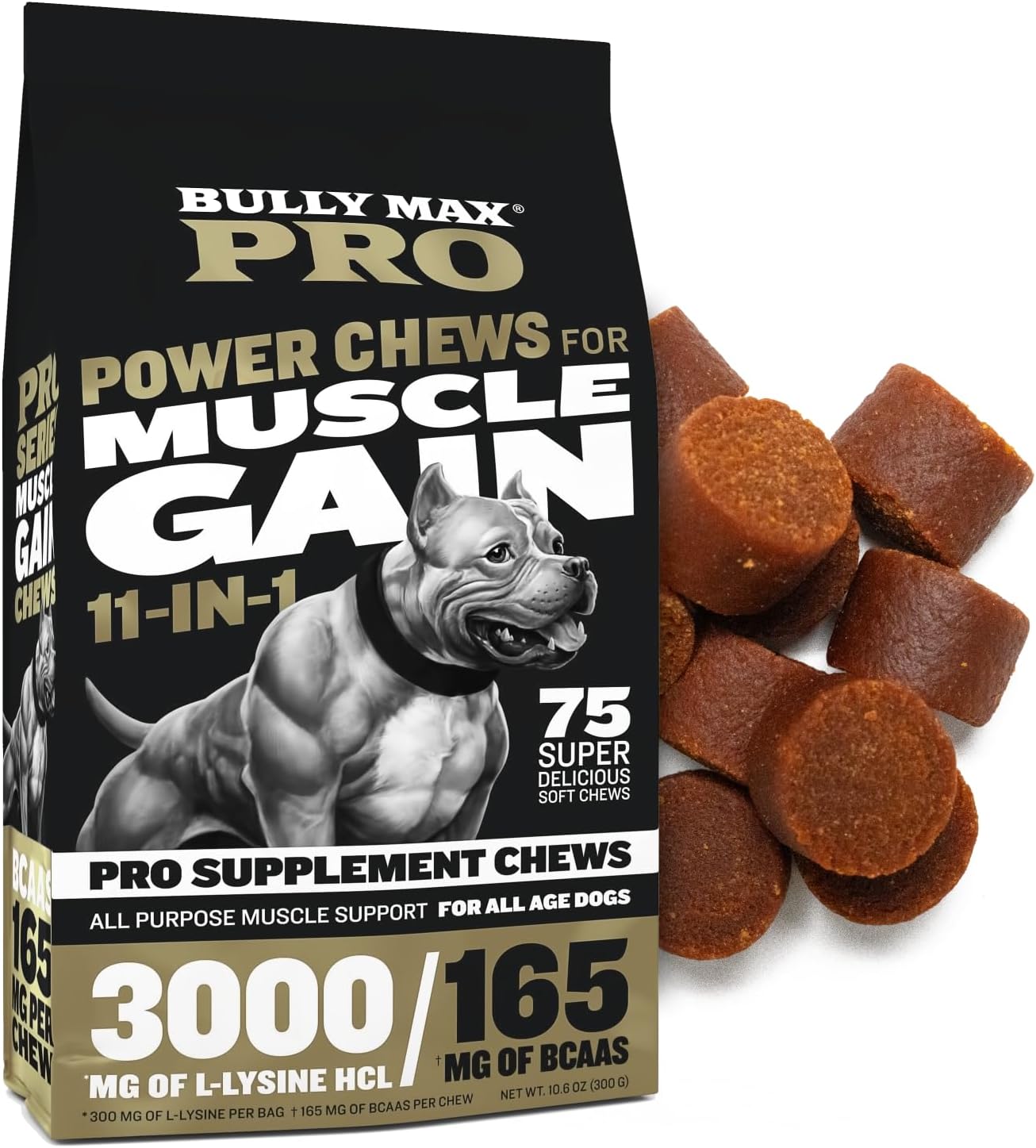
Explore recommended products: Bully Max Pro x2 Calories
What to Avoid
- “Light,” “weight management,” or “diet” labels — these formulas are specifically engineered to reduce caloric intake. They are the opposite of what you need.
- High-fiber formulas — beet pulp, cellulose, and chicory root are common fiber additives in weight management foods. Check the guaranteed analysis and avoid foods where crude fiber exceeds 5% on a dry matter basis for a weight-gain context.
- Predominantly plant-protein formulas — foods where most protein comes from peas, lentils, or potatoes rather than meat provide inferior amino acid profiles for muscle rebuilding.
- Artificial preservatives, colors, and flavors — not a direct weight concern, but dogs with compromised health are better served by minimally processed, clean-ingredient foods.
Special Cases: When Standard Advice Doesn’t Quite Fit
Underweight Senior Dogs
Older dogs face a different version of the weight problem. Sarcopenia — age-related muscle loss — is common in dogs over 7–8 years old and results in a “skinny fat” appearance where the dog looks thin but also lacks muscle tone. Senior dogs often have reduced appetite due to a dulled sense of smell, dental pain, or medication side effects.
For seniors, the emphasis shifts toward highly digestible, high-protein food rather than simply high-fat. Warming food slightly (which amplifies aroma), switching to softer textures or wet food, and ensuring dental pain is managed are all important. Caloric needs can be high in sarcopenic seniors despite reduced activity, as protein turnover demands energy.
Underweight Puppies
A thin puppy is a more urgent situation than a thin adult dog. Puppies have very small energy reserves and are at a critical stage of bone, organ, and brain development. Nutritional deficiencies during growth have consequences that can’t be fully corrected later. If a puppy is visibly underweight, don’t wait — see a vet promptly and feed a high-quality puppy food appropriate for their breed size. Large-breed puppy formulas control calcium-to-phosphorus ratios to protect joint development even as calories are increased.
Working and Sporting Dogs
A border collie who works livestock daily, a husky running in harness, or a hunting dog working several hours a day can easily burn 1,500–2,000 kcal more per day than their sedentary counterparts. These dogs often need feeding volumes that seem enormous by pet-owner standards. Performance formulas (often labeled “sport,” “endurance,” or “active”) with 500+ kcal per cup are designed precisely for this purpose.
Timing matters too: give a moderate meal 2–4 hours before strenuous activity to allow partial digestion, then a larger recovery meal afterward. Avoid feeding a large meal immediately before intense exercise, as bloat risk increases.
Post-Illness and Post-Surgery Recovery
Dogs recovering from illness or surgery often have suppressed appetites, may be on medications that cause nausea, and have elevated protein needs for tissue repair. Your vet may prescribe a recovery diet — these are typically highly digestible, palatable, and calorie-dense, designed specifically for the refeeding phase. Do not switch to a general weight-gain food until your vet clears you to do so, as some recovery diets have specific nutrient profiles that matter during healing.
Once a dog is past the acute recovery phase, transitioning to a high-quality, high-calorie maintenance food and adding calorie-dense toppers is the appropriate next step.
Frequently Asked Questions About Dog Food for Weight Gain
How long does it take for an underweight dog to gain weight?
Different with weight loss dog food, this depends on how underweight the dog is and the underlying cause. A mildly thin dog (BCS 3) eating a well-structured high-calorie diet may reach an ideal BCS in 4–8 weeks. A severely emaciated dog (BCS 1–2) may need 3–6 months of careful, supervised refeeding to safely reach a healthy weight. Weekly weigh-ins will tell you if your approach is working — if there’s no change after 3–4 weeks, revisit with your vet.
Can I feed my dog puppy food to help them gain weight?
Yes, in most cases. Puppy food is calorie-dense, high in protein, and highly palatable, making it useful for short-term weight gain in healthy adult dogs. Look for formulas labeled “All Life Stages,” which meet AAFCO nutritional standards for both puppies and adults. Do not use puppy food long-term, and avoid it in dogs with kidney disease or other conditions where high protein is contraindicated.
Is it safe to add oil to my dog’s food for weight gain?
Yes, in appropriate amounts. Salmon oil is the most broadly beneficial option — it adds calories and provides omega-3 fatty acids that support coat health. Coconut oil works but should be introduced slowly (1/4 teaspoon for small dogs, up to 1 teaspoon for large dogs) to avoid loose stools. Avoid feeding large amounts of any oil, as it can cause pancreatitis, particularly in dogs with a history of the condition.
My dog eats but stays thin — what’s wrong?
This is a red flag that warrants a vet visit. The most common causes are intestinal parasites, EPI (exocrine pancreatic insufficiency), and IBD. In EPI, dogs consume large amounts of food but cannot digest it properly, so nutrients pass through unabsorbed. A fecal test, blood panel, and sometimes more specialized testing (TLI test for EPI) will typically identify the cause. Treating the underlying condition is the priority — a weight-gain diet cannot compensate for a broken digestive system.
How much should I feed an underweight dog?
Start by calculating your dog’s Resting Energy Requirement (RER): RER (kcal/day) = 70 x (body weight in kg)^0.75. For weight gain in a mildly thin dog, feed 1.2–1.4 times the RER. For an active dog, the multiplier is higher. Your high-calorie food’s feeding guide is a useful starting point, but underweight dogs typically need 20–30% more than the guide suggests. Track weekly weight and adjust. Your vet can calculate a specific target if you need more precision.
What human foods help dogs gain weight?
Safe, calorie-dense human foods that can supplement a dog’s diet include: cooked eggs (plain), canned sardines in water, cooked plain chicken or turkey, plain full-fat yogurt, small amounts of peanut butter (xylitol-free), and sweet potato. These should be used as toppers to supplement a complete dog food, not as a replacement for it. Human food alone won’t deliver the balanced nutrition a recovering dog needs.
When should I stop the weight gain diet?
Once your dog reaches a BCS of 4–5 (ideal weight), transition gradually to a standard adult maintenance food over 10 days using the same ratios described in the transition table above. Continue monthly BCS checks to make sure weight is maintained. If weight starts to slip again, return to the weight-gain approach and recheck for underlying causes.
Conclusion
Helping an underweight dog gain weight safely is one of the most rewarding things you can do as a dog owner — watching a thin, dull-coated rescue transform into a healthy, energetic companion over the course of a few months is genuinely moving. But getting there requires patience, the right food, a sensible feeding strategy, and — always — a vet visit first to rule out the medical causes that no amount of high-calorie kibble can fix.
The core principles are straightforward: choose a dog food for weight gain with high caloric density (450+ kcal per cup), prioritize named meat proteins and quality fats, feed small and frequent meals, introduce changes gradually to protect a sensitive digestive system, and track progress weekly. Add calorie-dense whole food toppers to boost palatability and calories without disrupting the nutritional balance of a complete diet.
Every underweight dog’s situation is different. A post-surgery Labrador needs a different approach than an underfed rescue terrier or a working sled dog running in deep winter. Use this guide as a foundation, adapt it to your dog’s specific circumstances, and keep your vet in the loop throughout the process. With consistent, thoughtful care, most underweight dogs can reach a healthy weight — and stay there.
This article is for informational purposes only and does not constitute veterinary advice. Always consult a licensed veterinarian before making significant changes to your dog’s diet, particularly if your dog is underweight due to illness, injury, or suspected medical causes.