IVDD (Intervertebral Disc Disease) is one of the most common and serious neurological conditions in dogs. It occurs when the cushioning discs between the vertebrae of the spine herniate or rupture, pressing on the spinal cord and causing pain, weakness, or even paralysis. IVDD in dogs can strike suddenly or develop gradually — and knowing the warning signs can make the difference between full recovery and permanent disability.
In this guide, The Pet Geek will cover everything dog owners need to know: what IVDD is, which breeds are most at risk, how to recognize the symptoms, how it’s diagnosed, treatment options (surgical and non-surgical), and what recovery looks like.
Quick Overview
- What it is: Herniation of spinal discs pressing on the spinal cord
- Most affected breeds: Dachshund, French Bulldog, Beagle, Cocker Spaniel, Shih Tzu
- Key symptoms: Back pain, weakness in limbs, difficulty walking, paralysis
- Grading: 5 grades — from pain only (Grade 1) to complete paralysis (Grade 5)
- Treatment: Conservative care (rest + medication) or surgery, depending on severity
- Prognosis: Good to excellent with early treatment — especially Grades 1–3
What Is IVDD in Dogs?
The spine is made up of individual bones called vertebrae, stacked on top of each other from the neck to the tail. Between each pair of vertebrae sits a intervertebral disc — a small, shock-absorbing cushion made of a tough outer ring (the annulus fibrosus) surrounding a soft, gel-like core (the nucleus pulposus).
In a healthy spine, these discs flex and absorb impact with every movement. In dogs with IVDD, one or more of these discs deteriorates, herniates, or ruptures — causing the disc material to push into the spinal canal and compress the spinal cord or nerve roots.
The result ranges from mild neck or back pain to complete paralysis, depending on which disc is affected, how much material has herniated, and how quickly the compression occurred.
The Two Types of IVDD
There are two main types of IVDD in dogs, and they behave very differently:
| Hansen Type I | Hansen Type II | |
|---|---|---|
| What happens | The disc nucleus ruptures suddenly, shooting material upward into the spinal canal | The disc bulges slowly outward over time, gradually compressing the spinal cord |
| Onset | Sudden — can happen in seconds | Gradual — over months to years |
| Age of onset | Typically 3–7 years old | Typically 8–10 years old |
| Breeds affected | Chondrodystrophic breeds (Dachshund, Beagle, Bulldog) | Larger breeds (German Shepherd, Labrador, Doberman) |
| Severity | Often more severe due to sudden impact on spinal cord | Often milder but progressive |
A third, less common type — Hansen Type III (also called “high-velocity, low-volume” herniation) — involves a small amount of nucleus material shooting into the spinal canal at high speed, often causing sudden paralysis without prior warning signs.
Which Dogs Are Most at Risk for IVDD?
IVDD can affect any dog, but certain breeds are genetically predisposed due to a condition called chondrodystrophy — a form of dwarfism that causes abnormal cartilage development, including premature degeneration of the intervertebral discs.
High-Risk Breeds
- Dachshund — The breed most associated with IVDD. Approximately 19–24% of Dachshunds will experience a clinically significant disc herniation in their lifetime. Their long spines and short legs create disproportionate disc stress.
- French Bulldog — Increasingly common as the breed’s popularity has risen. Their compact, screw-tail anatomy puts significant pressure on multiple disc levels.
- Beagle — Moderate to high risk, particularly in the thoracolumbar (mid-back) region.
- Basset Hound — Similar spinal anatomy to Dachshunds; equally high risk.
- Cocker Spaniel — Prone to cervical (neck) disc disease in particular.
- Shih Tzu — Small chondrodystrophic breed with elevated IVDD risk.
- Pekingese — One of the classic IVDD-prone breeds.
- Bulldog (English) — Anatomical conformation creates multi-level disc vulnerability.
- Lhasa Apso — Small breed with chondrodystrophic traits.
- Miniature Schnauzer — Moderate risk, especially in middle age.
Large Breeds at Risk (Hansen Type II)
- German Shepherd
- Labrador Retriever
- Doberman Pinscher
- Rottweiler
In large breeds, IVDD tends to develop slowly and present as progressive weakness rather than sudden collapse — making it easier to miss in the early stages.
Symptoms of IVDD in Dogs: What to Look For
The symptoms of IVDD depend on which part of the spine is affected and how severe the compression is. There are two primary locations:
- Cervical (neck) IVDD — affects discs in the neck region (C1–C7)
- Thoracolumbar (back) IVDD — affects discs in the mid to lower back (T3–L3), the most common location
- Lumbosacral IVDD — affects the junction between the lumbar spine and pelvis
Common Symptoms of Thoracolumbar IVDD
- Sudden yelping or crying out in pain — especially when touched, lifted, or moving
- Hunched or arched back posture
- Reluctance to jump, climb stairs, or move normally
- Stiffness or slow, cautious movement
- Wobbly, uncoordinated hind legs (ataxia)
- Dragging one or both hind legs
- Knuckling — walking on the top of the paws instead of the pads
- Loss of bladder or bowel control
- Complete inability to walk (paralysis)
Common Symptoms of Cervical (Neck) IVDD
- Neck pain — reluctance to lower the head to eat or drink
- Holding the head in a lowered, stiff position
- Crying out when turning the head
- Weakness or paralysis in all four limbs (tetraparesis/tetraplegia)
- Muscle spasms in the neck and shoulders
Emergency Signs — Go to a Vet Immediately: If your dog suddenly cannot walk, is dragging their hind legs, has lost bladder or bowel control, or is in severe pain — this is a veterinary emergency. Time is critical. The sooner a herniated disc is treated, the better the prognosis.
The IVDD Grading Scale (Grade 1–5)
Veterinarians use a standardized grading system to classify IVDD severity. This grading system directly guides treatment decisions.
| Grade | Clinical Signs | Typical Treatment |
|---|---|---|
| Grade 1 | Pain only — no neurological deficits. Dog is painful but walking normally. | Conservative care (rest, medication) |
| Grade 2 | Pain plus mild weakness. Dog walks but is wobbly or uncoordinated. | Conservative care or surgery depending on response |
| Grade 3 | Moderate weakness — dog attempts to walk but cannot support full weight. | Surgery strongly recommended |
| Grade 4 | Paralysis — dog cannot walk but retains deep pain sensation in the limbs. | Surgery urgently recommended |
| Grade 5 | Complete paralysis with loss of deep pain sensation. Bladder and bowel dysfunction. | Emergency surgery — time-critical |
Deep pain sensation is the single most important prognostic indicator in IVDD. A dog with Grade 5 IVDD that still has deep pain sensation has a significantly better chance of recovery than one that has lost it. Once deep pain is lost, surgery should be performed within 24–48 hours for the best possible outcome.
How Is IVDD Diagnosed?
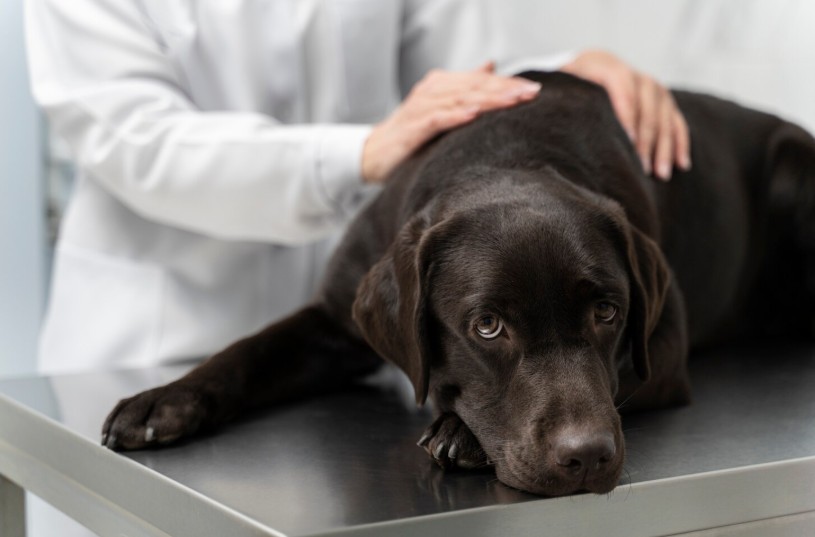
If your vet suspects IVDD, they will perform a neurological examination to assess your dog’s gait, spinal reflexes, pain response, and proprioception (awareness of limb position). From there, one or more imaging tests will be needed to confirm the diagnosis and pinpoint the affected disc.
Diagnostic Tests for IVDD
- MRI (Magnetic Resonance Imaging) — The gold standard for IVDD diagnosis. MRI provides the clearest view of disc material, spinal cord compression, and spinal cord injury. It is non-invasive and does not use radiation. Most specialist neurology practices use MRI as the first-line imaging tool.
- CT Scan (Computed Tomography) — Faster and more widely available than MRI. CT is excellent for visualizing calcified disc material (common in Type I IVDD in Dachshunds) and is often used when MRI is not immediately available.
- Myelogram — An older technique involving injection of contrast dye into the spinal canal, followed by X-rays. Now largely replaced by MRI and CT but still used in some practices.
- X-rays (Radiographs) — Cannot directly image the spinal cord or soft disc material, but can reveal calcified discs, narrowed disc spaces, and other spinal abnormalities that suggest IVDD.
In most cases, imaging will require general anesthesia to keep the dog still and minimize pain during positioning.
IVDD Treatment Options
Treatment for IVDD in dogs falls into two broad categories: conservative (non-surgical) management and surgical decompression. The right choice depends on the grade, the dog’s overall health, and how quickly symptoms appeared.
Conservative (Non-Surgical) Treatment
Conservative management is appropriate for Grade 1 and Grade 2 IVDD and involves:
- Strict crate rest — 4–6 weeks of severely restricted activity. This is the most important component of conservative treatment. The dog should not jump, run, use stairs, or engage in any activity that loads the spine. Short, leashed toilet walks only.
- Anti-inflammatory medications — Either NSAIDs (non-steroidal anti-inflammatory drugs) or corticosteroids to reduce spinal cord swelling and pain. These two classes should never be combined.
- Pain management — Gabapentin, tramadol, or other analgesics may be prescribed alongside anti-inflammatories.
- Muscle relaxants — Methocarbamol is sometimes used to address muscle spasms.
- Physical rehabilitation — After the initial rest period, a canine physiotherapist can help rebuild strength and coordination.
Success rate for conservative treatment: Studies report that approximately 80–90% of Grade 1–2 IVDD dogs recover with strict conservative management. However, the recurrence rate is significant — up to 30–40% of dogs treated conservatively will have another episode. Surgery eliminates the herniated disc material, reducing recurrence risk from that specific disc.
Important: “Crate rest” means true strict rest — not just limiting walks. Dogs on conservative treatment must be confined to a crate or small pen 23+ hours a day. Allowing a dog to jump on furniture, run, or play during this period can cause the condition to rapidly worsen to Grade 4 or 5.
Surgical Treatment
Surgery is recommended for Grade 3–5 IVDD, for Grade 2 dogs that fail to improve with conservative management, and for any dog with rapidly progressing signs. The goal of surgery is to decompress the spinal cord by removing the herniated disc material.
Types of IVDD Surgery
- Hemilaminectomy — The most common surgery for thoracolumbar IVDD. A section of bone (the lamina) is removed from one side of the vertebra to access the spinal canal and remove the offending disc material. Provides excellent visualization and decompression.
- Laminectomy — Similar to hemilaminectomy but bone is removed from both sides. Used for certain lesion locations where bilateral access is needed.
- Ventral Slot — The standard surgical approach for cervical IVDD. The surgeon approaches the disc from the underside of the neck to remove herniated material pressing on the spinal cord from below.
- Fenestration — A preventive or adjunctive procedure where adjacent discs are incised to remove nucleus material before it herniates. Often performed alongside decompressive surgery to reduce future recurrence.
- Pediculectomy — Used for certain lesions that cannot be adequately accessed via standard hemilaminectomy.
IVDD surgery should be performed by a board-certified veterinary neurologist or neurosurgeon. The sooner surgery is performed after onset of severe signs, the better the outcome — particularly for Grade 4 and 5 cases.
Success Rates for IVDD Surgery
| IVDD Grade | Surgical Success Rate | Average Recovery Time |
|---|---|---|
| Grade 1–2 | 95–98% | 2–6 weeks |
| Grade 3 | 85–95% | 4–8 weeks |
| Grade 4 | 80–90% | 6–12 weeks |
| Grade 5 (with deep pain) | 50–70% | 3–6 months |
| Grade 5 (without deep pain) | 5–10% | Unpredictable if at all |
IVDD Recovery: What to Expect
Recovery from IVDD — whether surgical or conservative — is a process that requires patience, consistency, and close veterinary monitoring. Here’s what the typical recovery journey looks like:
Week 1–2: Immediate Post-Treatment Period
After surgery, dogs are typically hospitalized for 1–3 days. Pain is managed with medication and the dog is assessed for any improvement in neurological function. After discharge, the dog must be strictly confined. Bladder expression may be necessary if urinary function hasn’t returned.
Week 2–4: Early Recovery
Neurological improvement — if it’s going to happen — typically begins in this window. Signs to look for include voluntary tail movement, conscious limb movements, or attempts to bear weight. A canine rehabilitation therapist can begin gentle passive range-of-motion exercises and hydrotherapy if the dog is stable.
Week 4–8: Active Rehabilitation
As strength and coordination return, structured physiotherapy becomes increasingly important. Underwater treadmill (hydrotherapy), balance work, and controlled walking exercises help rebuild muscle mass and retrain the nervous system. Dogs can make significant neurological gains during this phase.
Week 8–16: Return to Function
Most dogs who are going to achieve full or near-full recovery will have done so by 12–16 weeks. Some dogs with severe Grade 4–5 disease may continue improving for up to 6–12 months.
Home Care During Recovery
- Bladder management: Dogs who cannot urinate voluntarily need manual bladder expression 3–4 times daily. Your vet will teach you how to do this safely.
- Preventing pressure sores: Paralyzed or semi-paralyzed dogs should be turned every 4–6 hours and kept on padded, waterproof bedding.
- Harnesses, not collars: A well-fitted chest harness reduces spinal stress during assisted walking.
- Mobility aids: Dog wheelchairs (carts) can dramatically improve quality of life for dogs with permanent hind limb paralysis. Many dogs adapt to them enthusiastically within days.
- Weight management: Extra weight increases spinal disc stress. If your dog is overweight, weight loss during and after recovery is essential.
IVDD Prognosis: Will My Dog Fully Recover?
Prognosis depends on three factors: the grade at presentation, how quickly treatment was started, and whether deep pain sensation is intact.
- Grade 1–2: Excellent prognosis. The vast majority of dogs return to normal activity with either conservative or surgical treatment.
- Grade 3: Good prognosis with surgery. Most dogs regain the ability to walk.
- Grade 4: Good prognosis with prompt surgery. 80–90% of dogs walk again if operated on within 24–48 hours of becoming non-ambulatory.
- Grade 5 with deep pain intact: Guarded to fair prognosis. About 50–70% of dogs recover ambulatory function with urgent surgery.
- Grade 5 without deep pain: Poor prognosis. Less than 10% of dogs regain meaningful function. Surgery can still be attempted, but owners should be counseled honestly about expectations.
It’s worth noting that many permanently paralyzed dogs live full, happy lives with the support of a wheelchair cart, attentive owners, and appropriate bladder management. Paralysis does not necessarily mean poor quality of life.
Can IVDD Be Prevented?
IVDD in dogs cannot be completely prevented in genetically predisposed breeds — but several measures can meaningfully reduce risk and severity:
Weight Management
Obesity is one of the most significant modifiable risk factors for IVDD. Every extra pound of body weight increases compressive forces on intervertebral discs. Keeping your dog at a healthy, lean weight is the single most effective preventive measure you can take.
Ramp and Step Training
Jumping — especially off-leash jumping from furniture, into cars, or down stairs — generates significant spinal impact. Teaching high-risk breeds (especially Dachshunds) to use ramps and steps for furniture access reduces repeated disc trauma over time.
Harness Instead of Collar
Neck collars transmit leash forces directly to the cervical spine. For chondrodystrophic breeds, a chest harness is a better default choice for walks.
Controlled Exercise
High-impact activities like agility, repetitive stair use, and rough play with larger dogs increase disc stress. Moderate, controlled exercise (leash walks, swimming) is preferable for at-risk breeds.
Prophylactic Disc Fenestration
Some veterinary neurologists offer prophylactic fenestration — surgically opening adjacent discs to remove nucleus material before it herniates — for high-risk Dachshunds who have already had one IVDD episode. This is a more invasive prevention strategy but may significantly reduce recurrence risk when multiple discs are at risk.
Genetic Screening
A genetic test for the CDDY (chondrodystrophy) mutation exists for Dachshunds and other chondrodystrophic breeds. Responsible breeders can use this test to reduce the prevalence of the mutation in future generations.
The Cost of IVDD Treatment
IVDD treatment costs vary significantly depending on severity, location, and whether surgery is needed:
| Treatment Type | Estimated Cost (USD) |
|---|---|
| Initial veterinary exam + X-rays | $200 – $500 |
| MRI or CT scan | $1,500 – $3,000 |
| Conservative treatment (medications, rest) | $500 – $1,500 |
| Spinal surgery (hemilaminectomy) | $4,000 – $8,000+ |
| Post-surgical rehabilitation (6–12 weeks) | $1,000 – $3,000 |
| Dog wheelchair/cart | $400 – $700 |
Pet insurance is strongly recommended for chondrodystrophic breeds. Policies that include hereditary condition coverage can significantly offset IVDD treatment costs — but must be purchased before a diagnosis or symptoms appear.
Summary: Key Facts About IVDD in Dogs
- IVDD in dogs is the herniation of intervertebral discs causing spinal cord compression
- Two main types: Type I (sudden, younger chondrodystrophic dogs) and Type II (gradual, older larger dogs)
- Most at-risk breeds: Dachshund, French Bulldog, Beagle, Basset Hound, Cocker Spaniel
- Severity is classified on a Grade 1–5 scale, from pain-only to complete paralysis
- Grades 1–2: conservative management (strict rest + medication) is often successful
- Grades 3–5: surgery is strongly recommended for best outcomes
- Time is critical — the sooner treatment begins, the better the prognosis
- Deep pain sensation is the most important prognostic indicator
- Prevention strategies: weight management, ramps, harness use, avoiding high-impact activities
- Pet insurance is highly recommended for at-risk breeds before any symptoms appear
This article is for informational purposes only and is not a substitute for professional veterinary advice, diagnosis, or treatment. If you suspect your dog has IVDD, contact your veterinarian immediately — especially if symptoms are sudden or severe.
Frequently Asked Questions About IVDD in Dogs
What does IVDD stand for?
IVDD in dogs stands for Intervertebral Disc Disease. It refers to degeneration and herniation of the cushioning discs that sit between the vertebrae of the spine, causing compression of the spinal cord or nerve roots.
Can a dog with IVDD recover without surgery?
Yes — Grade 1 and Grade 2 IVDD can often be successfully managed with strict crate rest and medication. However, Grade 3–5 IVDD generally requires surgery for the best outcome. Dogs treated conservatively also have a higher chance of recurrence than those who have surgery.
How do I know if my dog has IVDD?
The most common signs are sudden back or neck pain, reluctance to move, a hunched posture, wobbly hind legs, or sudden inability to walk. However, only a veterinarian can diagnose IVDD — imaging (MRI or CT scan) is required to confirm which disc is affected and how severe the compression is.
How long does IVDD recovery take?
Recovery time depends on severity. Mild cases (Grade 1–2) may resolve in 4–6 weeks with conservative treatment. Surgical cases typically see meaningful improvement within 4–8 weeks, with full recovery taking 3–6 months for severe cases.
Is IVDD painful for dogs?
Yes, significantly. Even Grade 1 IVDD causes notable pain that affects a dog’s daily life. Higher grades involve severe pain alongside neurological deficits. Adequate pain management is a critical component of treatment at every grade.
Can IVDD come back after surgery?
Yes, though surgery reduces recurrence risk at the operated disc. Dogs are at risk of IVDD at other disc levels, particularly in chondrodystrophic breeds where multiple discs degenerate simultaneously. Long-term lifestyle modifications (weight management, ramps, no jumping) help reduce this risk.
Is IVDD hereditary?
Yes — the genetic predisposition for chondrodystrophic IVDD (Hansen Type I) is strongly hereditary. The CDDY mutation responsible for chondrodystrophy can be identified through genetic testing. Breeding dogs without this mutation reduces the incidence in future generations.
Can a paralyzed dog with IVDD have a good quality of life?
Yes. Many paralyzed dogs adapt remarkably well to life with a wheelchair cart. With attentive owners who can manage bladder expression, pressure sore prevention, and mobility, paralyzed dogs can live happy, pain-free lives for years. Quality of life should be assessed holistically — paralysis alone is not a reason for euthanasia in an otherwise healthy dog.