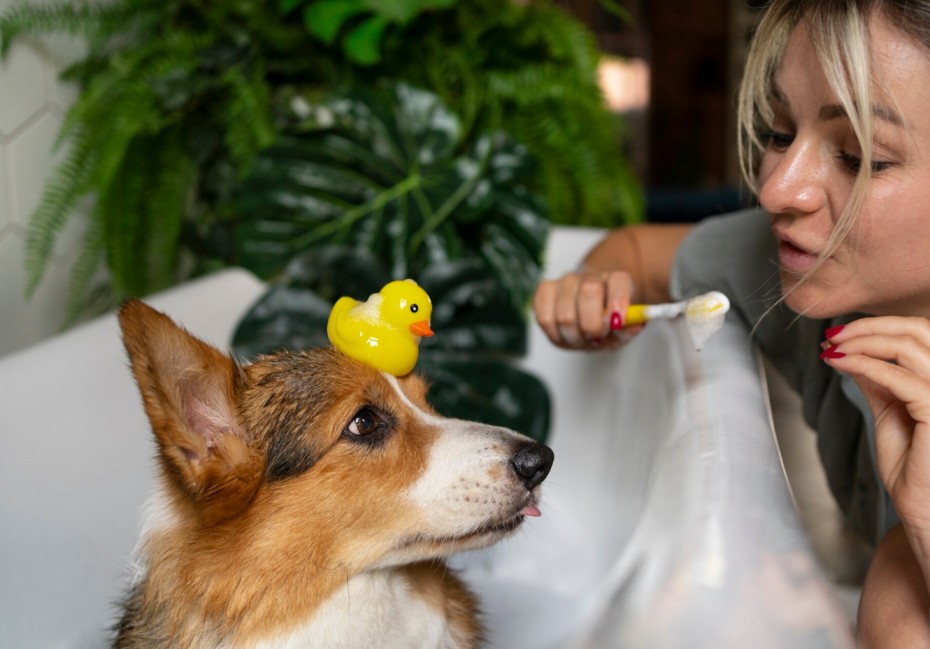
The first time we tried brushing Poopy’s teeth, it went about as well as you’d expect — a handheld brush that looked exactly like ours, shoved toward her mouth, and a very offended corgi backing into the corner of the kitchen. We almost gave up on the whole thing. What actually turned it around was switching to a finger brush instead of the human-style handle — something about having our actual hand right there instead of a foreign plastic stick made her noticeably calmer, and brushing stopped being a wrestling match.
If you’re shopping for dog toothpaste or trying to figure out why your dog won’t tolerate brushing at all, this is everything we wish someone had told us before that first disastrous attempt.
Why Dog Toothpaste Actually Matters
This isn’t really about fresh breath, even though that’s usually what gets people to start. Dental disease in dogs is strikingly common — the American Veterinary Dental College notes that most dogs show some sign of periodontal disease by the time they’re a few years old, and once plaque hardens into tartar below the gumline, brushing alone can’t remove it anymore. Regular brushing with the right toothpaste is one of the few things you can actually do at home to slow that buildup down before it turns into something that needs a dental cleaning under anesthesia, or worse, an extraction.
Human Toothpaste Is Not an Option
We know it’s tempting to just grab whatever’s already sitting by the sink, but human toothpaste isn’t a shortcut here — it’s a real risk. Many human pastes contain fluoride at levels that are fine for us but can cause stomach upset or worse in a dog who swallows it instead of spitting it out — and nearly every dog swallows it. Some also contain xylitol, an artificial sweetener that’s toxic to dogs even in small amounts. We’re dog owners, not vets, but this one isn’t a gray area — dog toothpaste exists specifically because it’s formulated to be swallowed safely, and that distinction matters more than the brand or flavor.
What Makes the Best Toothpaste for Dogs
A genuinely dog safe toothpaste is built around a few things that human toothpaste isn’t. Most are enzymatic, meaning they contain enzymes that help break down plaque chemically rather than relying purely on the physical scrubbing of the brush — useful on the days your dog barely tolerates thirty seconds of brushing. Flavor matters more than people expect too: poultry, beef, and malt are common because dogs actually enjoy the taste, which makes the whole process easier instead of something to dread. And whatever you pick, double-check the ingredient list for fluoride and xylitol specifically — “made for dogs” on the front of the tube is a good sign, but it’s not a substitute for actually reading the label.
Texture is worth paying attention to as well. Some dogs do better with a thinner, more liquid paste that’s easier to spread along the gumline, while others prefer a thicker, more traditional texture closer to what we’re used to. If your dog rejects the first one you try, that alone doesn’t mean brushing is a lost cause — it might just mean the formula wasn’t the right fit.
How to Toothbrush a Dog Without It Becoming a Fight
Start slow, and genuinely mean it — the first few sessions should be shorter and less ambitious than you think they need to be. Let your dog taste the toothpaste off your finger first, with no brush involved at all, so the flavor itself isn’t a surprise on top of everything else that’s new. Once they’re comfortable with that, work up to touching their teeth and gums briefly with your finger before introducing a brush at all.
This is where the brush style genuinely matters, and it’s the exact thing that turned things around for us with Poopy. A rigid, handheld brush that mimics a human toothbrush can feel foreign and a little intimidating to a dog who isn’t used to anything touching their mouth, and that was true for her — she backed away from it every time. A finger brush, the kind that slips over your fingertip like a thimble, kept things feeling more like touch and less like a tool, and she settled into it noticeably faster. It won’t work the same way for every dog, but if a standard brush is going badly, it’s worth trying before assuming your dog just can’t be brushed.
Once your dog tolerates the brush, focus on the outer surfaces of the teeth, where plaque builds up fastest, using small circular motions along the gumline. Daily brushing is the gold standard, but a few times a week is still meaningfully better than nothing — consistency matters more than perfection here. And if a session goes badly, end on something calmer rather than pushing through; a bad experience today makes tomorrow’s session harder.
When It’s Not About the Toothpaste: Dog Tooth Abscess
A tooth abscess is a different problem entirely, and no amount of brushing or the right toothpaste will fix one once it’s happened. An abscess forms when infection builds up around the root of a tooth, often from a fracture, severe decay, or advanced periodontal disease that’s gone untreated for a while. The signs aren’t always obvious at first — some dogs show facial swelling, especially just below the eye, while others mainly show it through reduced interest in food, pawing at the mouth, or bad breath that’s noticeably worse than usual, not just typical dog-breath.
We’re not vets, so we won’t pretend to diagnose this from a description — if you suspect an abscess, that’s a vet visit, not a wait-and-see situation, since untreated dental infections can spread and become genuinely serious. The AVDC has more detail on how these infections develop if you want to understand the mechanics better, but the practical takeaway is simple: toothpaste is prevention, not treatment, and a suspected abscess skips the home-care step entirely.
Frequently Asked Questions
Is dog toothpaste actually necessary, or will a brush alone work?
A brush with just water does remove some plaque, but enzymatic dog toothpaste adds a chemical layer of plaque-fighting that water alone doesn’t provide, and the flavor makes most dogs far more cooperative during brushing.
How often should I brush my dog’s teeth?
Daily is ideal, since plaque can start hardening into tartar within a couple of days, but a few times a week is still a real improvement over not brushing at all.
My dog hates the toothbrush — what else can I try?
A finger brush is worth trying before giving up, since it feels less foreign to a lot of dogs than a rigid handheld brush. Dental wipes and dental chews can also help in between brushing sessions, though they’re a supplement to brushing, not a replacement for it.
Can I use baking soda instead of dog toothpaste?
It’s best to avoid it — baking soda has a high sodium content and an alkaline profile that isn’t designed for a dog’s digestive system if swallowed, and it doesn’t offer the enzymatic plaque-fighting that purpose-made dog toothpaste does.
The Bottom Line
Dog toothpaste only works if your dog will actually tolerate the brushing that comes with it, so the formula matters less than finding a routine your specific dog can live with. Start slow, skip anything made for humans, and if the brush itself is the problem rather than the toothpaste, a finger brush is worth trying before you write the whole thing off.
We’re dog owners sharing what’s worked for Poopy and us, not vets or veterinary dentists. If you suspect a tooth abscess, broken tooth, or any other dental pain, skip the home-care routine and get your dog seen by a vet.
You might interesting in: How to Choose Large Dog Beds