We’ve gone through more dog bowls than we’d like to admit — cracked ceramic ones, plastic ones our dog somehow chewed the rim off of, and eventually a drawer full of stainless steel ones that just… work. This guide is what we’d tell a friend if they asked us which bowl to actually buy.
If you’re shopping for stainless steel dog bowls, the short version is: they’re the safest, easiest-to-clean option on the market, and the only real decision left is which style fits your dog’s habits — tips it over, eats too fast, or just needs a bowl that survives daily life.
Why We Switched to Stainless Steel in the First Place
Honestly, it wasn’t a big philosophical decision. One of our dogs developed small, irritated bumps along his chin, and after some digging (and a vet visit), it turned out to be a mild reaction some dogs have to plastic bowls — sometimes called “plastic muzzle dermatitis.” Plastic scratches easily, and those tiny grooves hold onto bacteria no matter how well you scrub them.
Switching to stainless steel wasn’t a miracle cure overnight, but within a couple of weeks the irritation cleared up and never came back. That’s when we started paying attention to bowls the way we pay attention to food.
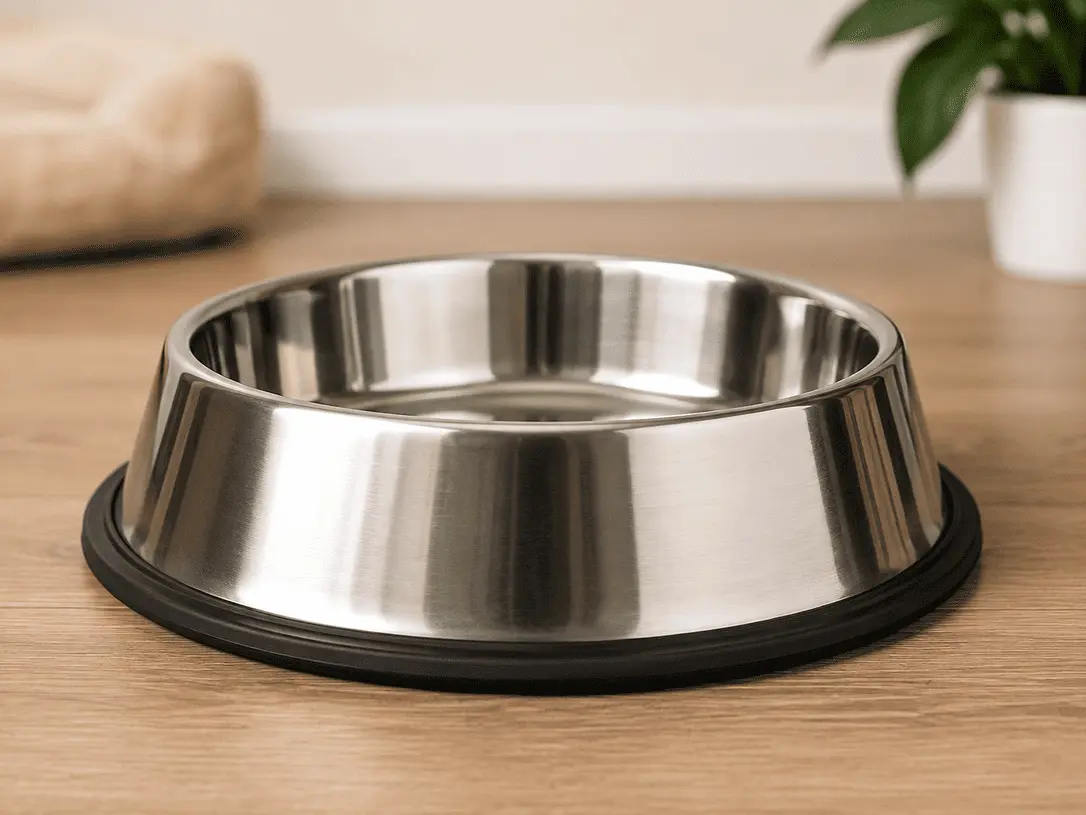
Stainless Steel vs. Plastic vs. Ceramic
| Material | Pros | Cons |
|---|---|---|
| Stainless steel | Non-porous, dishwasher-safe, doesn’t hold odors, very durable | Can slide around without a rubber base; lighter ones can be noisy |
| Plastic | Cheap, lightweight, comes in fun colors | Scratches easily, can trap bacteria, some dogs react to it |
| Ceramic | Heavy (stays put), looks nice, dishwasher-safe | Can chip or crack, glaze quality varies, heavier to clean |
None of this means plastic or ceramic bowls are dangerous for every dog — plenty of dogs use them their whole lives without issue. But if we’re recommending one material to default to, it’s stainless steel, and it’s not close.
Our Picks, by What Your Dog Actually Needs
1. Best Overall: Heavy-Gauge Bowl with a Rubber Base
This is the boring, correct answer. A thick-gauge stainless bowl (not the thin, flimsy kind that dents if you look at it wrong) with a silicone or rubber ring around the base. The rubber stops it from sliding across the floor while your dog eats, which solves 90% of the “why is there water everywhere” problem on its own.
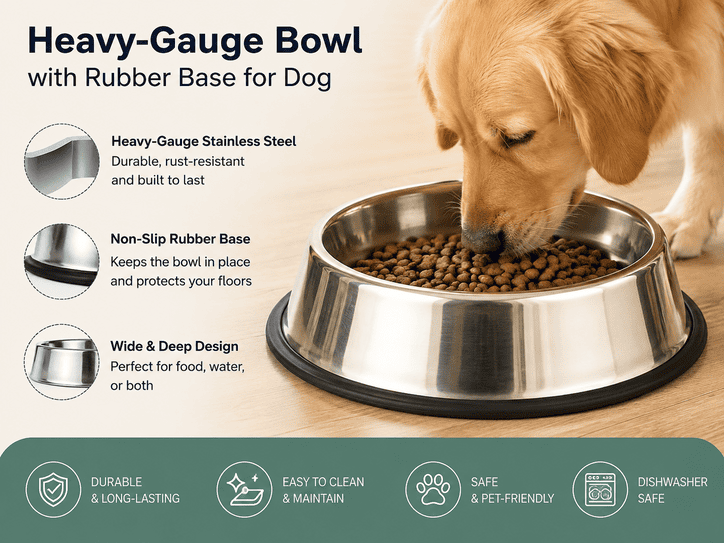
Try stainless steel dog bowl from Max and Neo
2. Best for Dogs That Flip Their Bowl: Tip-Proof, Wide-Base Design
If your dog is the type to knock their water bowl over out of pure chaos energy, look for a wider, low-profile bowl with a weighted or flared base. The physics are simple — a wider base means the bowl has to tip much further before it actually flips, and most dogs just don’t push it that far. Try ceramic bowl from Addogyy store
3. Best for Messy Drinkers: Elevated Stand with a Stainless Insert
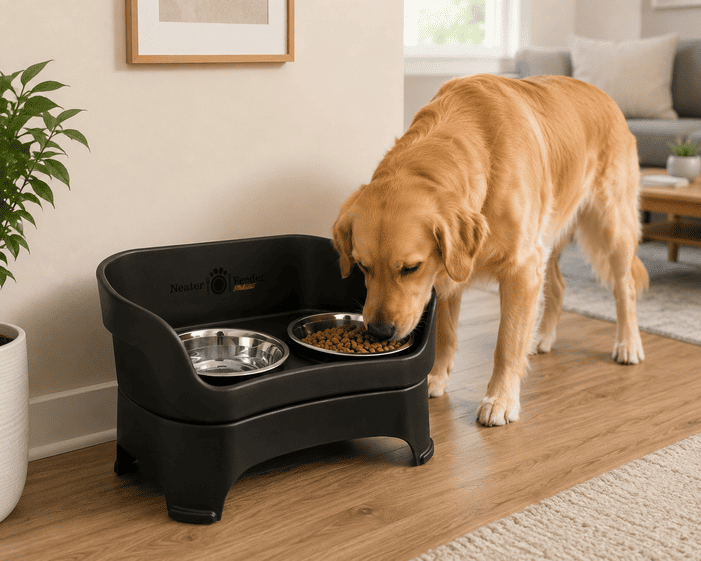
Elevated stands raise the bowl off the floor, which can help dogs who slobber water everywhere or who have joint issues that make bending down uncomfortable (this is worth asking your vet about for senior dogs or certain breeds). Look for one where the bowl itself lifts out for easy washing — not one where you’re scrubbing around a fixed frame. Try Neater Pet’s set
5. Best Budget Pick: A Plain, No-Frills Stainless Bowl
Sometimes you don’t need a stand, a rubber base, or a tray — you just need a solid metal bowl in the right size. These are usually the cheapest option and, honestly, the ones we still use for our dog’s water in the backyard. Try Neater Pet’s basic dog bowl
How to Pick the Right Size
| Dog Size | Suggested Bowl Capacity |
|---|---|
| Small (under 20 lbs) | 1–2 cups |
| Medium (20–50 lbs) | 2–4 cups |
| Large (50–90 lbs) | 4–6 cups |
| Extra Large (90+ lbs) | 6–8+ cups |
When in doubt, size up slightly for water bowls (dogs drink more in one sitting than you’d expect) and keep food bowls closer to an actual meal portion so you’re not eyeballing scoops every day.
Keeping It Clean (This Part Actually Matters)
- Wash daily, not just when it looks dirty — bacteria builds up in the residue you can’t see, even in stainless steel
- Most are dishwasher-safe, but check the bottom for a symbol or note before assuming
- Watch for dents, which can create small crevices — not a huge deal like scratched plastic, but worth replacing if it gets bad
Read more about recommended dog product: Wireless Dog Fence
Frequently Asked Questions
Are stainless steel dog bowls really better than plastic?
For most dogs, yes. Stainless steel doesn’t scratch the way plastic does, so it doesn’t develop the tiny grooves where bacteria likes to hide. It’s also the material vets most commonly recommend if a dog is showing chin irritation from a plastic bowl.
Why does my dog’s stainless bowl slide around the kitchen?
Lightweight stainless bowls without a rubber or silicone base will slide on smooth floors, especially once there’s food or water in them. A bowl with a non-slip base (or one set inside a tray) solves this almost every time.
Can stainless steel bowls go in the dishwasher?
Most can, but bowls with a rubber base should usually be hand-washed or placed on the top rack only, since high heat can degrade the rubber over time. Check the specific product’s care instructions.
Do stainless steel bowls rust?
Good-quality, food-grade stainless steel shouldn’t rust under normal use. If you do see rust spots, it’s usually a sign of a lower-quality bowl or scratched/damaged surface, and it’s worth replacing.
Setting up your dog’s whole feeding routine?
Check out our guide on dog food toppers to make mealtime more exciting, or our breakdown of how to choose high-protein dog food.
We write these guides based on what we’ve actually used and researched — not sponsored placements. If your dog has ongoing skin irritation, digestive issues, or you’re unsure about a specific product, loop in your vet before making changes to their routine.