Purina makes weight management dog food across three very different price points — and the differences are real, not just marketing. If your dog needs to lose weight, Purina Pro Plan Weight Management gives you the strongest protein profile and the only AAFCO feeding trial data in the lineup; if budget is the constraint, Purina Healthy Weight from the Dog Chow line actually delivers the lowest caloric density of the three. The mid-tier Purina ONE Healthy Weight sits in between and wins on palatability. Before you grab the bag on the lowest shelf, here is what is actually different between them and why it matters for your dog.
Purina’s Weight Management Lineup: Three Tiers, Three Products
Purina is one of the few pet food companies that deliberately sells across the full price spectrum under different sub-brands. That strategy works well for their mainstream lines, but it creates genuine confusion in the weight management category because the products are not interchangeable — they are built to different specifications with different ingredient sourcing and different research investment behind them.
The three products this review covers are:
- Purina Pro Plan Weight Management — sits inside Purina’s premium Pro Plan line, which targets performance-oriented and health-focused owners. Pro Plan is the brand most frequently recommended by veterinary nutritionists and is the only Purina line with extensive published feeding trial data.
- Purina ONE Healthy Weight — the mid-tier option under the Purina ONE SmartBlend line. Purina ONE is widely available in grocery stores and big-box retailers and occupies the “better” tier in the good-better-best framework.
- Purina Healthy Weight — part of the original Dog Chow line, which is Purina’s entry-level offering. This product competes on price and widespread availability rather than premium ingredients.
The price gap between the bottom and top options is roughly $50 per bag. That gap reflects real differences in protein sources, ingredient quality, research investment, and nutrient profiles — not just packaging. Understanding those differences is what this review is designed to help you navigate.
| Product | Approx. Price / Bag |
|---|---|
| Purina Pro Plan Weight Management | $70–80 / 34 lb |
| Purina ONE Healthy Weight | $45–55 / 31.1 lb |
| Purina Healthy Weight (Dog Chow) | $22–28 / 32 lb |
Purina Pro Plan Weight Management: Full Review
Purina Pro Plan Weight Management is the standout product in this comparison. It is also the most expensive, and in this case the premium is largely justified.
Ingredient Profile and Nutritional Analysis
The first ingredient is chicken — a named, whole protein source rather than a by-product meal or plant protein. Chicken provides a complete amino acid profile and is highly digestible for most dogs, which matters a great deal during weight loss when caloric intake is restricted and every gram of protein needs to do its job efficiently.
On a dry matter basis, the guaranteed analysis breaks down as follows:
- Protein: approximately 30% DM
- Fat: approximately 8% DM
- Caloric density: approximately 327 kcal per cup
The 30% DM protein level is notably high for a weight management food. Most dedicated weight management formulas reduce fat dramatically but also allow protein to fall, which accelerates muscle loss during caloric restriction. Pro Plan Weight Management maintains protein at a level comparable to many standard adult formulas, which helps dogs preserve lean muscle mass while losing body fat. This is the single most important nutritional feature in any weight management food, and it is where Pro Plan genuinely earns its premium.
L-carnitine is included in the formula. L-carnitine is an amino acid derivative that supports fat metabolism by facilitating the transport of long-chain fatty acids into the mitochondria for energy production. The research on supplemental L-carnitine in canine weight loss diets is not conclusive at low inclusion levels, but its presence alongside a high-protein dog food formula is a reasonable addition.
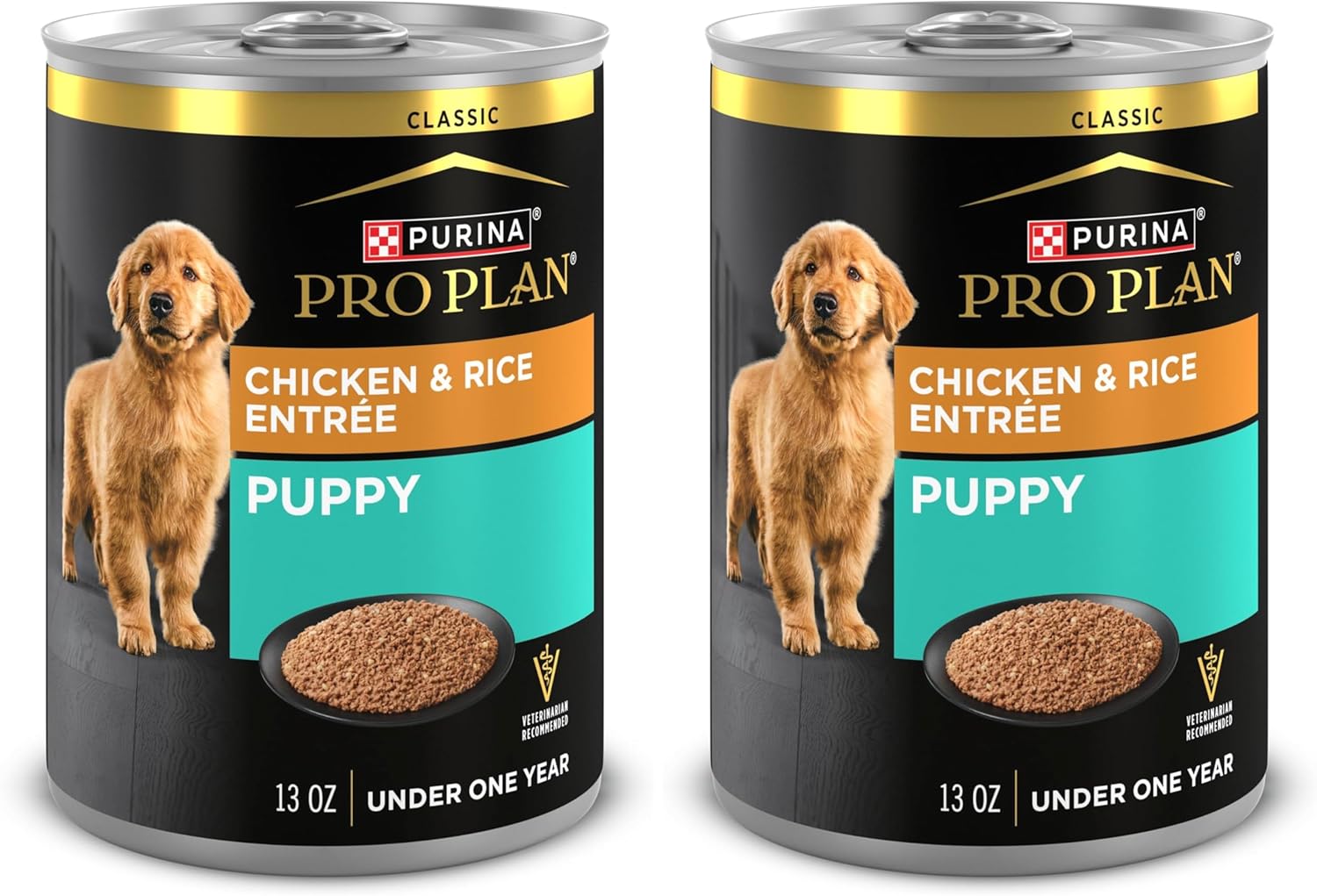
Research Backing
This is where Pro Plan separates itself from the other two products. Purina conducts AAFCO feeding trials on Pro Plan formulas rather than simply formulating to meet nutrient profiles on paper — a more stringent standard that gives veterinary nutritionists greater confidence in the product. Live probiotic cultures (Lactobacillus acidophilus) are added back after processing to support digestive health, which is useful for dogs prone to digestive upset during caloric restriction.
Available Formats
Pro Plan Weight Management is available in several size and breed-specific formulations:
- Adult (all breeds) — the standard formula reviewed here
- Small and Toy Adult Weight Management — smaller kibble size, nutrient profile adjusted for the metabolic needs of small breeds
- Large Breed Adult Weight Management — includes added glucosamine and EPA, which is meaningful for large breed dogs where excess weight accelerates joint degeneration
Honest Assessment
Pro Plan Weight Management is the best Purina weight management option for dogs actively losing weight. The combination of high protein, AAFCO feeding trial backing, and L-carnitine gives it a clinical credibility that neither of the lower-tier products can match.
Its main limitation is caloric density — at 327 kcal/cup it is not the most restrictive OTC option available. Dogs with significant obesity (body condition score 8–9/9) or dogs that have failed to respond to OTC foods should step up to a prescription diet rather than switching between OTC products.
Purina ONE Healthy Weight: Full Review
Purina ONE Healthy Weight is the middle tier in this lineup and, for many dog owners, the practical sweet spot between ingredient quality and cost. It is widely stocked in grocery and big-box retail environments, making it one of the most accessible weight management options on the market.
Ingredient Profile and Nutritional Analysis
Like Pro Plan, Purina ONE Healthy Weight leads with chicken as its first ingredient. The protein source quality at the top of the ingredient list is comparable between the two products at a glance, though Pro Plan’s formula development benefits from a larger research infrastructure.
Dry matter nutrient profile:
- Protein: approximately 30% DM
- Fat: approximately 9% DM
- Caloric density: approximately 340 kcal per cup
The 30% DM protein is consistent with Pro Plan, which is genuinely good for a mid-tier product. The fat content at 9% DM is slightly higher than Pro Plan’s 8%, and the caloric density at 340 kcal/cup is modestly higher as well. These differences are small enough that the practical impact on a weight management feeding plan is minimal — you would feed a small amount less per day compared to Pro Plan — but they do make Purina ONE Healthy Weight slightly less aggressive for active weight loss.
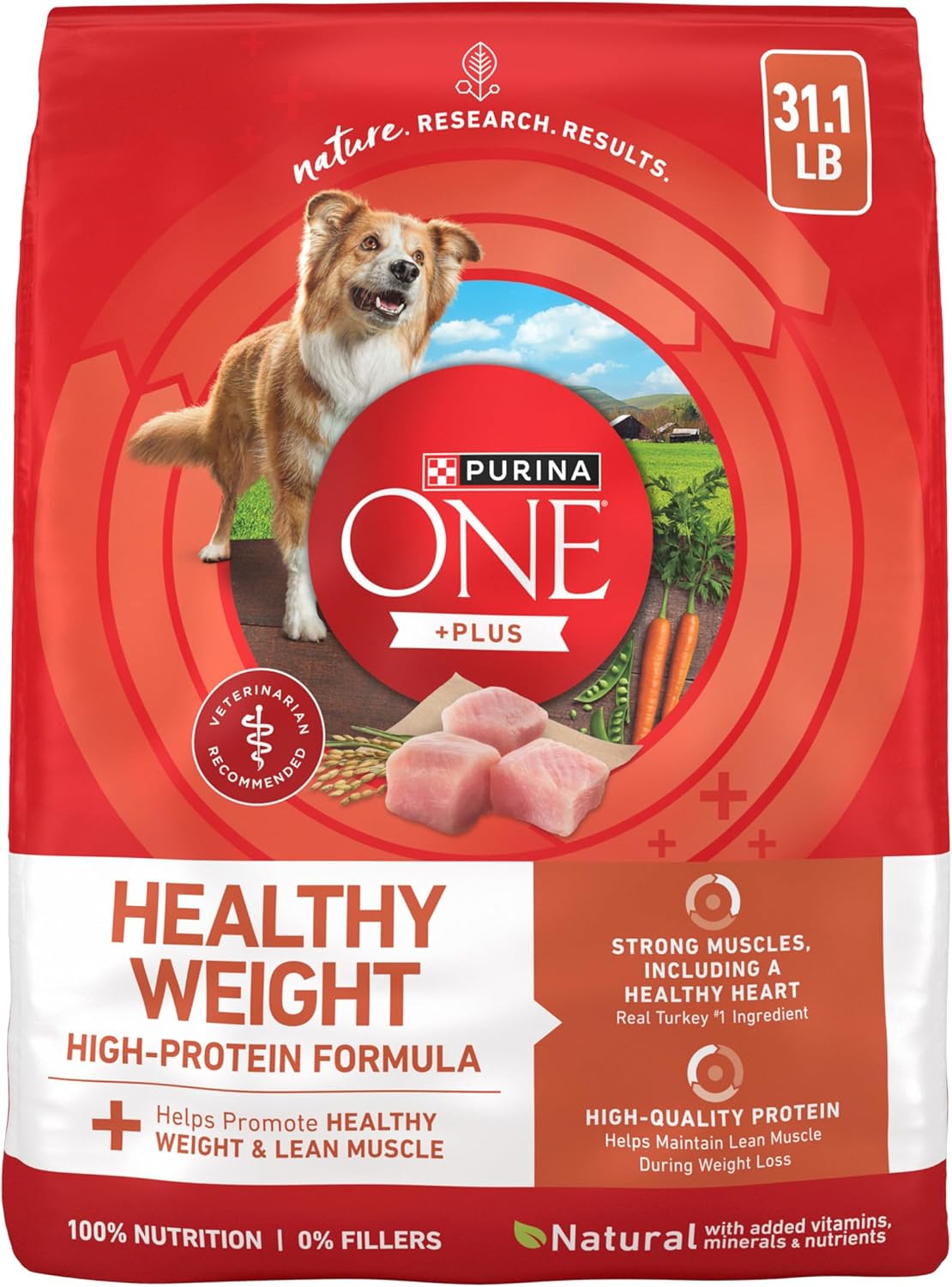
The Dual-Texture Kibble Factor
Purina ONE’s SmartBlend formulation uses a dual-texture kibble — a firmer outer layer with a softer center. This is a palatability feature, not a nutritional one, but palatability matters in weight management because restricted dogs are eating less than they want. Some dogs become food-selective after the novelty of a new food wears off; the dual texture tends to sustain engagement. If your dog has previously rejected weight management foods due to texture, Purina ONE is worth trying.
Honest Assessment
Purina ONE Healthy Weight is a solid mid-range product with a protein level competitive with Pro Plan. Its key shortfall relative to Pro Plan is the absence of AAFCO feeding trial data — ONE formulas meet nutrient profiles on paper rather than through feeding trials. For healthy adult dogs on a weight management plan, this distinction rarely causes practical problems. For dogs with underlying health conditions or owners who want the strongest available confidence, Pro Plan is the better choice.
Purina ONE Healthy Weight is best positioned as a weight control and weight maintenance food — ideal for dogs in a healthy weight range whose owners want to prevent creep — rather than as an aggressive weight loss tool. Its caloric density is the highest of the three products reviewed here, which means portion discipline is essential.
Purina Healthy Weight (Dog Chow Line): Full Review
Purina Healthy Weight from the Dog Chow line occupies a different market position than the first two products. It is sold primarily on price and accessibility and competes with store-brand and generic weight management offerings rather than with premium products.
Ingredient Profile and Nutritional Analysis
The first ingredient is corn — which is the most significant formulation difference from the two products above. Corn is a carbohydrate source, not a primary protein source. It is not inherently harmful for dogs and is AAFCO complete when the full formula provides adequate protein from other sources, but a corn-first formula signals that this product was built around ingredient cost rather than protein-forward nutrition.
Dry matter nutrient profile:
- Protein: approximately 24% DM
- Fat: approximately 7% DM
- Caloric density: approximately 280 kcal per cup
The 24% DM protein is meaningfully lower than the 30% offered by both Pro Plan and Purina ONE Healthy Weight. For a dog on caloric restriction, lower protein intake alongside reduced total calorie consumption increases the risk of lean muscle loss during weight reduction. This is the legitimate nutritional concern with the Dog Chow option — not the corn first ingredient in isolation, but the combined effect of fewer total calories and less protein to support muscle preservation.
The caloric density of approximately 280 kcal per cup is the lowest of the three products, and this is actually its practical advantage for caloric restriction. A dog eating 280 kcal/cup can receive a larger physical volume of food for the same calorie budget compared to a dog eating 340 kcal/cup. Dogs that are driven by volume of food consumed — rather than palatability — may feel more satisfied on the Dog Chow Healthy Weight formula at equivalent calorie levels.
Honest Assessment
Purina Dog Chow Healthy Weight is an AAFCO-complete, nutritionally adequate food for adult dogs. It is not a bad product within its market tier — it does what it claims to do and provides a lower-calorie alternative to standard Dog Chow. However, the lower protein level and corn-first formulation mean it is not optimized for the physiological demands of active weight loss in the way that Pro Plan is.
The appropriate use case is clear: this product suits budget-constrained households with overweight dogs where the primary goal is caloric restriction and the dog is otherwise healthy with no significant muscle loss concerns. It is not the right choice for senior dogs, dogs recovering from illness, or dogs with large amounts of weight to lose where muscle preservation is medically important.
Which Purina Weight Management Food Is Right for Your Dog?
The decision framework below addresses the most common scenarios. Use it as a starting point, not a substitute for a body condition score assessment from your veterinarian.
Choose Purina Pro Plan Weight Management if:
- Your dog needs active, meaningful weight loss (body condition score 7 or above out of 9)
- Muscle preservation during weight loss is a priority — senior dogs, working dogs, athletic breeds
- You want AAFCO feeding trial backing rather than formulation-only compliance
- Your dog has joint issues alongside weight issues — the Large Breed Weight Management variant adds glucosamine and EPA
- Your dog is 7 years or older — Pro Plan Weight Management 7+ addresses both weight management and senior nutritional needs simultaneously
Choose Purina ONE Healthy Weight if:
- Your dog needs moderate weight control rather than aggressive weight loss
- Your dog is a picky eater who has rejected other weight management foods due to palatability
- You want a mid-range price point with a protein level comparable to Pro Plan
- The goal is long-term weight maintenance rather than a short-term reduction program
Choose Purina Healthy Weight (Dog Chow) if:
- Budget is the primary constraint and a lower-cost option is necessary to maintain any weight management program at all
- Your dog is mildly overweight with no underlying health conditions
- Your dog is volume-motivated and the lower caloric density (280 kcal/cup) will help with satiety
- You plan to transition to a higher-quality food once weight goals are achieved
When to Step Beyond Purina Entirely
OTC weight management foods are appropriate first-line tools for overweight dogs, but they are not right for every situation. Consider a veterinary prescription weight management food in these circumstances:
- Hill’s Prescription Diet Metabolic — when OTC options have been used correctly for 8–12 weeks without meaningful weight loss
- Royal Canin Satiety Support — when a dog is severely obese or when satiety is the dominant challenge
- Any prescription food — when obesity is accompanied by diabetes, pancreatitis, or metabolic conditions requiring precise caloric management
If your dog has been on an OTC weight management food for three months without progress, a veterinary visit is the appropriate next step rather than switching between OTC products.
Conclusion
Purina’s weight management dog food lineup reflects the company’s broader market strategy: three genuinely different products at three genuinely different price points, not the same formula with different packaging. Understanding those differences is what separates a weight management program that works from one that stalls.
For most dogs actively trying to lose weight, Pro Plan Weight Management is the right Purina choice — the protein profile, feeding trial backing, and breed-specific variants make it a clinically credible OTC option. If your dog is a picky eater who has rejected other weight management foods, try Purina ONE Healthy Weight — the protein is comparable and the dual texture improves acceptance. If budget is the binding constraint, Purina Dog Chow Healthy Weight is an AAFCO-complete option with the lowest caloric density of the three, adequate for mild caloric restriction in otherwise healthy dogs.
Whichever product you choose, the fundamentals of weight management apply equally: weigh portions, minimize treats, recheck body condition every four weeks, and do not hesitate to involve your veterinarian if progress stalls. No bag of food manages weight by itself — the program matters as much as the formula.
Frequently Asked Questions
Is Purina Pro Plan Weight Management good for dogs?
Yes — it is one of the stronger over-the-counter weight management options available. The 30% DM protein level helps preserve lean muscle during caloric restriction, it is backed by AAFCO feeding trials rather than formulation compliance alone, and it includes L-carnitine to support fat metabolism. For dogs with moderate weight management needs it is a sound, well-supported choice.
What is the difference between Purina ONE Healthy Weight and Pro Plan Weight Management?
The key differences are in research backing, formula development, and kibble format. Both products have approximately 30% DM protein and lead with chicken as the first ingredient. Pro Plan is backed by AAFCO feeding trials; Purina ONE is formulated to meet AAFCO nutrient profiles without feeding trial verification. Pro Plan has a slightly lower caloric density (327 vs. 340 kcal/cup) making it modestly more effective for active weight loss. Purina ONE uses a dual-texture kibble that improves palatability for some dogs. Pro Plan costs approximately $25–30 more per comparable bag size. For dogs that need active weight loss, Pro Plan is the better choice. For dogs maintaining weight or needing mild caloric control, ONE Healthy Weight performs comparably at a lower cost.
How much Purina weight management food should I feed my dog?
Use the bag’s feeding guide as a starting point, not a fixed prescription. For active weight loss, many veterinarians recommend feeding 20–25% below maintenance for the dog’s target body weight — not their current weight. Weigh your dog every two to four weeks and adjust. A healthy rate of weight loss is approximately 1–2% of body weight per week. If the scale is not moving after eight weeks of consistent, weighed portions, consult your veterinarian.
Can I use Purina weight management food for a dog that is not overweight?
Not recommended as a routine choice. Weight management formulas are calorie-restricted, and feeding them to a dog at a healthy weight can cause unintentional weight loss over time. Dogs predisposed to weight gain — certain breeds, spayed or neutered dogs, less active seniors — may be candidates for a weight management food before they become overweight, but that transition is best guided by body condition scoring from your veterinarian rather than done preemptively.
Is Purina weight management food grain-free?
No. All three products reviewed here contain grains. Pro Plan Weight Management and Purina ONE Healthy Weight include rice, corn, and wheat; Dog Chow Healthy Weight leads with corn. Grain-free is not a requirement for a good weight management food — grains are not harmful for most dogs and are not a meaningful consideration in the weight management context unless your dog has a diagnosed grain intolerance.
How long until I see results with Purina weight management food?
At the correct caloric restriction, most dogs show measurable weight loss within four to six weeks of starting a weight management diet. Visible changes in body condition typically take eight to twelve weeks. The full weight loss journey to reach a target body condition score can take four to twelve months depending on how much weight needs to be lost. If you see no measurable change after eight weeks of consistent, weighed portions, consult your veterinarian — the issue may be portion accuracy, high-calorie treats undermining the diet, or an underlying metabolic condition that the food alone cannot address.
Purina Pro Plan Weight Management vs. Hill’s Perfect Weight — which is better for weight loss?
The comparison is genuinely close. Hill’s Perfect Weight has a slightly lower caloric density (~300 kcal/cup vs. Pro Plan’s ~327 kcal/cup) and includes a fiber blend for satiety management. Purina Pro Plan offers comparable protein, live probiotics, and strong veterinary brand recognition. For moderately overweight dogs, palatability and acceptance may be the deciding factor between the two. For dogs with significant obesity, Hill’s Perfect Weight’s lower caloric density gives it a modest practical edge without requiring a prescription.
Disclaimer: This content is for informational purposes only and does not constitute veterinary advice. Nutrient values are based on guaranteed analysis and dry matter calculations from publicly available product data and may vary by specific formula version. Always consult your veterinarian before making significant changes to your dog’s diet, particularly if your dog has underlying health conditions or requires supervised weight loss.