Picture this: your dog sneaks a chunk of sausage off the counter on a Tuesday, and by Thursday he is vomiting, refusing to eat, and hunched over in obvious pain. The vet delivers the diagnosis — pancreatitis — and the first major treatment directive is dietary fat restriction. This scenario plays out in vet clinics every week, and it illustrates exactly why low fat dog food is a medical and nutritional necessity for millions of dogs, regardless of whether they need to lose weight. If your dog has been diagnosed with pancreatitis, hyperlipidemia, liver disease, EPI, or lymphangiectasia, managing dietary fat is not optional — it is part of their treatment plan.
This article is specifically about low fat as a medical and nutritional concept. It is not primarily about weight management — if your goal is weight loss for an overweight dog, there is a separate guide for that. Here we cover the conditions that require fat restriction, how to identify genuinely low fat foods, and what your options look like from prescription diets to carefully constructed home-cooked meals.
What “Low Fat” Actually Means in Dog Food
Here is where most pet owners run into trouble: there is no legally regulated definition of “low fat” for dog food in the United States. The Association of American Feed Control Officials (AAFCO) sets nutrient minimums and certain labeling rules, but it does not define a specific fat percentage threshold that a product must meet before it can be called “low fat.” This means that two bags sitting side by side on the shelf — both labeled “low fat” — could have meaningfully different fat contents.
Veterinary nutritionists and internal medicine specialists generally use two working definitions based on dry matter (DM) fat percentage:
- Therapeutic low fat: Under 10% fat on a dry matter basis. This level is typically recommended for dogs managing active pancreatitis, hyperlipidemia, or lymphangiectasia. Most prescription gastrointestinal low fat diets fall in the 8–10% DM fat range.
- Moderate fat restriction (maintenance low fat): 10–15% fat on a dry matter basis. This range is appropriate for dogs that need ongoing fat restriction for chronic conditions in remission, or for breeds genetically predisposed to hyperlipidemia that are not yet symptomatic.
Standard adult maintenance kibble typically contains 14–20% DM fat, and high-performance or puppy foods often run even higher. So “low fat” is always relative to the baseline of normal dog food.
How to Calculate Dry Matter Fat Percentage
The fat percentage on the guaranteed analysis panel of a dog food bag is reported on an as-fed basis, which includes the moisture content of the food. Because wet food and dry food have dramatically different moisture levels, comparing them on an as-fed basis is misleading. Dry matter basis calculation removes moisture from the equation and gives you a true comparison point.
The formula is straightforward:
- Find the moisture percentage on the guaranteed analysis panel (for example, 10% for dry kibble).
- Subtract moisture from 100 to get the dry matter percentage: 100 − 10 = 90% dry matter.
- Divide the as-fed fat percentage by the dry matter percentage: if the bag shows 8% crude fat, then 8 ÷ 0.90 = 8.9% DM fat.
For wet food the math looks different. A canned food might show 4% crude fat and 78% moisture. Dry matter is 100 − 78 = 22%. Fat on DM basis: 4 ÷ 0.22 = 18.2% DM fat. That canned food is not actually low fat, even though 4% sounds low at first glance.
What “Light” and “Reduced Fat” Labels Actually Mean
AAFCO does have definitions for “light” and “lean” claims. A dry dog food labeled “light” must contain no more than 3,100 kcal/kg, and a “lean” dry food must have no more than 9% fat. These definitions can be useful reference points, but they do not align perfectly with the veterinary therapeutic threshold. A food can be labeled “light” and still not qualify as therapeutic low fat. Always run the dry matter calculation yourself rather than relying on marketing language.
Medical Conditions That Require Low Fat Dog Food
This is the most important section of this article and the one that sets it apart from generic weight-loss dog food guides. The following conditions each have a physiological reason why dietary fat must be restricted — reasons that have nothing to do with a dog being overweight.
Pancreatitis
The pancreas produces enzymes that digest fat among other nutrients. When a dog eats a high-fat meal, the pancreas is stimulated to release a large surge of digestive enzymes. In a dog with pancreatitis, this enzyme release can become dysregulated — the pancreas essentially starts digesting itself, triggering significant inflammation, pain, vomiting, and in severe cases, systemic complications that can become life-threatening.
Both acute and chronic pancreatitis require fat restriction, but the approach differs slightly. In the acute phase (and in the immediate recovery period following a flare), most veterinarians recommend a diet under 10% DM fat, and sometimes even lower during the most sensitive recovery window. Long-term management of chronic pancreatitis typically involves maintaining a diet in the 8–12% DM fat range permanently, because the pancreas retains heightened sensitivity even between flare-ups.
The commonly cited recommendation is to keep fat under 10% DM for pancreatitis management, though some specialists draw the line at 8% for dogs with recurrent or severe disease history. Individual thresholds vary — one dog might tolerate 12% DM fat without issue while another flares at 11%. Tracking symptoms and working with your vet to find the specific threshold your dog can handle is part of long-term management.
Vet Note: Pancreatitis is one of the conditions where “close enough” is genuinely risky. A food that is marketed as low fat but tests at 13% DM fat could be enough to trigger a flare in a sensitive dog. Always verify fat content using the dry matter calculation before committing to a food.
Hyperlipidemia (High Blood Triglycerides and Cholesterol)
Hyperlipidemia means abnormally high levels of fats (lipids) in the bloodstream. Some cases are secondary — caused by another disease like hypothyroidism, diabetes, or Cushing’s disease — but primary hyperlipidemia occurs in certain breeds as an inherited condition. Miniature Schnauzers are the most commonly affected breed, with a genetic predisposition to significantly elevated triglycerides. Beagles, Shetland Sheepdogs, and Briards are also over-represented.
Dogs with hyperlipidemia can develop complications including pancreatitis (the two conditions frequently co-occur in Miniature Schnauzers), atherosclerosis, and potentially neurological signs. Dietary fat restriction reduces the lipid load entering the bloodstream and can measurably lower triglyceride levels over time. For dogs with primary hyperlipidemia, a low fat diet is a lifelong management strategy, not a temporary fix.
Symptoms of hyperlipidemia can be subtle or absent until complications arise — intermittent vomiting, abdominal discomfort, lethargy after eating, and milky-white blood serum on bloodwork are common findings. Diagnosis is confirmed through a fasted lipid panel.
Liver Disease
The liver plays a central role in fat metabolism, processing dietary fats and regulating lipid production and transport. When liver function is compromised — whether through hepatic lipidosis, portosystemic shunts, chronic hepatitis, or other causes — its ability to handle fat is reduced. High dietary fat can increase the workload on an already-stressed liver and may contribute to fat accumulation in liver cells.
For dogs with liver disease, dietary management typically involves moderate fat restriction alongside protein adjustments and increased highly digestible carbohydrates. The specific fat target depends on the type and severity of the liver condition — your veterinarian or a board-certified veterinary nutritionist should guide the exact parameters. In general, keeping fat in the 10–15% DM range is a reasonable starting point for hepatic support diets, though some severe cases may require lower.
Exocrine Pancreatic Insufficiency (EPI)
EPI is a condition in which the pancreas fails to produce adequate digestive enzymes, including lipase, which is the primary enzyme responsible for breaking down dietary fat. Dogs with EPI cannot properly digest or absorb fat from their food, leading to fat malabsorption, chronic loose or greasy stools, weight loss despite a ravenous appetite, and eventually malnutrition.
The primary treatment for EPI is enzyme replacement therapy — powdered pancreatic enzymes added to each meal. However, because fat digestion is already compromised, feeding a lower-fat diet reduces the overall digestive burden and helps maximize absorption of the nutrients the dog is actually managing to process. Most dogs with EPI do best on a moderately low fat diet in the 10–15% DM range, though some dogs with concurrent small intestinal disease may need to go lower.
German Shepherd Dogs are disproportionately affected by EPI due to an inherited condition called pancreatic acinar atrophy. Rough Collies and Chow Chows are also more commonly diagnosed. EPI is a permanent condition requiring lifelong dietary management and enzyme supplementation.
Lymphangiectasia (Protein-Losing Enteropathy)
Lymphangiectasia is a rare but serious intestinal condition in which the lymphatic vessels in the small intestinal wall become dilated and dysfunctional. These vessels are responsible for transporting fat absorbed from food. When they malfunction, dietary fat — particularly long-chain triglycerides — causes the lymphatic vessels to leak, losing proteins, lymphocytes, and other substances into the intestinal tract.
Dogs with lymphangiectasia require an ultra-low fat diet, typically under 5% DM fat and sometimes as low as 2–3% DM fat. This is not achievable with standard commercial foods, and it often requires prescription diets specifically formulated for severe fat restriction, or a carefully constructed and monitored home-cooked diet using ultra-lean ingredients. Breeds with higher prevalence include Yorkshire Terriers, Soft-Coated Wheaten Terriers, Norwegian Lundehunds, and Basenji dogs.
Important: Lymphangiectasia management should always be supervised by a veterinary internist and ideally a board-certified veterinary nutritionist. The ultra-low fat requirements make this one of the most difficult dietary conditions to manage correctly, and nutritional deficiencies are a real risk without professional guidance.
How to Read a Dog Food Label for Fat Content
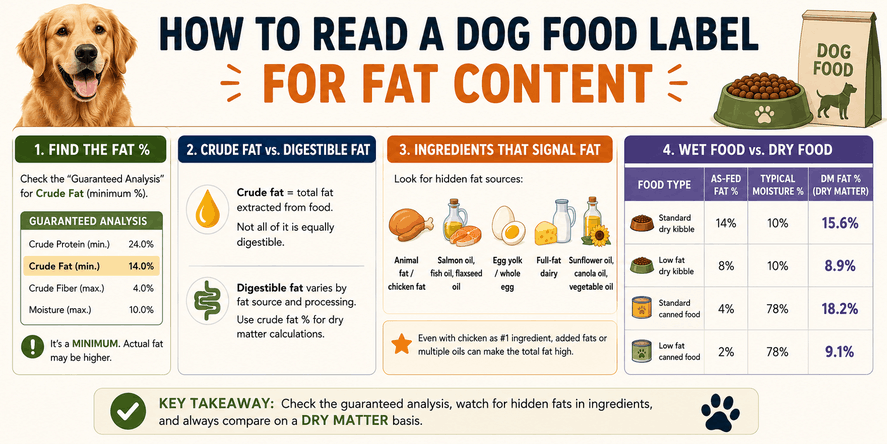
The guaranteed analysis panel is the section of the label that gives you the nutrient information you need. It appears on every bag, can, or pouch of commercial dog food sold in the United States. For fat content, here is what to look for and how to interpret it.
Finding the Fat Percentage
The guaranteed analysis lists “Crude Fat” as a minimum percentage. This means the actual fat content could be higher than what is stated — manufacturers list a minimum guarantee, not a ceiling. For dogs who need strict fat restriction, this is an important nuance: a food that shows 8% crude fat minimum could legally contain 10% or more. Calling the manufacturer for a typical analysis (rather than the guaranteed minimum) can give you a more accurate picture.
Crude Fat vs. Digestible Fat
“Crude fat” refers to the total fat extracted from the food using a chemical process. It includes all fat present in the food, but not all of that fat is equally digestible. Digestibility varies by fat source and processing method. For most purposes, the crude fat percentage is the number you use for dry matter calculations because digestibility data is rarely available on pet food labels — but it is worth knowing that crude fat slightly overestimates what the dog actually absorbs.
Ingredients That Signal Hidden Fat
The ingredient list can reveal fat sources that contribute to total fat content even if the headline ingredients look lean. Watch for these:
- Animal fat or chicken fat — added fats used to improve palatability and energy density
- Salmon oil, fish oil, flaxseed oil — healthy fats, but fat nonetheless; significant amounts push the total fat up considerably
- Egg yolk or whole egg — egg whites are low in fat, but whole eggs and egg yolk add meaningful fat
- Full-fat dairy (cheese, whole milk) — occasionally used in treats or toppers
- Sunflower oil, canola oil, vegetable oil — plant-based fats that increase the crude fat percentage
A food with chicken as the first ingredient can still be high in fat if animal fat or multiple oil sources appear in the first six to eight ingredients.
Wet Food vs. Dry Food Fat Comparison
This is where the dry matter calculation becomes essential. Wet food looks dramatically lower in fat on an as-fed basis simply because it contains 75–85% water. A canned food showing 3–4% as-fed fat might actually be 15–20% DM fat — higher than many dry kibbles. Conversely, dry food showing 8–9% as-fed fat might be around 9–10% DM fat. Always convert to dry matter before comparing across different food types or formats.
| Food Type | As-Fed Fat % | Typical Moisture % | DM Fat % |
|---|---|---|---|
| Standard dry kibble | 14% | 10% | 15.6% |
| Low fat dry kibble | 8% | 10% | 8.9% |
| Standard canned food | 4% | 78% | 18.2% |
| Low fat canned food | 2% | 78% | 9.1% |
Best Ingredients in Low Fat Dog Food
Understanding what ingredients to look for — and which ones to avoid — makes evaluating commercial foods and building home-cooked meals considerably easier.
Lean Protein Sources
Protein is essential and should still be the backbone of any low fat diet. The key is choosing high protein sources that are naturally low in fat:
- Chicken breast (skinless) — one of the leanest animal proteins available; around 1–3% fat as fed
- Turkey breast — similarly lean, widely used in commercial low fat formulas
- Whitefish, cod, tilapia, haddock — lean fish proteins that add omega-3s without the fat load of fatty fish like salmon or sardines
- Rabbit — an underused but genuinely lean novel protein
- Venison — lean, digestible, and a useful novel protein for dogs with concurrent food sensitivities
Proteins to use sparingly or avoid in strict low fat diets include: lamb (typically 15–25% fat), beef (varies significantly by cut — ground beef can be 20%+ fat), duck (fatty by nature), pork, and salmon (while healthy, salmon and other oily fish are high in fat and better suited as occasional toppers than as a main protein in low fat formulas).
Digestible Carbohydrates
Low fat dog food necessarily relies more heavily on carbohydrates than many grain-free or high-protein dog food. Good carbohydrate sources in low fat food include:
- White rice — highly digestible, used in recovery diets for its gentleness on the GI tract; low in fiber but excellent short-term
- Brown rice — slightly more fiber than white rice; suitable for long-term use
- Sweet potato — nutrient-dense, adds beta-carotene, and well-tolerated by most dogs
- Oats — a good source of soluble fiber and gentle on digestion
- Barley and quinoa — less common but nutritionally solid options
Fiber Sources That Support Digestion
Fiber serves a supporting role in low fat diets by slowing gastric emptying, feeding beneficial gut bacteria, and helping firm up loose stools that can accompany fat malabsorption. Useful fiber sources include:
- Pumpkin — one of the most recommended foods for GI-sensitive dogs; soluble and insoluble fiber in a gentle package
- Beet pulp — a common ingredient in commercial GI formulas; provides fermentable fiber without significant fat
- Psyllium husk — highly soluble fiber, useful for loose stools but must be introduced gradually
- Plain green vegetables (green beans, zucchini, broccoli in moderate amounts) — low-calorie, fibrous additions to home-cooked meals
What to Avoid
- Unspecified “meat meal” or “animal meal” — generic meat meals can come from high-fat trimmings
- Added fats listed in the first half of the ingredient list — chicken fat, animal fat, fish oil, or any oil appearing as a primary ingredient suggests the formula is not genuinely low fat
- High-fat supplements baked into the base formula — some foods add salmon oil or flaxseed oil in quantities significant enough to raise overall fat content considerably
- Peanut butter or nut-based inclusions — high in fat; common in treats
Commercial Low Fat Dog Food Options
Commercial options range from veterinary prescription formulas to over-the-counter alternatives, and choosing between them depends largely on why your dog needs a low fat diet.
Prescription Low Fat Diets
For dogs with pancreatitis, lymphangiectasia, severe hyperlipidemia, or other conditions requiring strict fat restriction under 10% DM, prescription gastrointestinal diets are generally the first recommendation. These formulas are specifically designed and tested for therapeutic use, and their nutrient profiles are verified more rigorously than standard commercial foods. The major players include:
- Hill’s Prescription Diet i/d Low Fat — widely prescribed for GI conditions including pancreatitis; dry kibble and canned options available; fat content typically around 7–9% DM
- Royal Canin Gastrointestinal Low Fat — another primary prescription option; formulated specifically for fat malabsorption conditions; available in dry and canned
- Purina Pro Plan Veterinary Diets EN Gastroenteric Low Fat — Purina’s prescription GI formula with a low fat profile suitable for pancreatitis management
These foods require a veterinary prescription for purchase through most channels, which is appropriate — they are medical diets, and starting them without a diagnosis could mask symptoms or delay appropriate care for an undiagnosed condition.
Over-the-Counter Options for Moderate Fat Restriction
For dogs needing ongoing, moderate fat restriction — for example, a Miniature Schnauzer with mild hyperlipidemia in remission, or a dog with a history of pancreatitis that is currently stable — over-the-counter low fat kibbles can be appropriate. Look for formulas where the dry matter fat calculation falls in the 10–15% range. Some options that often meet this threshold include various “weight management” formulas (not because the goal is weight loss, but because these formulas happen to contain less fat) and some senior formulas.
The critical step is running the dry matter calculation yourself. Do not rely on the label description. A food marketed as a “healthy weight” formula might have 12% DM fat, which is genuinely moderate restriction. Another might have 16%, which is essentially standard maintenance.
When OTC is Sufficient vs. When Prescription is Needed
Use this as a rough framework:
- Prescription required: Active pancreatitis, acute recovery from pancreatitis, lymphangiectasia, severe hyperlipidemia, EPI with concurrent GI disease, or any condition where your vet has specified a fat target under 10% DM
- OTC may be adequate: Chronic pancreatitis in long-term remission with a stable, mild fat restriction requirement; primary hyperlipidemia with triglycerides well-controlled on diet alone; dogs with a history of single pancreatitis episodes as a precautionary diet
When in doubt, ask your veterinarian. The cost difference between prescription and OTC food is real, but it is far smaller than the cost of a pancreatitis hospitalization.
Home-Cooked Low Fat Diet for Dogs
Home cooking gives you precise control over every ingredient in your dog’s bowl, which makes it appealing for dogs with strict fat requirements. However, it comes with significant responsibilities that should not be underestimated.
A Simple Low Fat Template
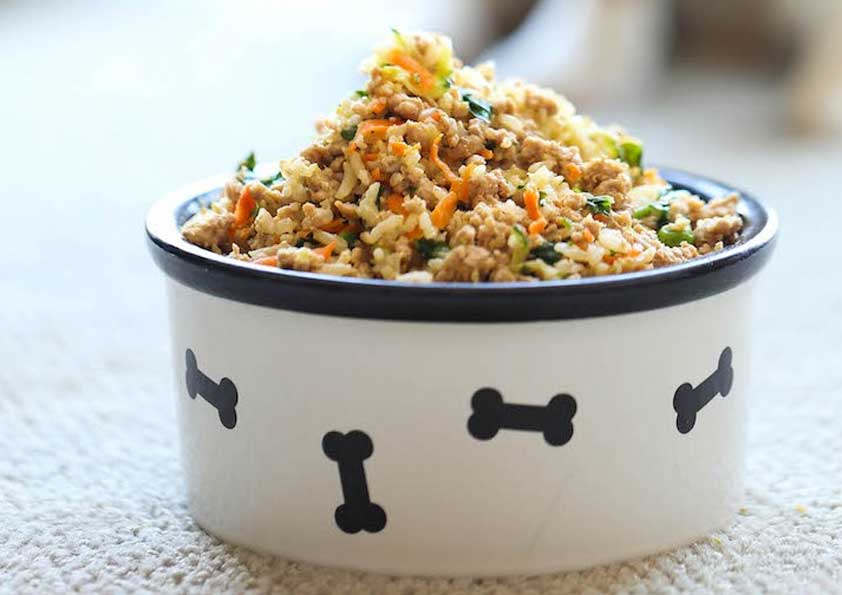
A basic home-cooked low fat meal for a dog follows this structure:
- Lean protein: 50–60% of the meal by volume (boiled chicken breast, turkey breast, or lean white fish)
- Digestible carbohydrate: 30–40% of the meal (plain white rice, sweet potato, or oats)
- Vegetable/fiber source: 10–15% of the meal (plain canned pumpkin, green beans, or cooked zucchini)
Example Low Fat Recipe (Short-Term Use)
For a 40-pound dog, a single meal might look like:
- 150g boiled boneless skinless chicken breast, drained of cooking liquid
- 100g plain cooked white rice
- 30g plain pumpkin puree (not pie filling)
This combination is extremely low in fat — roughly 3–5% on a dry matter basis — and is highly digestible. It is the diet commonly recommended by veterinarians for acute pancreatitis recovery. It is also nutritionally incomplete, which is the most important limitation.
The Critical Limitation: Nutritional Completeness
The chicken-and-rice approach works as a short-term (days to a few weeks) bland diet during recovery, but it is severely deficient in calcium, phosphorus, essential vitamins, and trace minerals when fed long-term. Dogs fed a home-cooked diet exclusively for more than a few weeks without proper supplementation will develop nutritional deficiencies — sometimes serious ones, particularly in calcium, which can cause orthopedic problems.
Warning: Do not feed a home-cooked diet as the sole diet for more than 2–3 weeks without having the recipe reviewed and balanced by a board-certified veterinary nutritionist (DACVN). This is not optional for long-term management. A properly balanced home-cooked recipe requires specific supplements calculated for your dog’s weight, life stage, and health status. Resources like the BalanceIT tool or the Petdiets service can help, but professional oversight is strongly recommended.
Supplementing a Home-Cooked Low Fat Diet
For short-term use (acute recovery), most vets allow the unsupplemented bland diet for a week or two with no major concerns. For ongoing use, a balanced recipe typically requires:
- A calcium source (calcium carbonate at calculated doses based on the recipe’s protein and phosphorus content)
- A complete vitamin/mineral supplement designed for home-cooked diets (not a human multivitamin)
- Potentially iodine supplementation if using unsalted, non-iodized ingredients throughout
- Essential fatty acids, especially if the diet is ultra-low fat — this requires guidance because supplementing fat in a fat-restricted diet sounds contradictory but may be necessary for skin, coat, and brain health
Final Thought
Low fat dog food is a specific nutritional and medical tool, not just a weight management option. When a dog’s pancreas, liver, digestive lymphatics, or lipid metabolism are compromised, the fat content of every meal becomes a direct factor in their health and comfort. Understanding what “low fat” actually means — and how to verify it using dry matter calculations rather than label marketing — puts you in a much stronger position to make good decisions for your dog.
The first step is always a proper diagnosis. If you suspect your dog has a condition that requires fat restriction, bloodwork, urinalysis, and sometimes imaging or biopsy are needed to confirm what you are dealing with. From there, your vet can recommend whether a prescription low fat food is necessary, whether an over-the-counter option will do the job, or whether a carefully supervised home-cooked diet makes sense for your situation. Low fat feeding done right is genuinely effective — pancreatitis can be managed, hyperlipidemia can normalize, and dogs on appropriate low fat diets often live comfortable, symptom-free lives for years.
Frequently Asked Questions About Low Fat Dog Food
What is the lowest fat dog food available?
The prescription gastrointestinal low fat formulas from Hill’s, Royal Canin, and Purina are among the lowest fat commercially available dog essentials, typically running 7–9% DM fat. For dogs with lymphangiectasia who need under 5% DM fat, some ultra-low fat recipes need to be custom-prepared under veterinary nutritionist supervision because commercial options do not reliably achieve that level. Certain prescription hydrolyzed protein or elemental diets can approach very low fat levels, but these require specific veterinary guidance.
Can I feed my dog with pancreatitis regular dog food?
No, not during an active episode or in the initial recovery period. Standard adult maintenance dog food typically contains 14–20% DM fat, which is well above the under-10% threshold needed for pancreatitis management. Feeding regular food to a dog in pancreatitis recovery is likely to prolong symptoms, trigger a flare, or cause a relapse. After full recovery, some dogs can tolerate a moderate-fat diet, but many with chronic or recurrent pancreatitis need to stay on a low fat diet permanently.
Is low fat dog food good for all dogs?
It is not harmful to most dogs, but it is not necessary for all of them. Healthy adult dogs without medical conditions generally do well on standard-fat diets. Puppies, pregnant or nursing dogs, and highly active dogs specifically need adequate fat for energy, brain development, hormone production, and fat-soluble vitamin absorption. Putting a healthy young dog on a strict low fat diet without a medical reason could shortchange their nutritional needs.
How quickly should I switch to low fat food after a pancreatitis episode?
In most cases, the transition to low fat food begins as soon as the dog is able to eat again after the acute phase — typically 24–48 hours after vomiting has stopped and appetite has returned, under veterinary guidance. The initial reintroduction often uses a bland, easily digestible low fat food in small, frequent meals rather than one or two large portions. A gradual transition from bland diet to a complete low fat diet over 5–7 days is typical, though your vet’s specific guidance takes priority based on the severity of the episode.
Can low fat dog food cause nutritional deficiencies?
A properly formulated commercial low fat diet from a reputable manufacturer will meet AAFCO nutrient profiles and should not cause deficiencies when fed as directed. The concern arises with home-cooked low fat diets fed without proper supplementation or with improperly balanced recipes. Fat-soluble vitamins (A, D, E, K) require some dietary fat for absorption — ultra-low fat diets may require supplementation of these vitamins, and this should be managed under veterinary guidance.
Is grain-free food lower in fat?
Not necessarily. Grain-free does not mean low fat. Many grain-free formulas replace grains with legumes (peas, lentils, chickpeas) or starchy vegetables, but they frequently maintain standard or above-standard fat levels because the primary market for grain-free food is not dogs needing fat restriction. Some grain-free formulas are actually higher in fat than conventional kibble. Always check the dry matter fat calculation regardless of grain-free status.
My dog is a healthy weight but has high triglycerides — what food should I use?
This is exactly the situation where the medical rationale for low fat food is most important, and where it is most frequently overlooked. A lean Miniature Schnauzer with elevated triglycerides needs a genuinely low fat diet — under 10% DM fat — despite having no weight problem. Start with a prescription gastrointestinal low fat formula if triglycerides are significantly elevated, or a carefully selected over-the-counter low fat food for milder cases. Recheck the fasted lipid panel after 6–8 weeks on the new diet to assess response. If triglycerides do not normalize with diet alone, your vet may discuss medication options.
How do I know if my dog needs low fat food long-term?
The clearest indicator is a veterinary diagnosis of one of the conditions covered in this article. After a first pancreatitis episode, some dogs never have another with a moderate diet change, while others flare repeatedly and require strict long-term management. The pattern of recurrence, the severity of each episode, and your dog’s individual response to different fat levels all inform whether lifelong strict restriction is needed. Regular monitoring — bloodwork, symptom tracking, and periodic consultation with your vet — is the best way to calibrate this over time.
Related Reading:
Disclaimer: This article is intended for general informational purposes only and does not constitute veterinary advice. If your dog has been diagnosed with pancreatitis, hyperlipidemia, liver disease, EPI, lymphangiectasia, or any other condition requiring dietary management, always follow your veterinarian’s specific guidance. Dietary fat targets should be established in consultation with a licensed veterinarian and, when appropriate, a board-certified veterinary nutritionist.